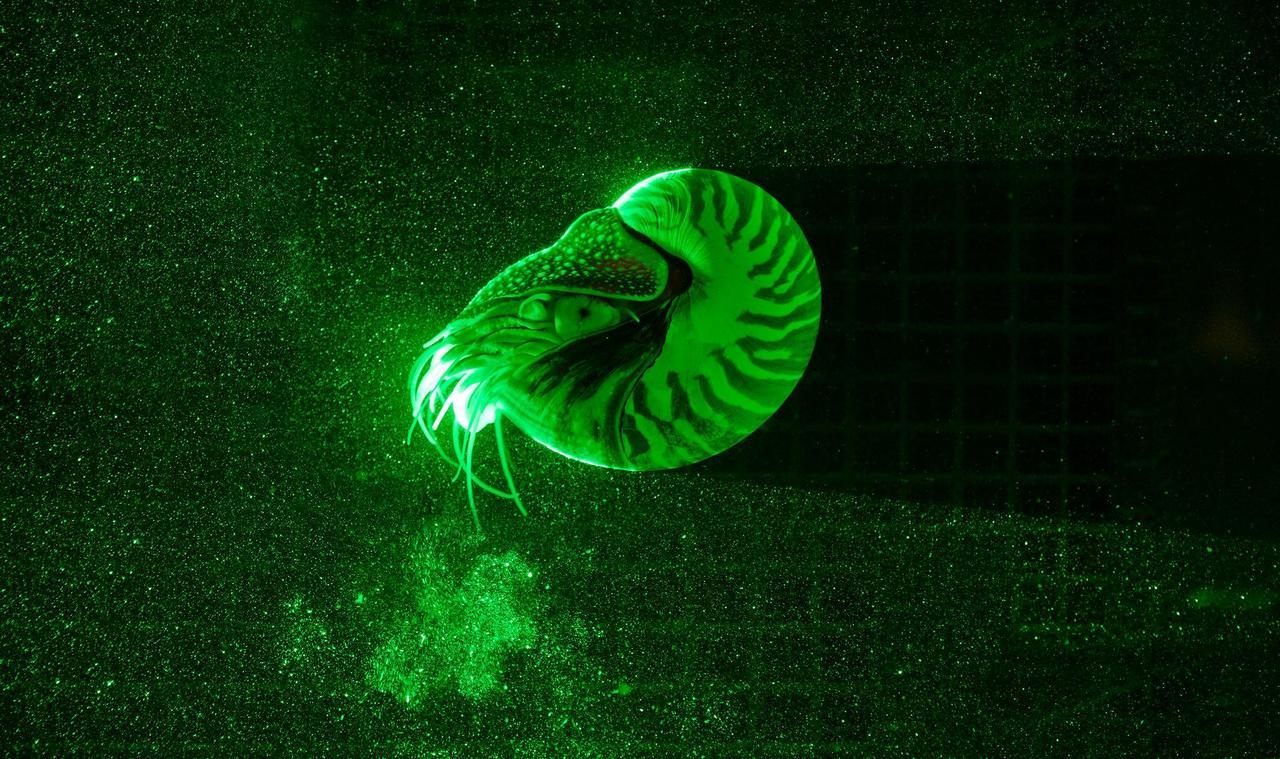
The shellbound chambered nautilus is a champion of underwater jet propulsion. It can eke out efficiencies as high as 75%, far outclassing other jet-based swimmers like squid, salps, and jellyfish. That high efficiency is especially important for the nautilus, which spends a great deal of time at depths where the oxygen needed to fuel movement is in short supply. To get around, the nautilus draws water in through an enlarged orifice, then squirts it out little by little. Its this asymmetry between drawing in and expending that keeps efficiency high. By releasing a jet slower and at lower speeds, the nautilus is able to reduce wasteful losses to friction and thereby keep the efficiency high. The drawback is that the nautilus swims relatively slowly at an average of around 8 centimeters–less than one body length–per second. (Image credit: Simon and Simon Photography/University of Leeds; research credit: T. Neil and G. Askew; via NYTimes; submitted by Kam-Yung Soh)
Tag: nautilus

Krakatoa
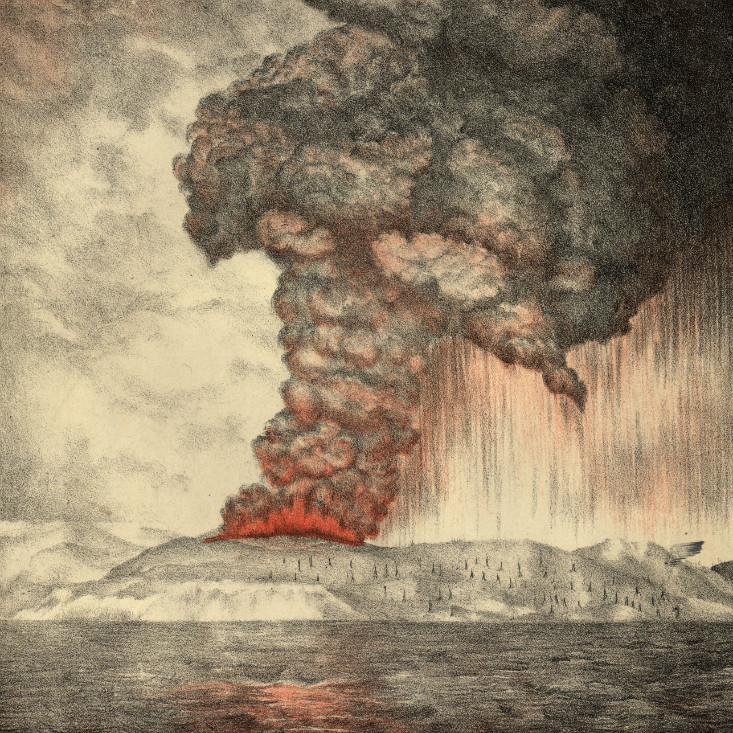
Volcanoes seem to be a common topic these days. Yesterday Nautilus published a great piece by Aatish Bhatia on the 1883 eruption of Krakatoa, which tore the island apart and unleashed a sound so loud it was heard more than 4800 km away:
The British ship Norham Castle was 40 miles from Krakatoa at the time of the explosion. The ship’s captain wrote in his log, “So violent are the explosions that the ear-drums of over half my crew have been shattered. My last thoughts are with my dear wife. I am convinced that the Day of Judgement has come.“
In general, sounds are caused not by the end of the world but by fluctuations in air pressure. A barometer at the Batavia gasworks (100 miles away from Krakatoa) registered the ensuing spike in pressure at over 2.5 inches of mercury. That converts to over 172 decibels of sound pressure, an unimaginably loud noise. To put that in context, if you were operating a jackhammer you’d be subject to about 100 decibels. The human threshold for pain is near 130 decibels, and if you had the misfortune of standing next to a jet engine, you’d experience a 150 decibel sound. (A 10 decibel increase is perceived by people as sounding roughly twice as loud.) The Krakatoa explosion registered 172 decibels at 100 miles from the source. This is so astonishingly loud, that it’s inching up against the limits of what we mean by “sound.” #
Those are some mindbogglingly enormous numbers. Aatish does a wonderful job of explaining the science behind an explosion whose effects ricocheted through the atmosphere for days afterward. Check out the full article over at Nautilus. (Image credit: Parker & Coward, via Wikipedia)

Nautilus Article
Spend an hour watching the clouds roll overhead and no two of them will be the same. The complexity and dynamic motion of turbulence make these flows fascinating, even mesmerizing, to watch. Humans are a pattern-seeking species. We like to seek order in apparent chaos, and this, perhaps, is what makes turbulence such a captivating subject for scientists and artists alike.
Nicole Sharp, “The Beautiful Unpredictability of Coffee, Clouds, and Fire”
Something a little different today. I have a guest post over at Nautilus about looking for patterns in turbulence. Go check it out!