Tag: insect flight

  • Flexible Wings Aid Butterfly Flight

    Flexible Wings Aid Butterfly Flight

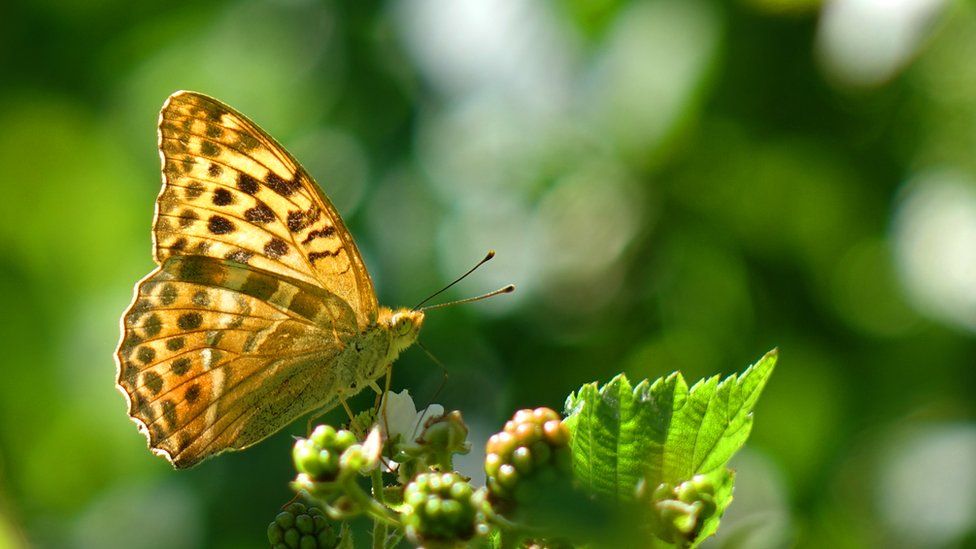
    Butterflies are some of the oddest flyers of the insect world, given the large size of their wings relative to their bodies. That could be a recipe for inefficient flight, but a new study shows that butterflies’ large flexible wings actually help them take off quickly.

    When lifting their wings, butterflies use an unusual clapping motion, with the leading edges of their wings coming together before the rest of the wings. This motion helps cup and direct air, creating most of the butterfly’s thrust, according to the researchers. The wings’ flexibility is key to this. Using artificial wings — both stiff and flexible — researchers found that the flexible wings generated 22% more useful impulse and were 28% more efficient. For a tiny flyer with frequent take-offs, that’s an enormous savings! (Image, video, and research credit: L. Johansson and P. Henningsson; via BBC; submitted by Kam-Yung Soh)

  • Flying Through Waterfalls

    Flying Through Waterfalls

    Swifts and starlings often make their nests behind waterfalls. To explore how these birds traverse their watery curtain, researchers observed hummingbirds, a smaller sister species, flying through an artificial waterfall. They found that the birds tended to part the water with one wing while continuing to use the other to produce thrust. This behavior helped them cross the barrier smoothly and easily.

    In contrast, smaller and slower flyers, like the insect species the researchers tested, were typically unable to cross the waterfall. Instead, they got carried away by the flow or managed to pass through only to crash. The scientists suggest that protection from insects may be one reason birds choose to nest behind waterfalls. (Image and research credit: V. Ortega-Jimenez et al.; via Science; submitted by Kam-Yung Soh)

  • Mimicking Insect Flight

    Mimicking Insect Flight

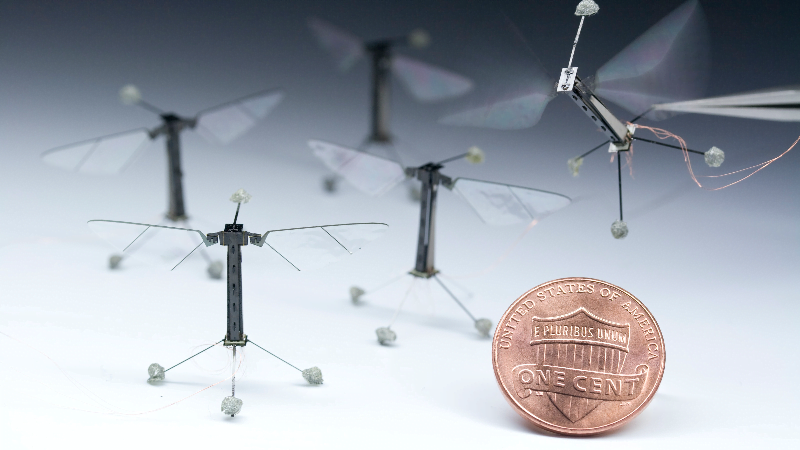
    There’s an oft-repeated tale that science cannot explain how a bumblebee flies. And while that may have been true 80 years ago, when engineers assumed they could apply their knowledge of fixed-wing aircraft to insects, it’s very far from the truth now.

    Being small, insects use aerodynamic tricks that are very different from the physics used by aircraft or even birds. Insects like fruit flies use a forward-and-backward sweeping motion at a very high angle of attack as they flap. This motion creates a vortex at the leading edge of the wing that provides the lift keeping the insect aloft. It still requires fast reflexes — most insects flap their wings hundreds of times a second — but the mechanism is robust enough to keep insects aloft and maneuverable. (Image credits: Robobee – K. Ma and P. Chirarattananon, simulation – F. T. Muijres et al., illustration – G. Lauder; via APS Physics)

  • Featured Video Play Icon

    Flying Beetles, Stinging Nettles, and Jellyfish

    In the latest JFM/FYFD video, we tackle some of the less pleasant aspects of summer weather: stopping invasive insects, understanding how plants dispense poison, and looking at the physics behind jellyfish stings. And if you’ve missed any of our previous videos, we’ve got you covered. (Image and video credit: T. Crawford and N. Sharp)

  • Featured Video Play Icon

    How Mosquitoes Fly in the Rain

    One might think that rainfall would keep the mosquitoes away, but it turns out that rain strikes don’t bother these little pests much.  Because the insect is so small and light compared to a falling raindrop, the water bounces off instead of splashing. This results in a relatively small transfer of momentum, although the mosquito does get deflected quite strongly. Researchers estimate that the insects endure accelerations up to 300 times that of gravity, which is more than 10 times what a human can withstand. (Video credit: A. Dickerson et al; submitted by Phillipe M.)