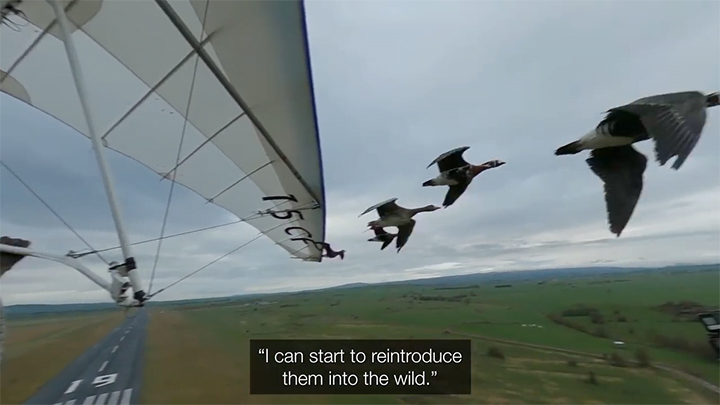
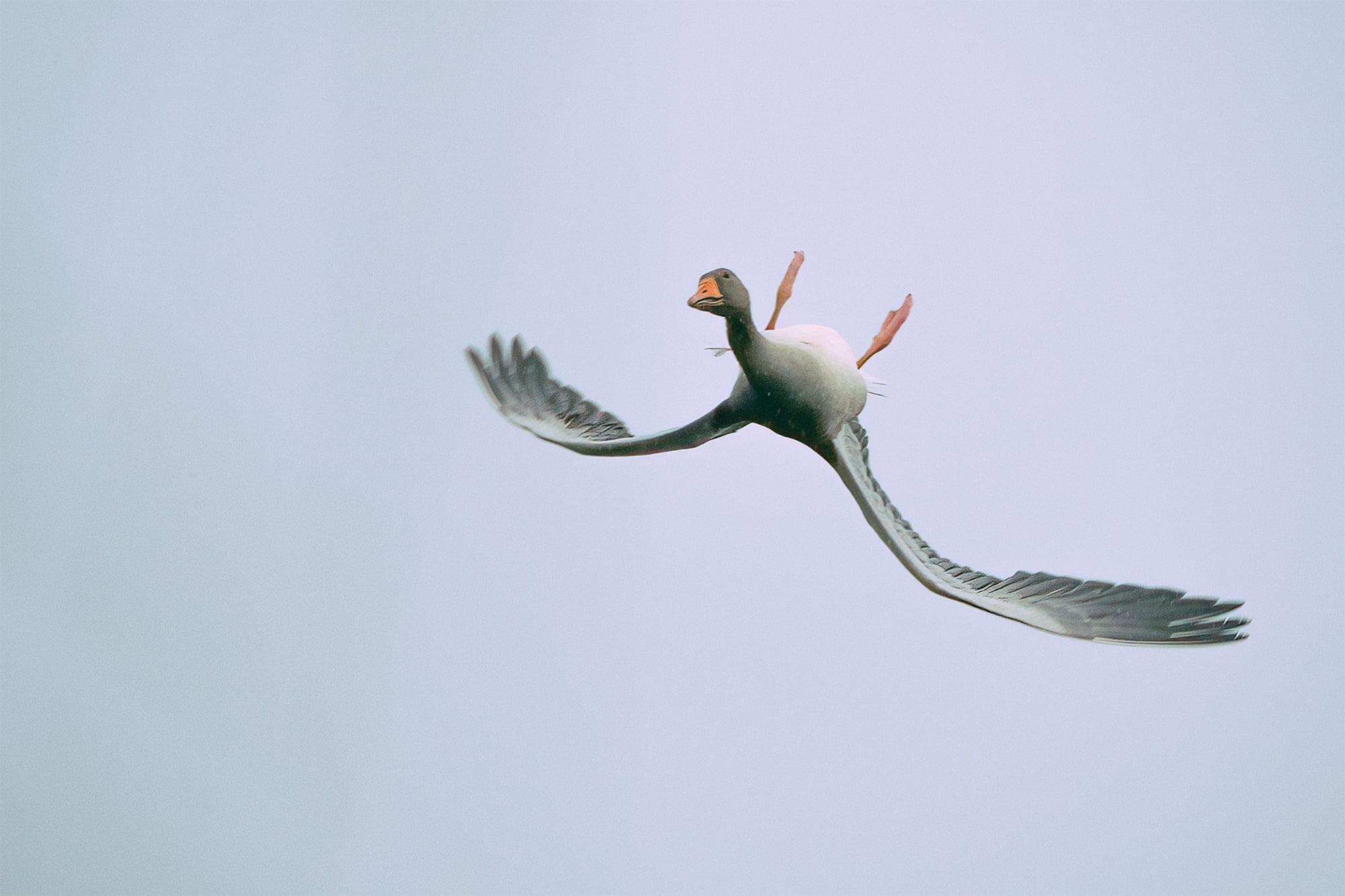
Scientists do all manner of odd things in the name of science. To teach bar-headed geese – birds capable of flying at the altitude of Everest – to fly in a wind tunnel, one group of researchers fostered a group of geese from the moment they hatched. They taught them to fly, first by chasing their bicycling parent and then following her on a motor scooter. Only then could they train the geese to fly in a wind tunnel designed to test how these birds manage to keep flying with only 30% of the oxygen found at sea level*.
The birds’ secret, it turns out, is metabolic. As the oxygen dropped, so did the temperature of the geese’s blood. Hemoglobin, which binds oxygen in blood cells, is more efficient at lower temperatures, allowing the birds to get more oxygen. At the same time, though, their overall metabolism slowed down, meaning that they required less oxygen overall to function. Taken together, these adaptations make the geese excellent fliers in conditions most animals cannot tolerate. (Image and research credit: J. Meir et al.; via WashPo; submitted by Marc A.)
* Occasionally I get comments pointing out that drag decreases with altitude, thereby making it easier to cut through the air. While this is true, I can say from my own experience of living and exercising at altitude that, for most of us, the effects of low oxygen levels far outweigh the savings in drag. It’s hard to appreciate a tiny drop in drag when your heart rate is sky high!