Tag: fog collection

  • Building a Better Fog Harp

    Building a Better Fog Harp

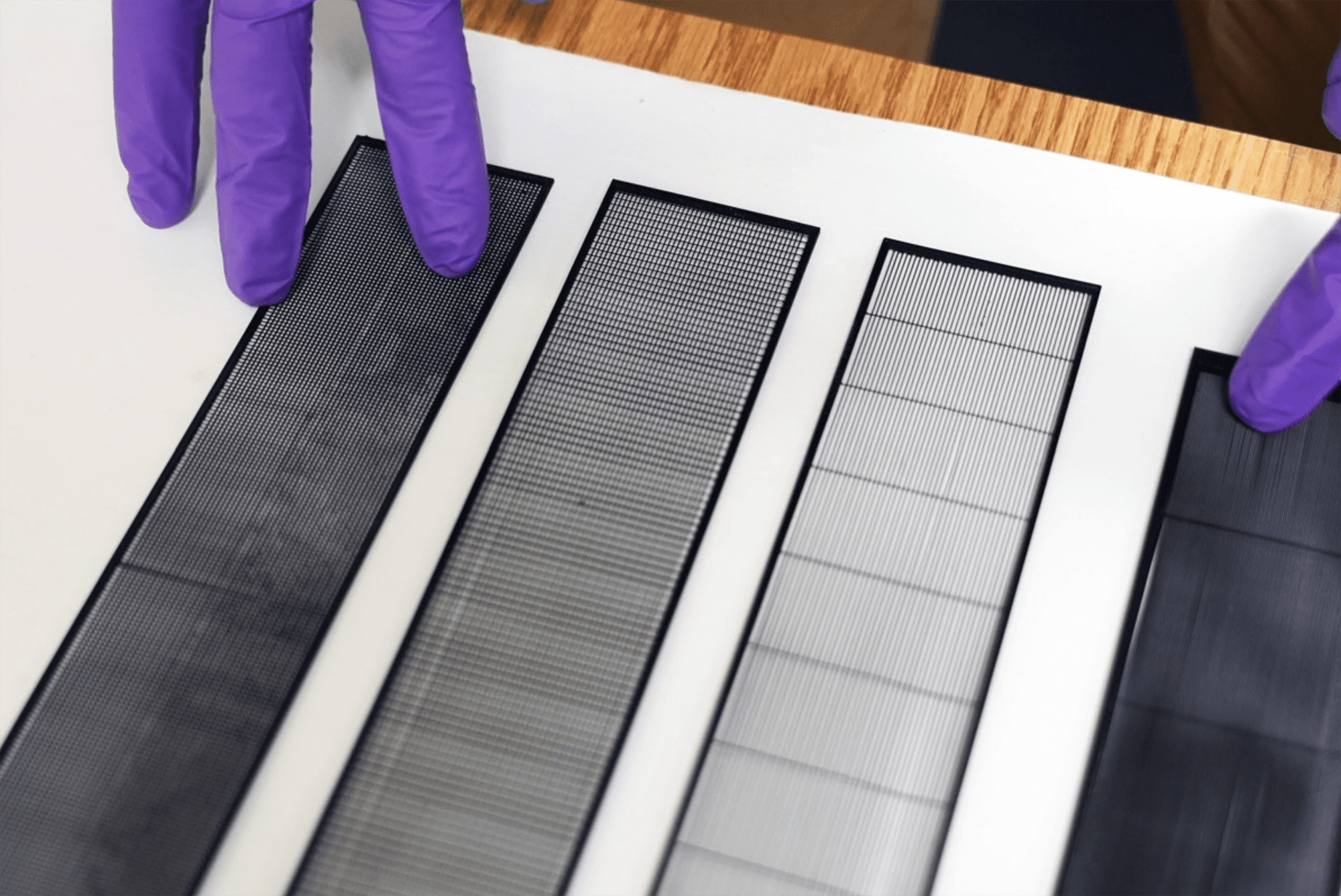
    On arid coastlines, fog rolling in can serve as an important water source. Today’s fog collectors often use tight mesh nets. The narrow holes help catch tiny water particles, but they also clog easily. A few years ago, researchers suggested an alternative design — a fog harp inspired by coastal redwoods — that used closely spaced vertical wires to capture water vapor. At small scales, this technique worked well, but once scaled up to a meter-long fog harp, the strings would stick together once wet — much the way wet hairs cling to one another.

    The group has iterated on their design with a new hybrid that maintains the fog harp’s close vertical spacing but adds occasional cross-wires to stabilize. Laboratory tests are promising, with the new hybrid fog harp collecting water with 2 – 8 times the efficiency of either a conventional mesh or their original fog harp. The team notes that even higher efficiencies are possible with electrification. (Image credit: A. Parrish; research credit: J. Kaindu et al.; via Ars Technica)


    Fediverse Reactions
  • Collecting Fog

    Collecting Fog

    In some parts of the world, fog is a major source of freshwater, but collecting it is a challenge. Most systems use a wire mesh to capture and collect droplets, but the process is highly inefficient, pulling only 1-3% of droplets from the fog. Researchers found that this is due largely to aerodynamic effects. The presence of the wire deflects droplets around it (bottom left). To solve this, engineers introduced an electric charge into the fog. The subsequent electric field actually pulls droplets to the wires (bottom right). When applied to a mesh (top), the efficiency of fog capture improves dramatically. 

    The technique can also be used to capture water vapor that would otherwise escape from the cooling towers of power plants. The MIT researchers who developed the technique will conduct a full-scale test at the university’s power plant this fall. They hope the technique will recapture millions of gallons of water that would otherwise drift away from the plant. (Image credits: MIT News, source; image and research credits: M. Damak and K. Varanasi, source)