Tag: film boiling

  • Different Kinds of Boiling

    Different Kinds of Boiling

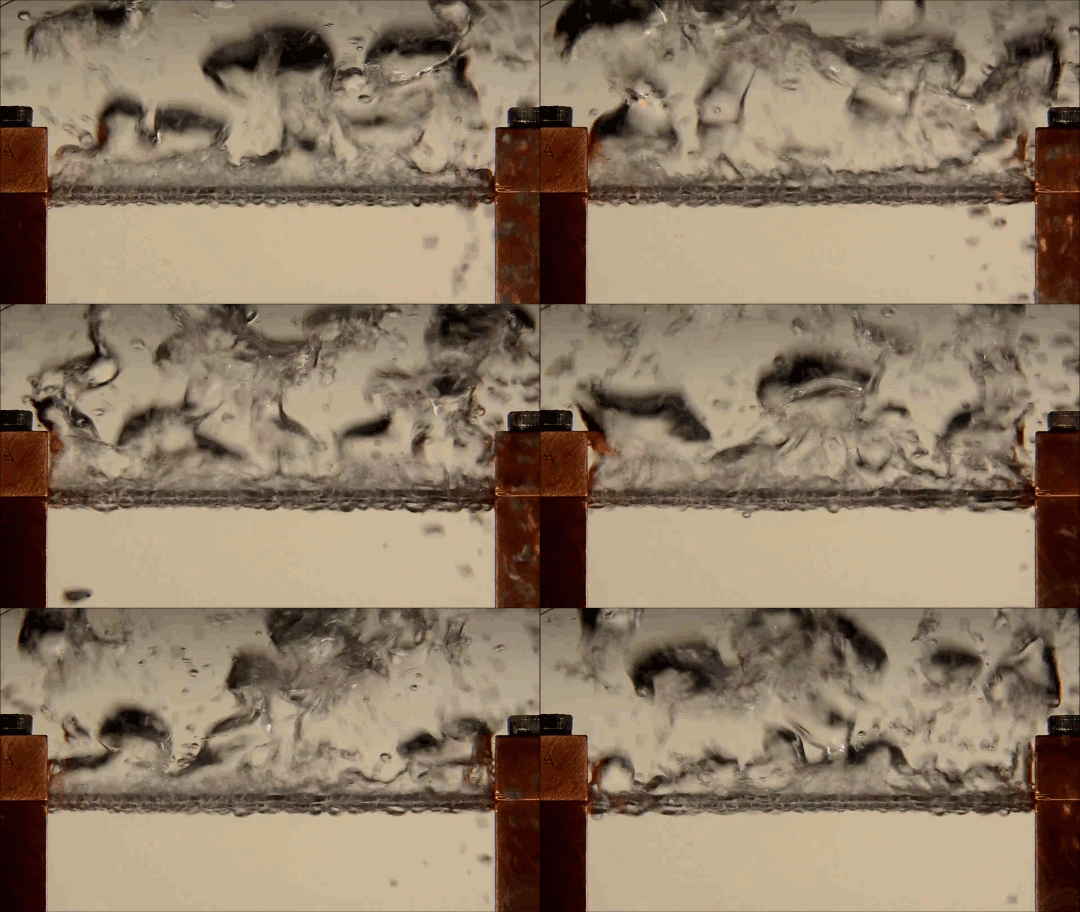
    When you put a pot of water on to boil, you probably don’t give much thought to the process. In our daily lives, we pretty much only see one kind of boiling: the sort where lots of small bubbles form on a hot surface and then rise. That’s nucleate boiling (top image), and it’s typical when you have a surface close to the boiling point of a liquid. 

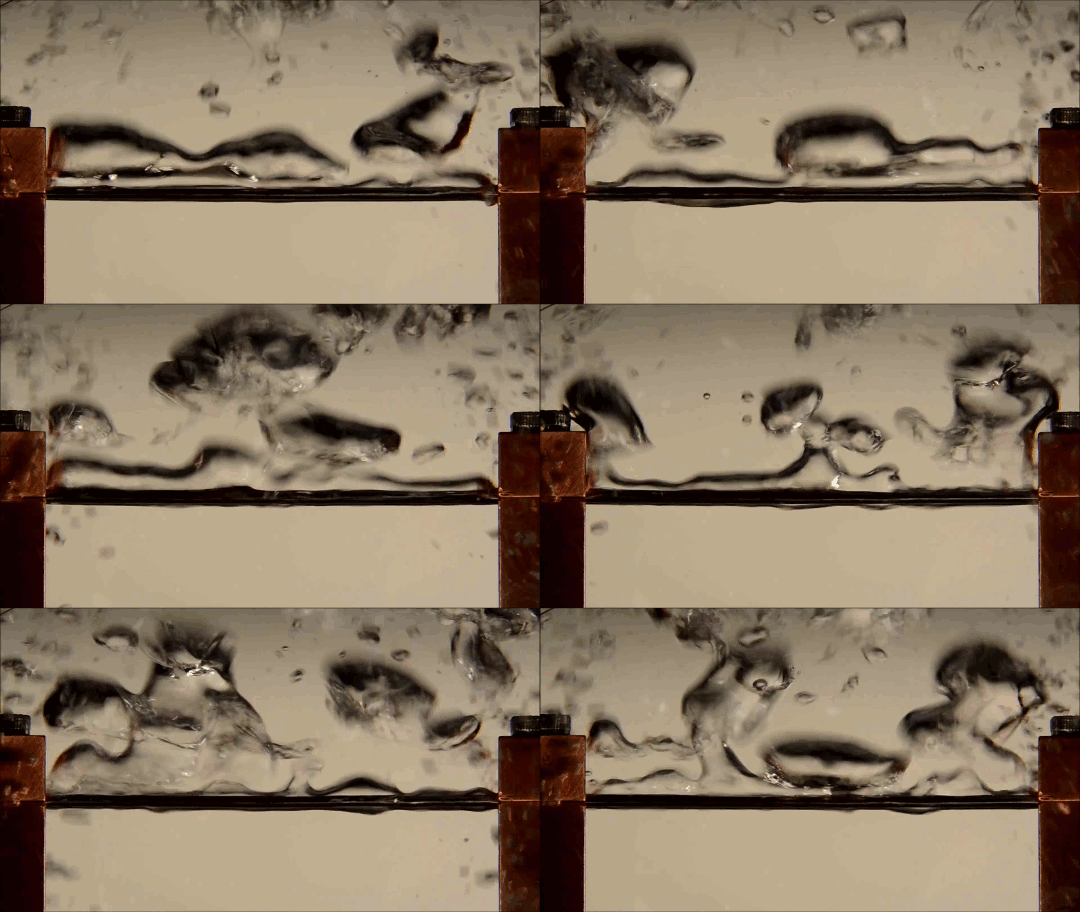
    But when you continue raising the temperature of the surface, you get a transition to a different boiling regime (middle image). In this final regime (bottom image), a film of vapor envelopes the heated surface; hence its name: film boiling. Because vapor is less efficient for heat transfer than a liquid, a surface undergoing film boiling can become much, much hotter because it cannot transfer its heat away efficiently. In this experiment, the tube starts at 375K during nucleate boiling and rises to a temperature nearly three times higher during film boiling. (Image credit: TSL, source)

  • Featured Video Play Icon

    The Tightrope Dancers

    Boiling is a process most of us don’t pay much attention to. But it can be remarkably entertaining and beautiful. This award-winning video shows boiling on and around a heated wire immersed in oil. Depending on the diameter of the wire and the power used to heat it, the researchers observe several different regimes of behavior. In one, vapor bubbles form on the wire and interact with one another: bouncing, merging, and dancing back and forth. When the bubbles become large enough, their buoyancy lifts them upward. In another regime, the wire is hot enough for film boiling. Like the Leidenfrost effect, film boiling occurs when a surface is so hot that it instantly vaporizes any liquid near it. The vapor layer then acts like coating, insulating the remaining liquid from the hot surface. The bubbles formed on the wire in this regime are mesmerizing, rising in periodic patterns or shifting back and forth gobbling up lesser bubbles. (Video credit: A. Duchesne et al.)