Elephant seals are harbingers — canaries in the coal mine — for climate change. A long-running experiment tracks northern elephant seal populations using a combination of sensor tags and field measurements. With the miniaturization of sensors, a tagged seal can provide a wealth of data for scientists: foraging paths, temperature and salinity data, behavioral patterns, ecological data, and even information on the species around the seal. This video delves into this treasure trove, explaining how and what we’re learning from this species, especially as they navigate our changing climate. (Video and image credit: Science)
Tag: ecology

Reintroducing Beavers
Beavers are impressive ecological engineers and a keystone species for wetland environments. But in the UK, it’s been nearly 400 years since beavers were regularly found in the wild. In the meantime, Victorian engineering sensibilities drastically altered the landscape to quickly drain rainwater from upstream locations, which unfortunately increases flooding dangers downstream.
But all of that is changing with the reintroduction of wild beavers in a Cornwall experiment. Within their 5 acres, the beavers are transforming the landscape by deepening ponds and slowing water drainage. Their dams create ideal habitat spaces not only for the beavers but for many other species of mammals, birds, and insects. Check out the full interview to learn more and see this previous post for a similar effort in the Western U.S. (Video and image credit: BBC Earth)

Rivers in the Sky
The water cycle is quite a bit more complicated than what we learn in elementary school, and the environment around us contributes to that cycle in invisible but vital ways. In this video, Joe Hanson of It’s Okay to Be Smart pulls back the veil on this in the context of the Amazon river basin and how the Amazon rainforest itself creates an atmospheric river that carries more water than its namesake river.
Trees release water into the air almost constantly as they transpire. And to trigger that water to fall as rain, trees can release other compounds that serve as a nucleus around which raindrops can form. The condensing raindrops form clouds, which lower the air pressure and create winds, thereby creating an atmospheric river flowing from the Atlantic back up the Amazon River. That stream carries rain that feeds the rainforest and the Amazon River, continuing the cycle. (Video and image credit: It’s Okay to Be Smart)


The Livers of Our Rivers
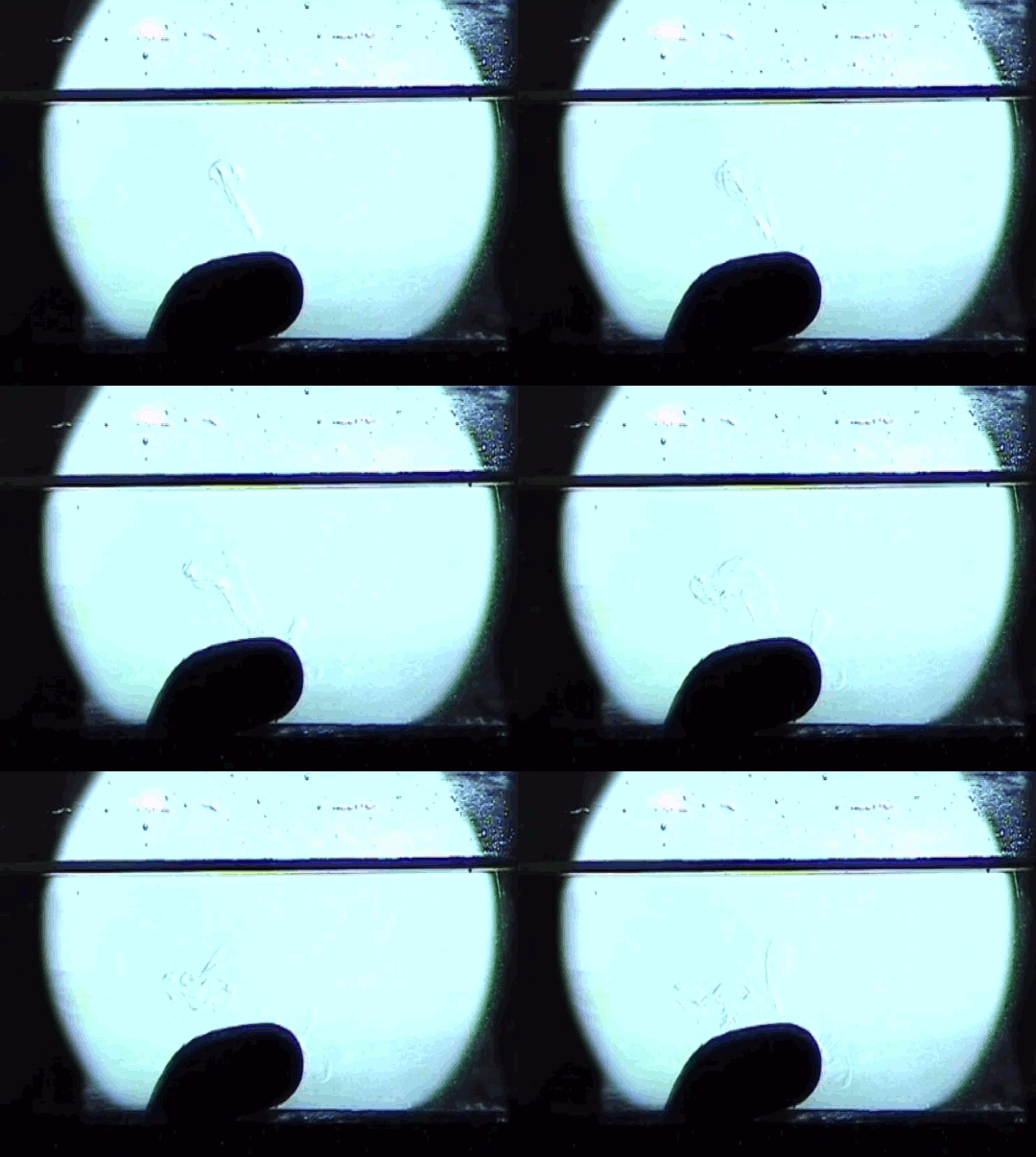
To the naked eye, mussels and other bivalves don’t appear to be doing much. But these filter feeders are hard at work. The mussel takes in water through its incurrent siphon (on the right side in this image), and tiny cilia move the water through its gills, which filter out plankton and other edibles. Wastewater flows out the exacurrent siphon, seen here as the plume coming out the top of the mussel.
Mussel species are important indicators of the health of both fresh and marine water bodies. Because they’re stationary and they are constantly processing the water, the health of these bivalves is indicative of the ecosystem’s overall health. (Image credit: S. Allen, source)

Making Better Tags for Tracking Turtles
Tagging equipment is used on all manner of aerial and marine creatures to gather data about animal behavior in their natural environments. It can be difficult, though, for researchers to gauge what effects the tags have on an animal. A recent study by T. T. Jones et al. used drag measurements on marine turtle casts to estimate the effects of common tagging equipment. They found that, on large turtles, the equipment increases a turtle’s drag by as little as 5%, but for smaller species or juvenile turtles, the drag cost can be much larger – in some cases doubling a turtle’s drag when swimming. Such large increases in drag may significantly change a tagged turtle’s behavior and skew results or even endanger the animal. The researchers suggest a model that allows others to estimate a tag’s drag effects across species. (Image credits: T. Gray and M. Carey; research credit: T. T. Jones et al.; via PopSci; submitted by Chi M.)