Tag: ice bridges

  • Freezing Via Ice Bridge

    Freezing Via Ice Bridge

    For frost to spread on a surface, individual water droplets freeze and then spread the freezing front to a nearby droplet. Frequently that happens through an ice bridge that connects one droplet to the next. On hydrophilic surfaces, the bridge grows along the surface, slowly connected one droplet to the next and the next until the entire surface is covered in frost. On superhydrophobic surfaces, frost still spreads via ice bridge, but those ice bridges are suspended in the air, cantilevered out from the frozen droplet. You can watch the process in the image below.

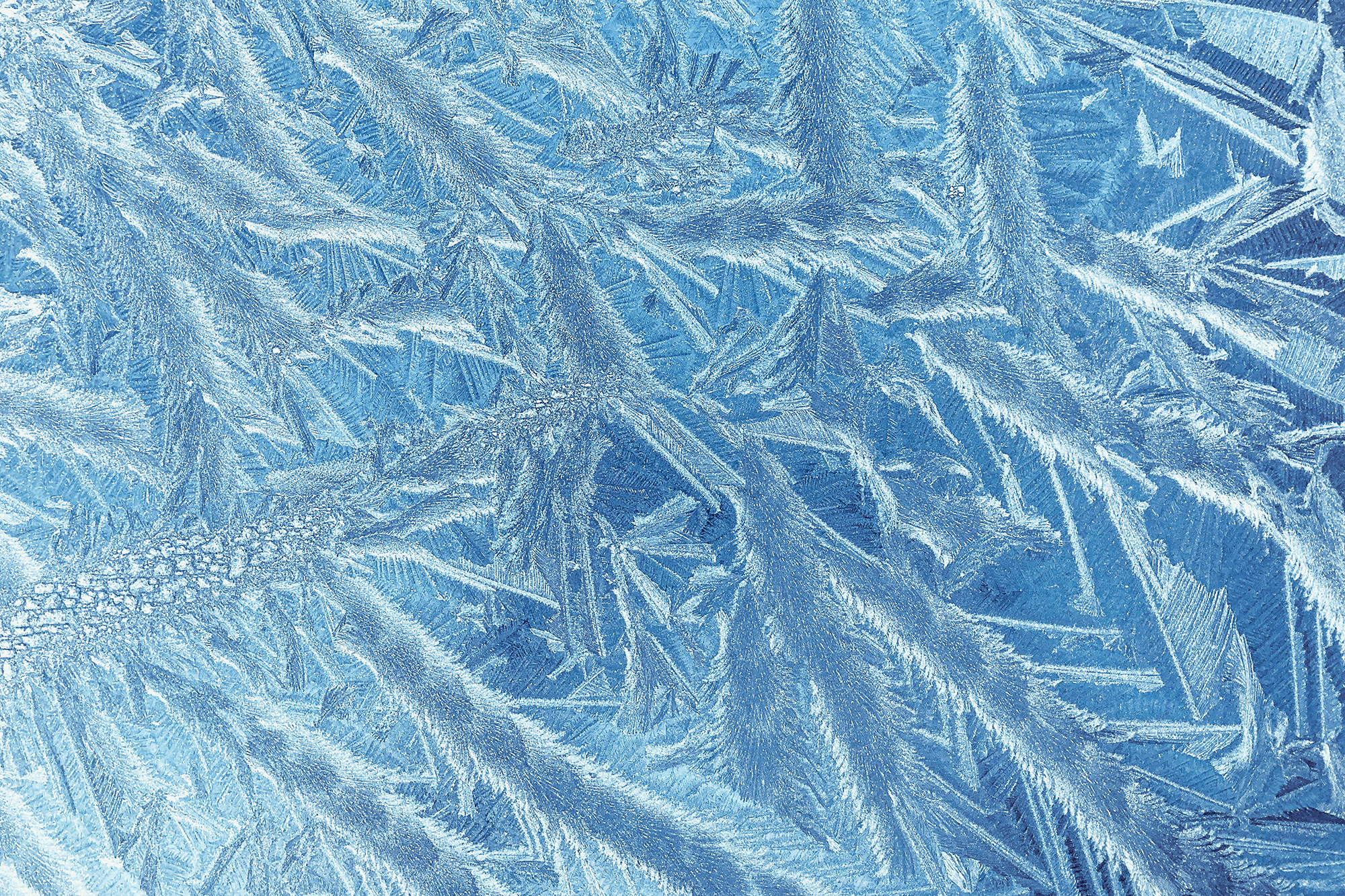
    The researchers found that frost was later to form and slower to spread on these superhydrophobic surfaces, which could be valuable for applications like the heat exchanger found in heat pumps. Once a heat exchanger’s finned surface is frost-covered, its efficiency plummets. The team suggests that coating these surfaces to be superhydrophobic could help keep them operating efficiently longer in cold and humid conditions. (Image credit: frost – K. Shimizu, experiment – S. Yang et al.; research credit: S. Yang et al.; via Physics World)
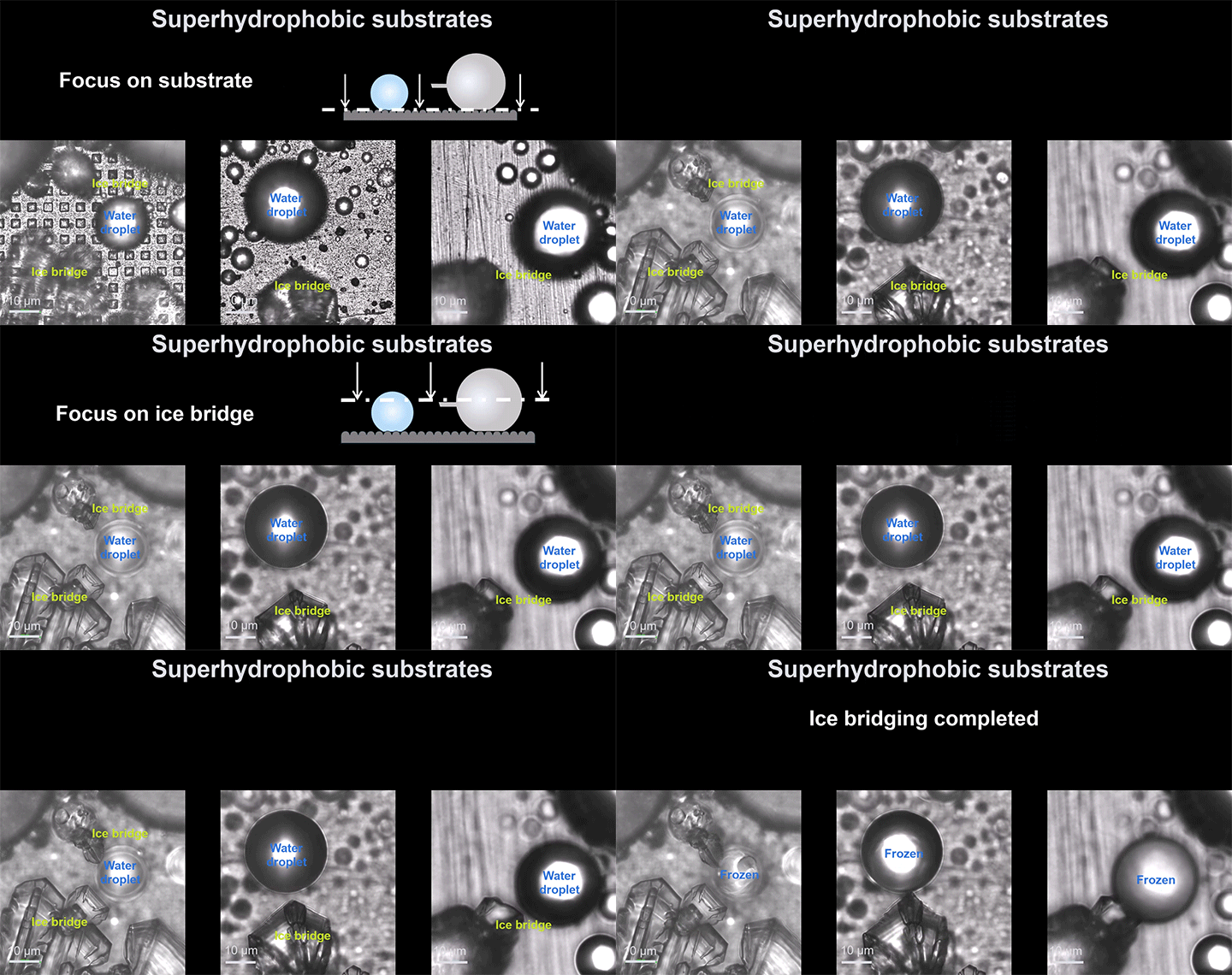

    Animation of a suspended ice bridge growing between water droplets on a superhydrophobic surface.
    Animation of a suspended ice bridge growing between water droplets on a superhydrophobic surface.
    Fediverse Reactions
  • Ice Bridges

    Ice Bridges

    During winter, Canada’s Arctic Archipelago, home of the Northwest Passage, generally fills with sea ice. These ice bridges form in the long and narrow straits between islands. A new paper models ice bridge formation and break-up, showing that ice bridges can only form when ice floating in the strait is sufficiently thick and compact. To form a bridge, wind must first push the ice together and then frictional forces between individual pieces of ice must be large enough to resist wind or water driving them apart. As temperatures drop, the individual ice chunks can then freeze together into solid sheets until summer returns.

    The existence of a critical thickness and density of the ice field for ice bridge formation has important implications for climate change. As Arctic temperatures warm for longer periods, these waters may no longer generate ice of sufficient thickness and quantity for ice bridges to form. Since ice bridges serve as important oases for marine mammals and sea birds and help isolate Arctic sea ice from warmer waters, their loss will have a profound impact on both Arctic ecology and global climate. (Image credit: NASA Earth Observatory; research credit: B. Rallabandi et al.; via Physics Buzz)