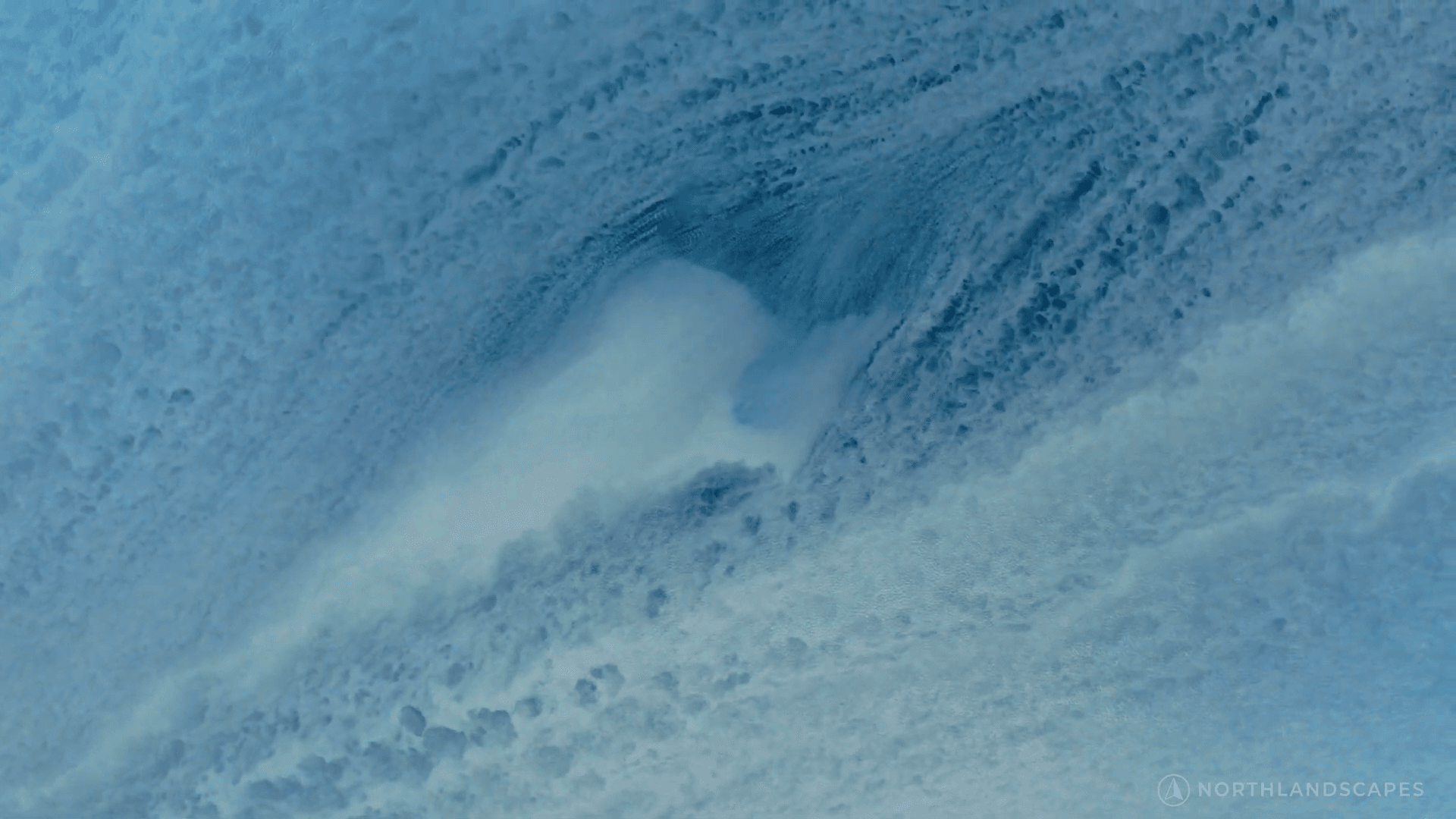
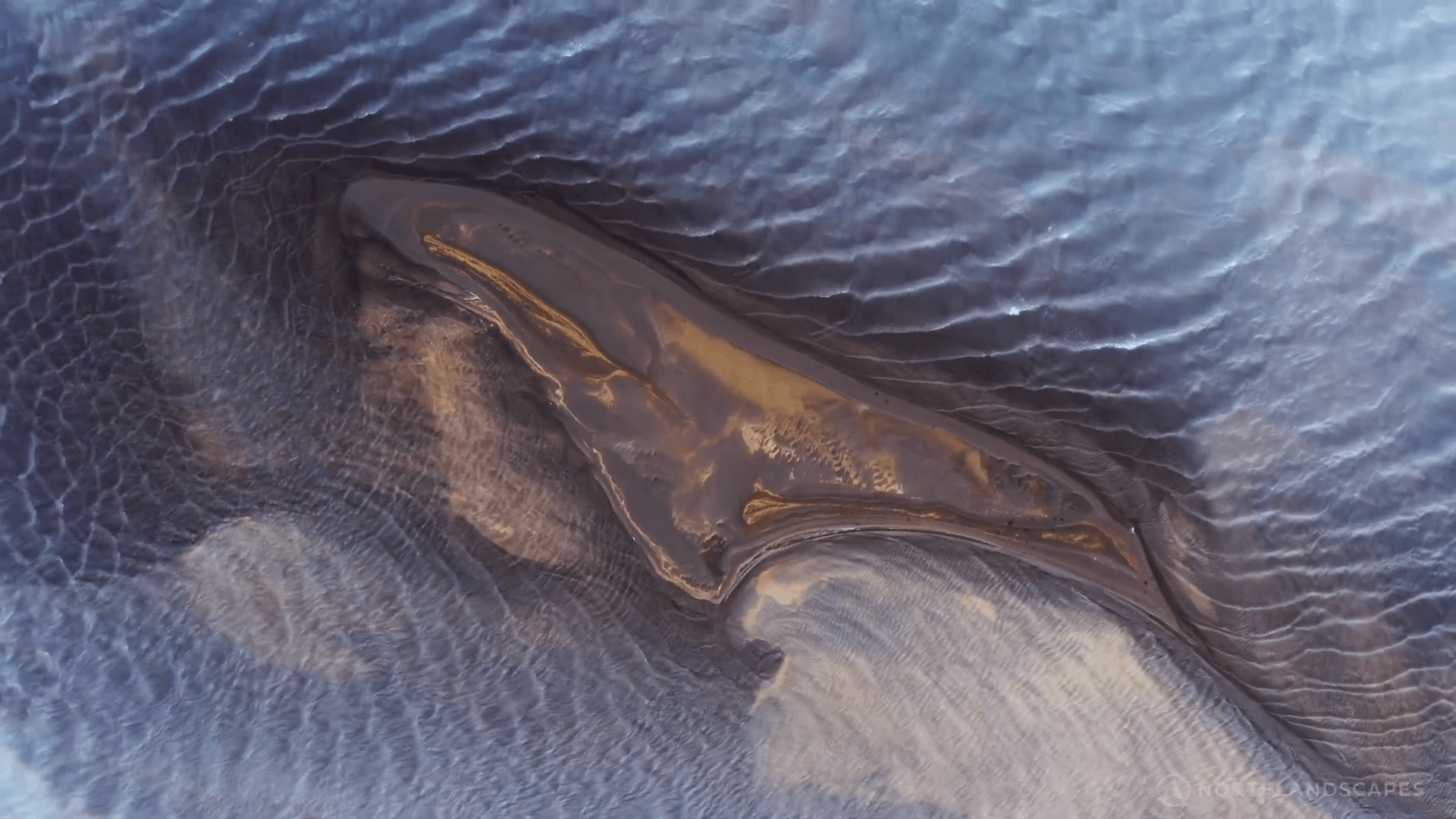
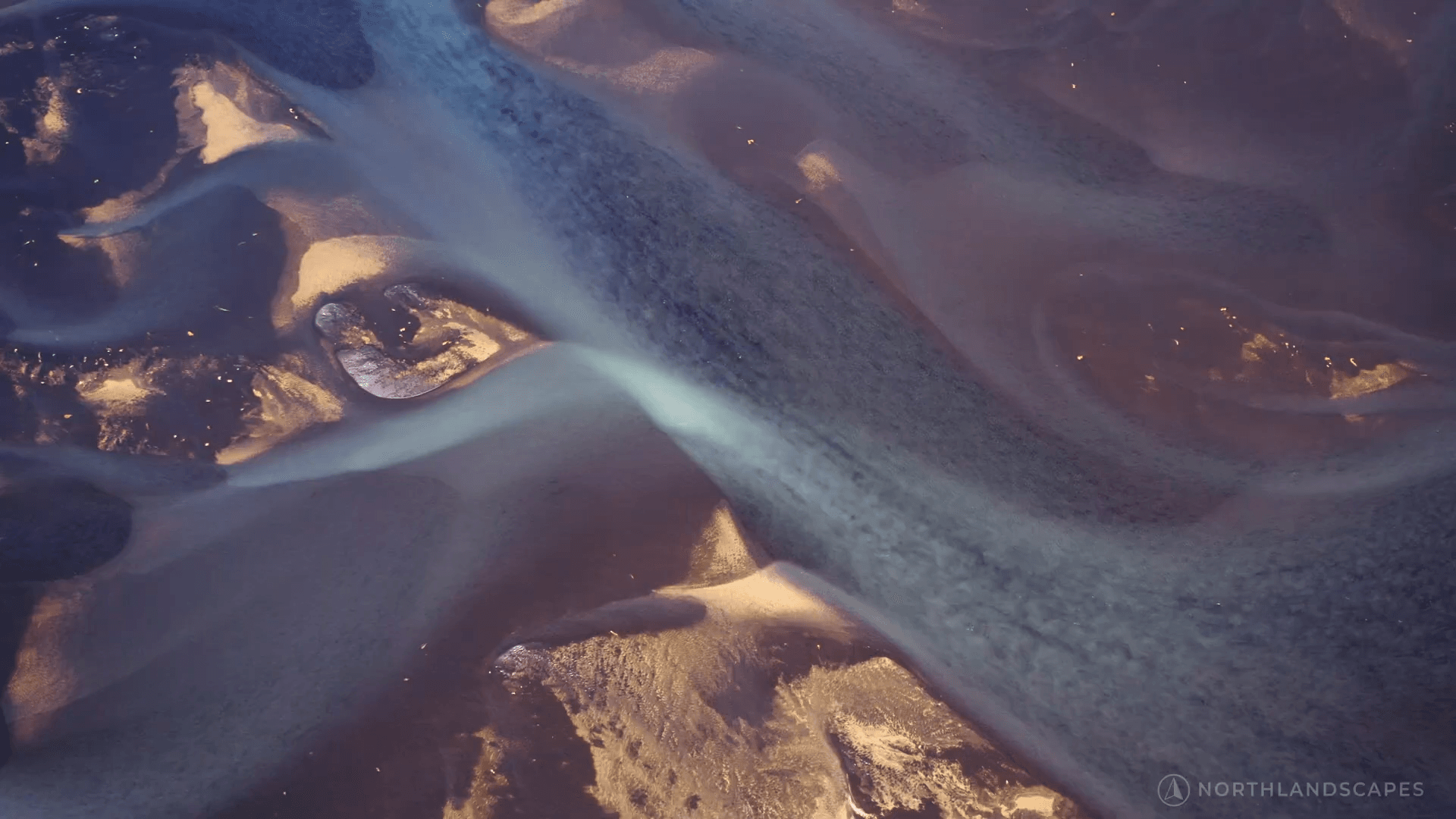
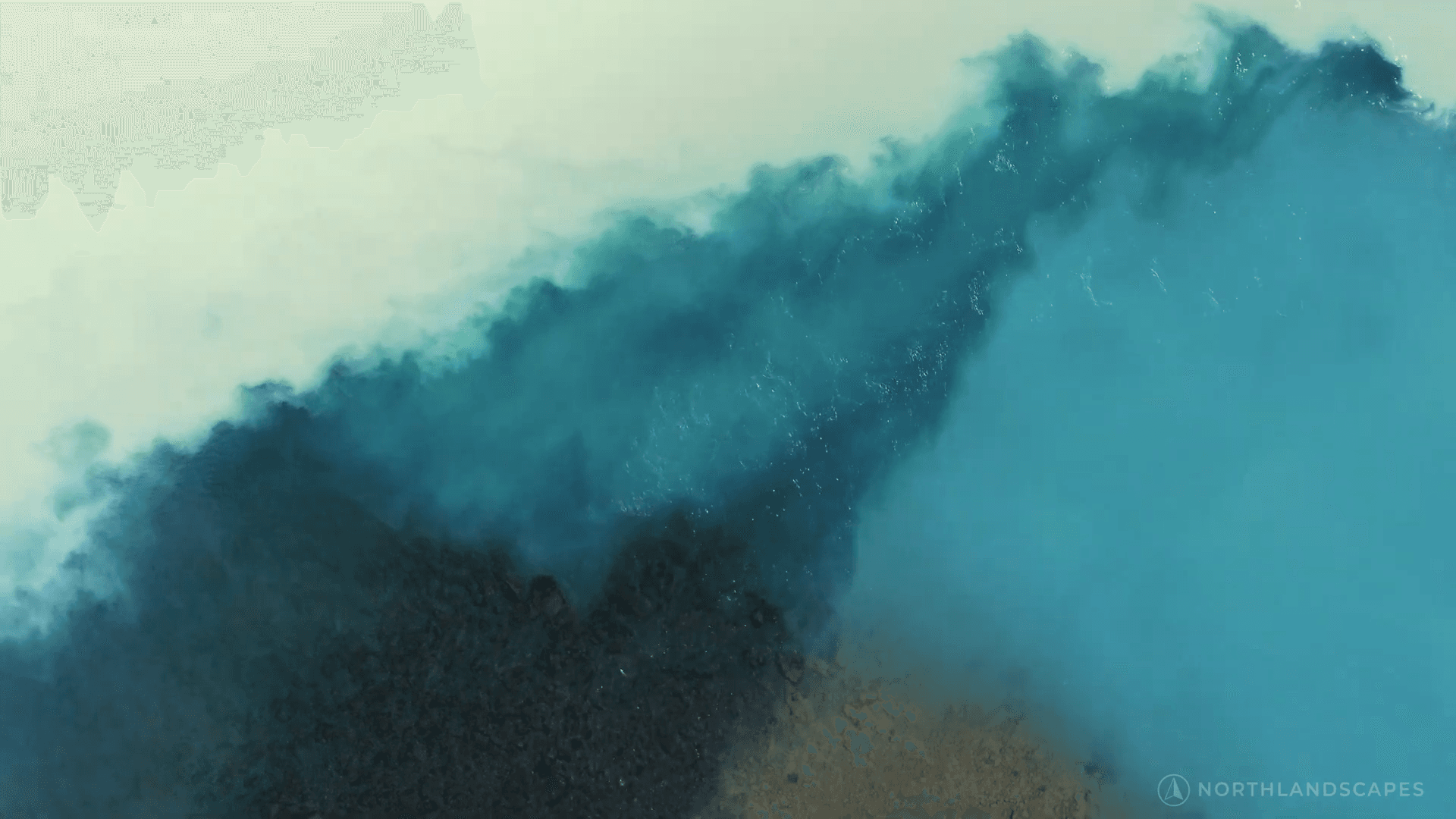
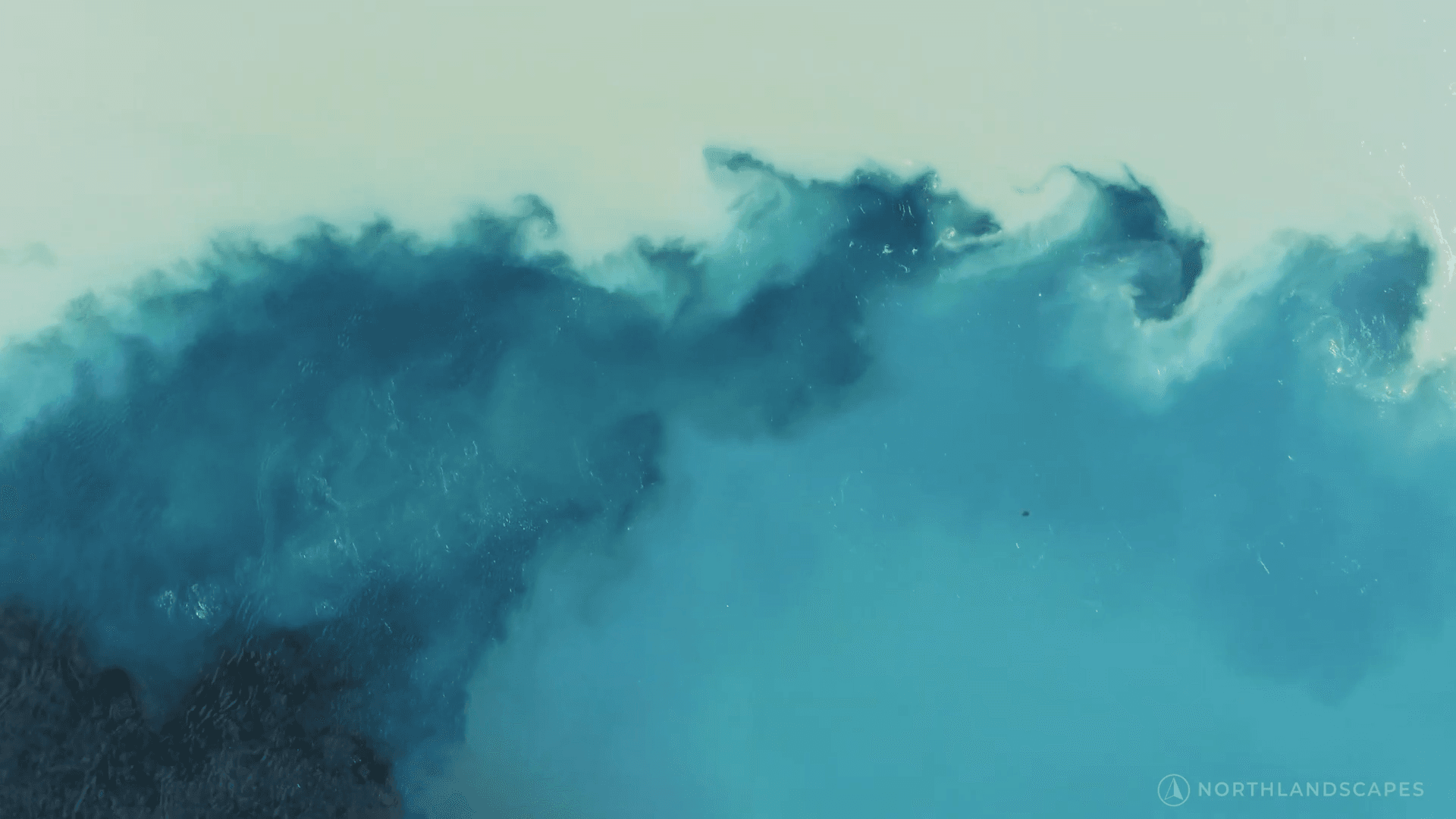
Glacier-fed rivers are often rich in colorful sediments. Here, photographer Jan Erik Waider shows us Iceland’s glacial rivers flowing primarily in shades of blue. While the wave action and diffraction in these videos is great, the real star is the turbulent mixing where turbid and clearer waters meet. Watch those boundaries, and you’ll see shear from flows moving at different speeds which feeds the ragged, Kelvin-Helmholtz-unstable edge between colors. (Video and image credit: J. Waider; via Laughing Squid)

Tag: turbidity

Lagoon Flows
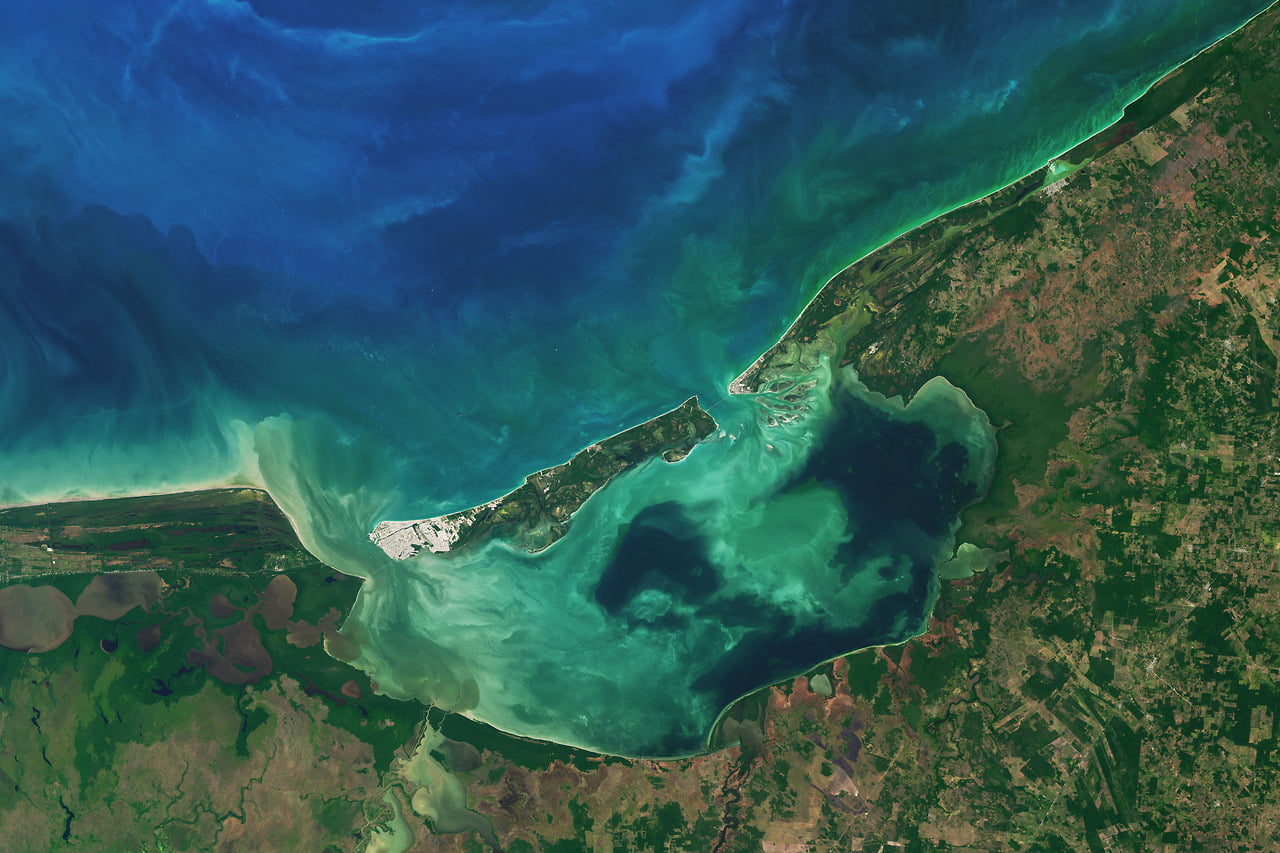
The meeting of land and sea often creates a rich and colorful environment. This satellite image shows Mexico’s Laguna de Términos, a coastal lagoon off the Gulf of Mexico. A skinny barrier island forms the lagoon’s two connections to the ocean; the eastern side is the usual inlet (right), while the western side forms an outlet. Rivers feed freshwater into the lagoon from the south and southwest. These introduce sediments that cause some of the lighter swirls in the image. Winds and tides also contribute to this turbidity. The sheltered nature of the lagoon allows fresh and salt water to mix gradually, providing harbor for many forms of life. Oyster beds thrive in the river mouths; seagrasses prefer the calmer, saltier waters, and mangrove trees line the shore, slowly desalinating water for themselves as their roots shelter young fish and shrimp. (Image credit: NASA Earth Observatory)

Underwater Landslides
Turbidity currents are a gravity-driven, sediment-laden flow, like a landslide or avalanche that occurs underwater. They are extremely turbulent flows with a well-defined leading edge, called a head. Turbidity currents are often triggered by earthquakes, which shake loose sediments previously deposited in underwater mountains and canyons. Once suspended, these sediments make the fluid denser than surrounding water, causing the turbidity current to flow downhill until its energy is expended and its sediment settles to form a turbidite deposit. By sampling cores from the seafloor, scientists studying turbidites can determine when and where magnitude 8+ earthquakes have occurred over the past 12,000+ years! (Video credit: A. Teijen et al.; submitted by Simon H.)
Do you enjoy FYFD and want to help support it? Then please consider becoming a patron!