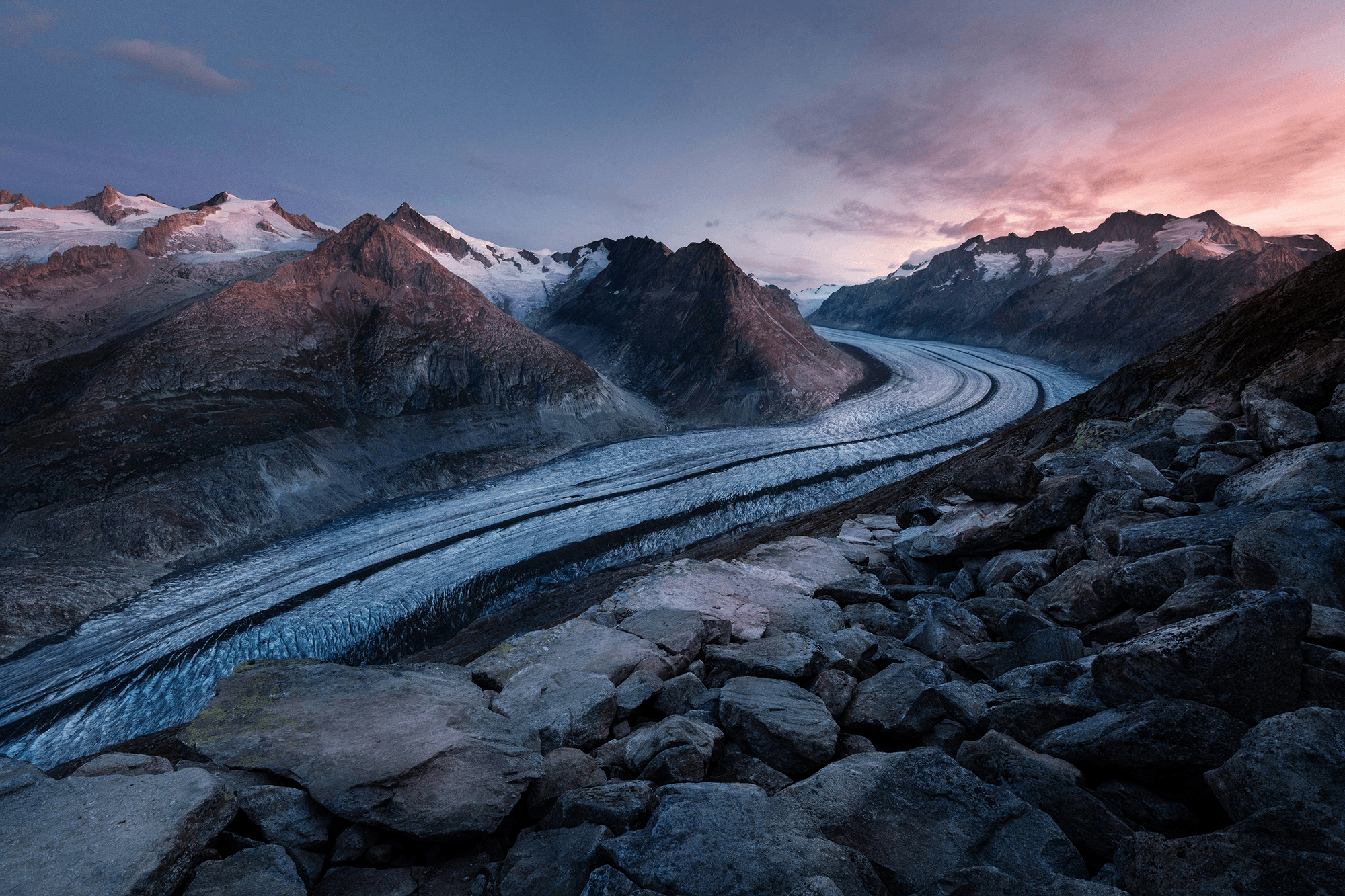
Under the cold temperatures and immense pressures of a glacier, ice does not always behave in ways we’d expect. For example, cutting through ice using the pressure of a weighted wire does not break an ice block in two; as the wire passes through the ice, the melted water refreezes in its wake, leaving an intact block. Known as regelation, this process is one way that glaciers flow past obstacles in their path.
Although many experiments demonstrate regelation for ice with temperatures near freezing, the process occurs in colder ice, too. A new study combines data across a wide range of temperatures with a new physical model of regelation to show how the process changes with temperature. It seems that relatively small temperature changes drastically affect how much meltwater forms around the wire and how slowly the ice refreezes. (Image credit: S. Ferrara; video credit: SciTube; research credit: C. Meyer et al.)