Tag: eggs

  • Teaching Diffusion With Eggs

    Teaching Diffusion With Eggs

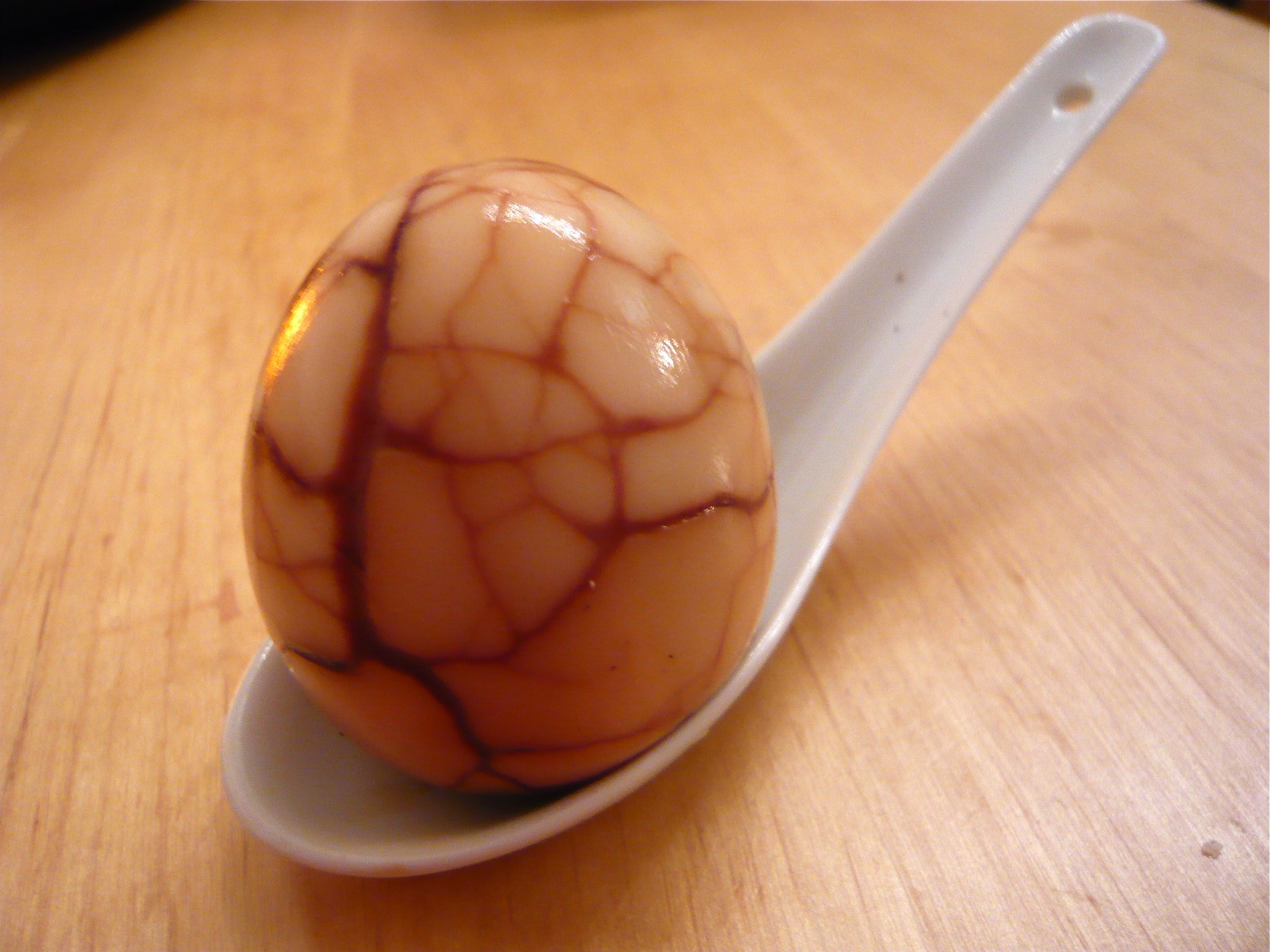
    Many cultures around the world marinate hard-boiled eggs — like pickled eggs in Europe or tea- and soy-infused eggs from Asia. These delicacies offer a fun (and tasty) way to demonstrate the concept of diffusion, the tendency of a substance to move from areas of high concentration to low concentration via random molecular motion.

    Simply steep peeled, hard-boiled eggs in your sauce (or food dye) of choice. Remove an egg every so often and slice it in half to see how far the sauce traveled. You can also play with the temperature to accelerate the diffusion. The longer an egg steeps and the hotter its surroundings, the further into the egg white the sauce will diffuse! (Image credit: Wordridden; research credit: C. Emeigh et al.)
  • This Is Your Brain

    This Is Your Brain

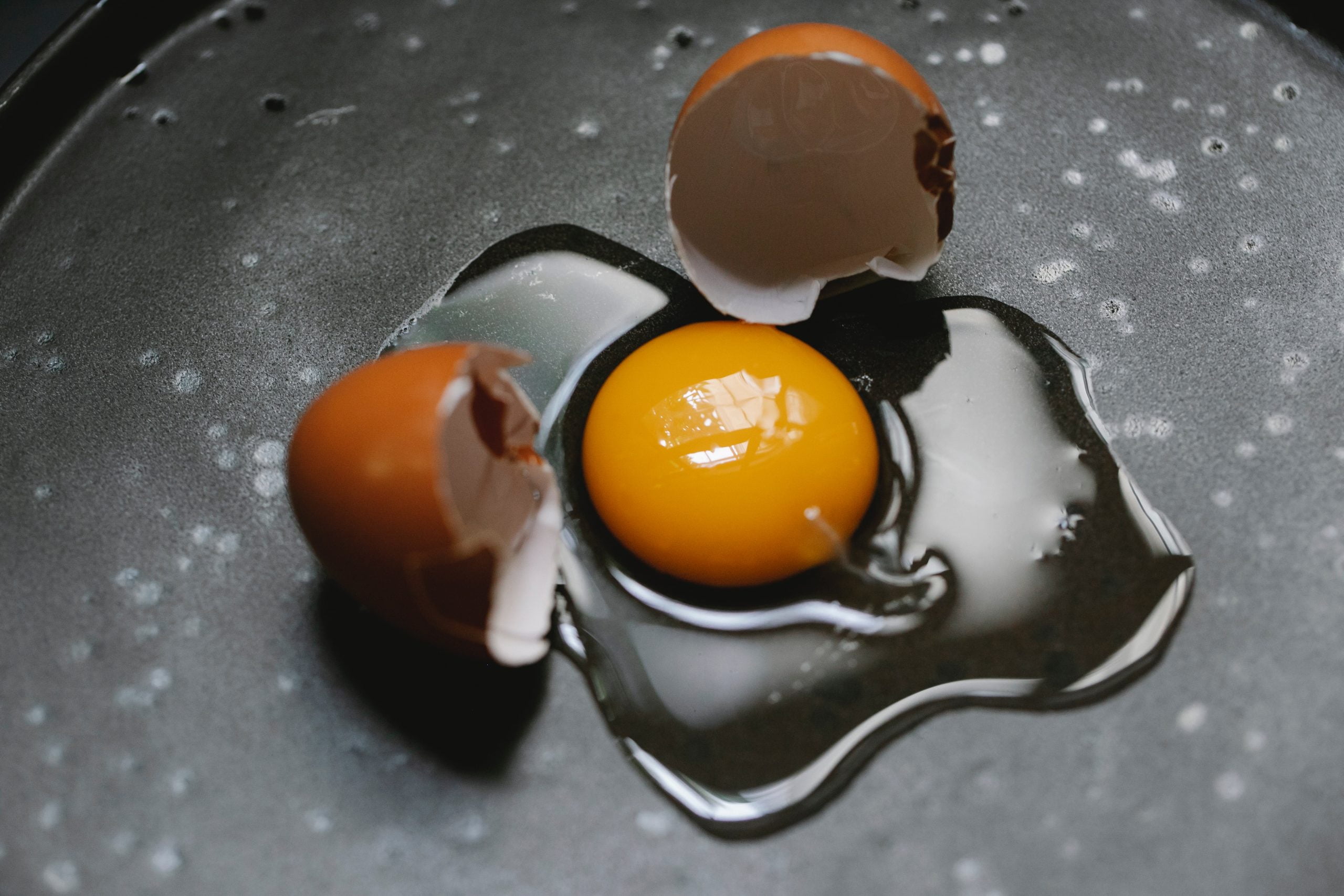
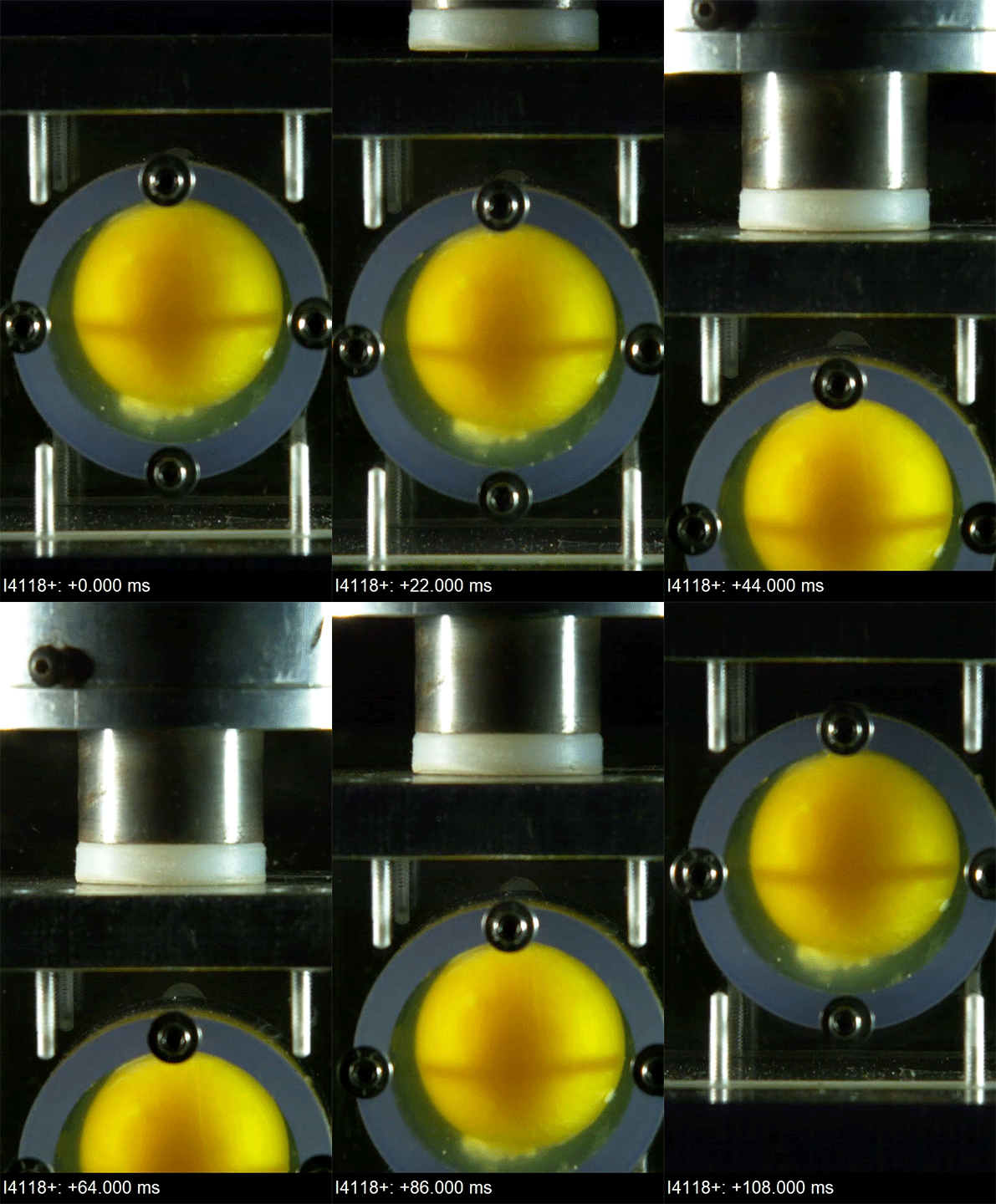
    The human brain, like an egg, consists of soft matter bathed in a fluid and encased in a hard shell. To better understand how our brains respond to sudden accelerations, researchers looked at how egg yolks behave. In a purely translational impact (Image 1), the egg yolk deforms very little. But rotational motions (Images 2 and 3) cause major effects because of the imbalance between pressure forces outside the yolk’s membrane and the centrifugal forces within it. Rotational deceleration was particularly potent (Image 3).

    The researchers’ findings are consistent with concussion research, which has shown that impacts with rotational acceleration/deceleration inside the skull are the most damaging. Based on the yolk’s deformation, such impacts likely stretch neurons and disturb their delicate network. (Image credit: cracked egg – K. Nielsen, others – J. Lang et al.; research credit: J. Lang et al.; via Physics World; submitted by Kam-Yung Soh)