Tag: soft matter

  • Rolling Down Soft Surfaces

    Rolling Down Soft Surfaces

    Place a rigid ball on a hard vertical surface, and it will free fall. Stick a liquid drop there, and it will slide down. But researchers discovered that with a soft sphere and a soft surface, it’s possible to roll down a vertical wall. The effect requires just the right level of squishiness for both the wall and sphere, but when conditions are right, the 1-millimeter radius sphere rolls (with a little slipping) down the wall.

    Rolling requires torque, something that’s usually lacking on a vertical surface. But the team found that their soft spheres got the torque needed to roll from their asymmetric contact with the surface. More of the sphere contacted above its centerline than below it. The researchers compared the way the sphere contacted the surface to a crack opening (at the back of the sphere) and a crack closing (at the front of the sphere). That asymmetry creates just enough torque to roll the sphere slowly. The team hopes their discovery opens up new possibilities for soft robots to climb and descend vertical surfaces. (Image and research credit: S. Mitra et al.; via Gizmodo)


    Fediverse Reactions
  • Ultra-Soft Solids Flow By Turning Inside Out

    Ultra-Soft Solids Flow By Turning Inside Out

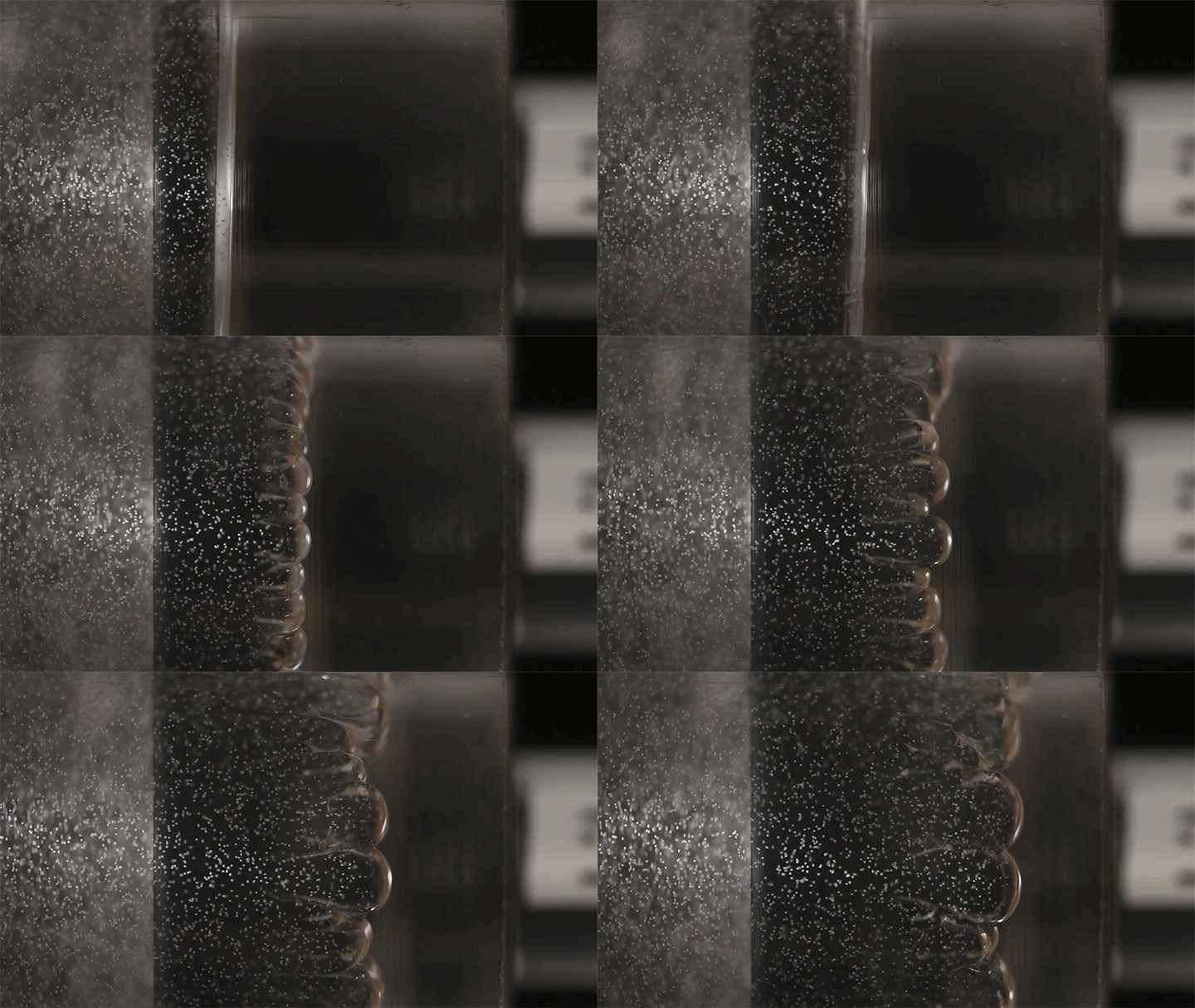
    Can a solid flow? What would that even look like? Researchers explored these questions with an ultra-soft gel (think 100,000 times softer than a gummy bear) pumped through a ring-shaped annular pipe. Despite its elasticity — that tendency to return to an original shape that distinguishes solids from fluids — the gel does flow. But after a short distance, furrows form and grow along the gel’s leading edge.

    Front view of an ultra-soft solid flowing through an annular pipe. The furrows forming along the face of the gel are places where the gel is essentially turning itself inside out.
    Front view of an ultra-soft solid flowing through an annular pipe. The furrows forming along the face of the gel are places where the gel is essentially turning itself inside out.

    Since the gel alongside the pipe’s walls can’t slide due to friction, the gel flows by essentially turning itself inside out. Inner portions of the gel flow forward and then split off toward one of the walls as they reach the leading edge. This eversion builds up lots of internal stress in the gel, and furrowing — much like crumpling a sheet of paper — relieves that stress. (Image and research credit: J. Hwang et al.; via APS News)

    Fediverse Reactions
  • Cooking Perfect Cacio e Pepe

    Cooking Perfect Cacio e Pepe

    In cooking, sometimes the simplest recipes are the toughest to master. Cacio e pepe — a classic three-ingredient Italian pasta — is an excellent example. Made properly, the sauce of cheese and black pepper combines with starchy water to coat the pasta in a uniform, cheesy sauce. Or, if you’re me, you wind up with a pasta sauce flecked with stringy clumps of melted cheese. Fortunately for those of us who have yet to master this one, a new research paper has us covered with tips to make the perfect cacio e pepe.

    The key to that elusive silky sauce, they found, is the starch – water – cheese combination. Your water needs just the right amount of starch — they found that between 1 – 4% starch by (cheese) mass worked. If the starch concentration is too low (which can easily happen in pasta water), you’ll get the clumpy cheese mess that so frequently happens in my kitchen. Temperature is also critical; if the water is too hot when it’s added, then it can destabilize the sauce. Check out the pre-print’s Section V for the scientific, supposedly foolproof, recipe. I know I’ll be trying it! (Image credit: O. Kadaksoo; research credit: G. Bartolucci et al. pre-print; via APS News)

    Fediverse Reactions
  • “Bulging Balloons”

    “Bulging Balloons”

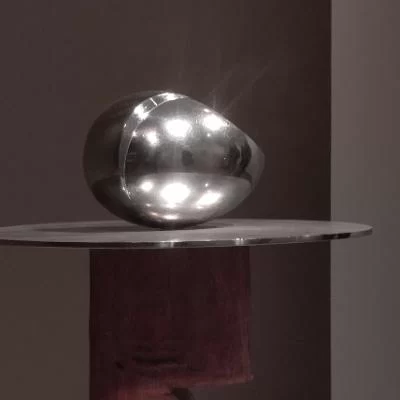
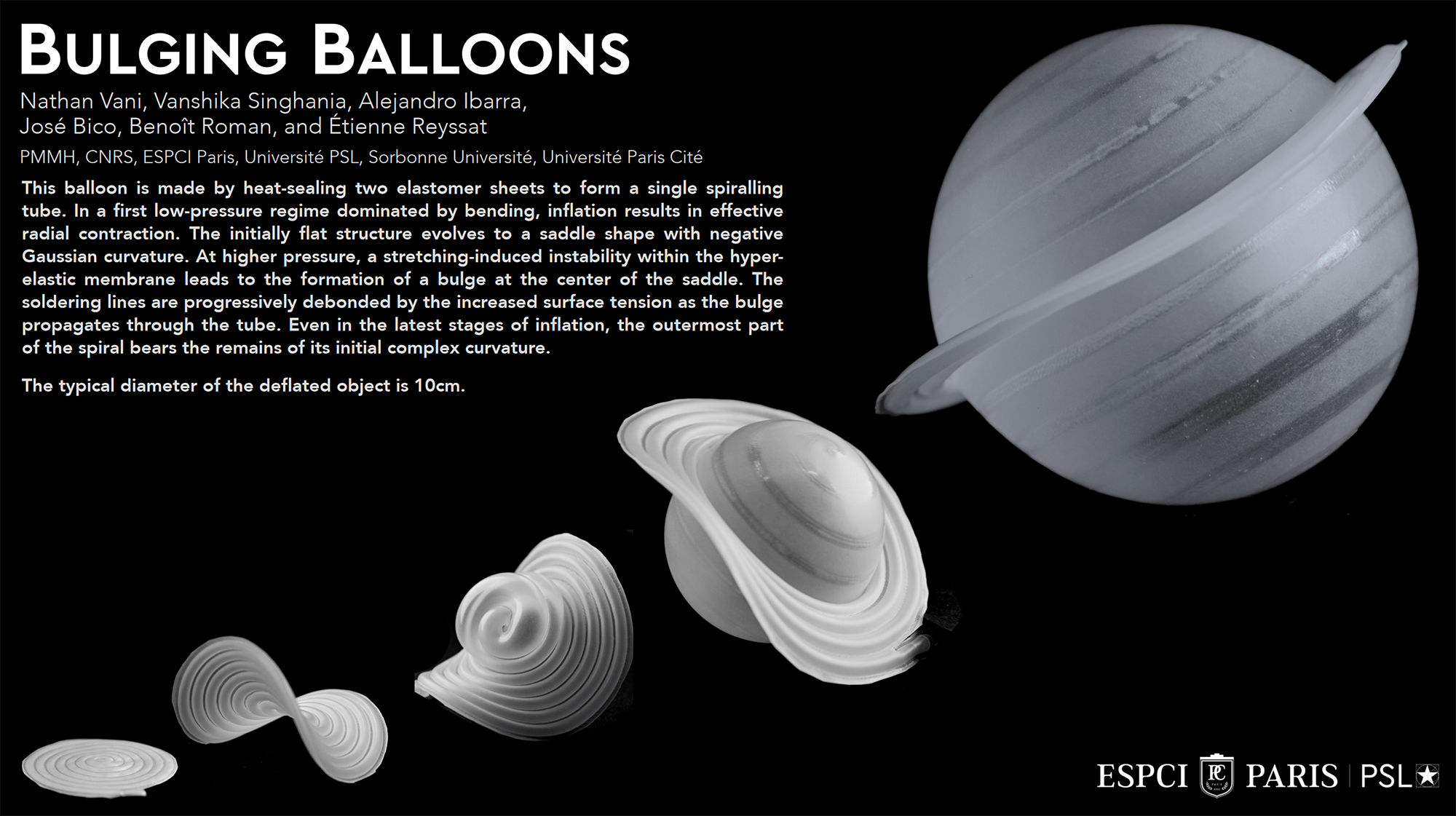
    This planet-like balloon started out as two elastomer sheets, heat-sealed together into a spiraling tube. As the balloon was inflated, it changed from flat to a saddle-like shape. With more air, the pressure inside increased, triggering an instability that caused the middle of the balloon to bulge. As inflation continued, the central bulge expanded, unbonding layer after layer of the seal. Even late in inflation, the balloon maintains hints of its original shape in the form of a ring around the Jovian bulge in the middle. (Image credit: N. Vani et al.)

    Fediverse Reactions
  • Why Creases Don’t Disappear

    Why Creases Don’t Disappear

    Flex your fingers and you’ll see your skin fold into well-defined creases. Many soft solids (including old apples) fold this way, and like your skin, the creases never fully disappear, even when the stress is removed. A recent study finds that surface tension and contact-line-pinning are critical to the irreversibility of these creases.

    The authors studied sticky polymer gel layers under a confocal microscope as the gel folded. In doing so, they found that surface tension dictates the microscopic geometry of a fold, causing the two sides of a surface to touch. They also found that completely unfolding a creased surface requires more energy than folding it in the first place did because the folded surfaces adhere to one another.

    When unfolded, the crease behaves somewhat like a droplet on a rough surface. Such droplets move in fits; their contact line stays pinned to the rough microscopic peaks of the surface until there’s enough energy to overcome that attachment and the contact line jumps to another position. Similarly, a creased surface cannot simply unfold smoothly. Adhesion ensures that part of the crease remains, serving as a starting point for the next fold-unfold cycle. (Image credit: C. Rainer; research credit: M. van Limbeek et al.; via APS Physics; submitted by Kam-Yung Soh)

  • Storing Memory in Bubbles

    Storing Memory in Bubbles

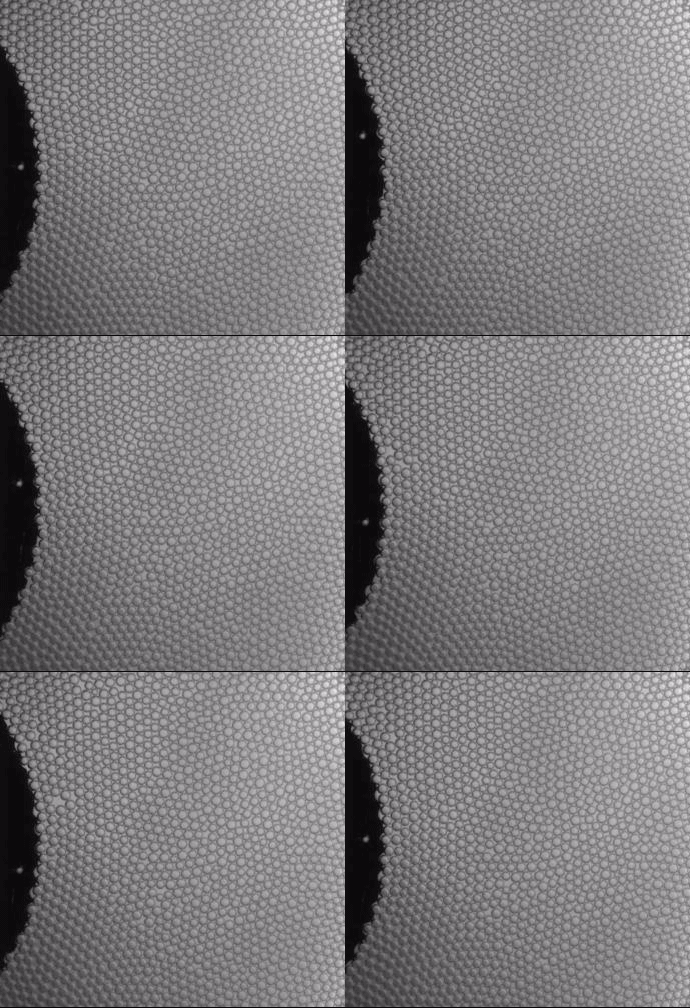
    Soft systems like this bubble raft can retain memory of how they reached their current configuration. Because the bubbles are different sizes, they cannot pack into a crystalline structure, and because they’re too close together to move easily, they cannot reconfigure into their most efficient packing. This leaves the system out of equilibrium, which is key to its memory. 

    By shearing the bubbles between a spinning inner ring (left in image) and a stationary outer one (not shown) several times, researchers found they they could coax the bubbles into a configuration that was unresponsive to further shearing at that amplitude. 

    Once the bubbles were configured, the scientists could sweep through many shear amplitudes and look for the one with the smallest response. This was always the “remembered” shear amplitude. Effectively, the system can record and read out values similar to the way a computer bit does. Bubbles are no replacement for silicon, though. In this case, scientists are more interested in what memory in these systems can teach us about other, similar mechanical systems and how they respond to forces. (Image and research credit: S. Mukherji et al.; via Physics Today; submitted by Kam-Yung Soh)