Tag: agriculture

  • Making Drops Stick

    Making Drops Stick

    As you may have noticed when washing vegetables, many plants have superhydrophobic leaves. Water just beads up on their surface and slides right off. This is a useful feature for plants that want to direct that water toward their roots, but it’s a frustration in agriculture, where that superhydrophobicity means extra spraying of pesticides in order to get enough to stick to the plant.

    But that may not be the case for much longer. Researchers have found that adding a little polymer to water droplets (right) can suppress their ability to rebound (left) from superhydrophobic surfaces. Above a critical concentration, the high shear rate of the droplet as it tries to detach activates the viscoelastic properties of the polymer. That viscoelasticity suppresses the rebound, keeping the droplet attached. That’s good news for everyone, since it means less spraying is needed to protect crops. (Image and research credit: P. Dhar et al.)

  • How Rain Can Spread Pathogens

    How Rain Can Spread Pathogens

    Rainfall can help spread pathogens from an infected plant to healthy ones. This transfer can happen both through droplets and by dry-dispersal of pathogen spores (top). When a raindrop hits a leaf, its initial spread triggers a vortex ring of air that can lift thousands of dry spores into a swirling trajectory (bottom). That boost in height carries spores beyond the slower wind speeds of the plant’s boundary layer and into faster air streams that disperse it toward healthy plants. (Image and research credit: S. Kim et al.)

  • Featured Video Play Icon

    The Sharpshooter Insect

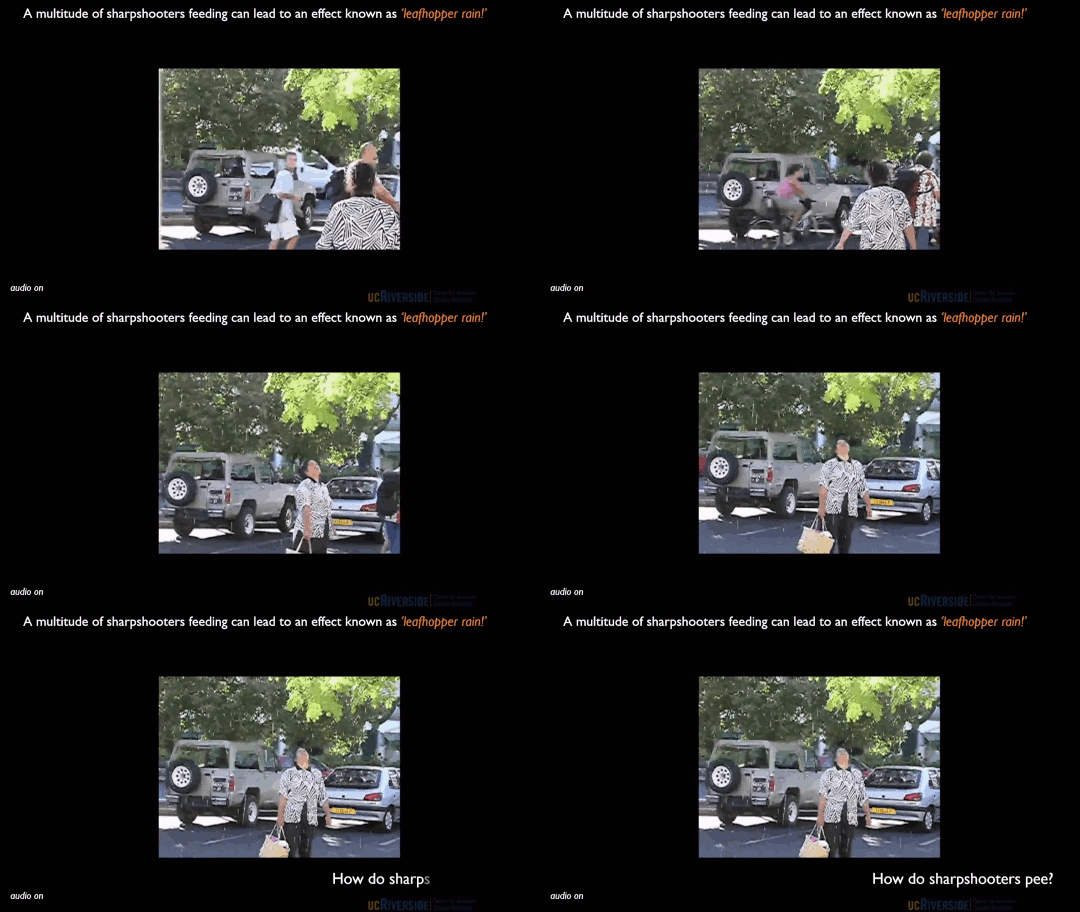
    The sharpshooter is a small, sap-sucking insect capable of consuming more than 300 times its body weight in fluid each day. To sustain that level of intake, the insect also has to have a robust mechanism for expelling excess fluid, and that particular talent has earned the insect the nickname of the “pissing fly”. Together a group of sharpshooters can expel enough fluid to imitate rain (top).

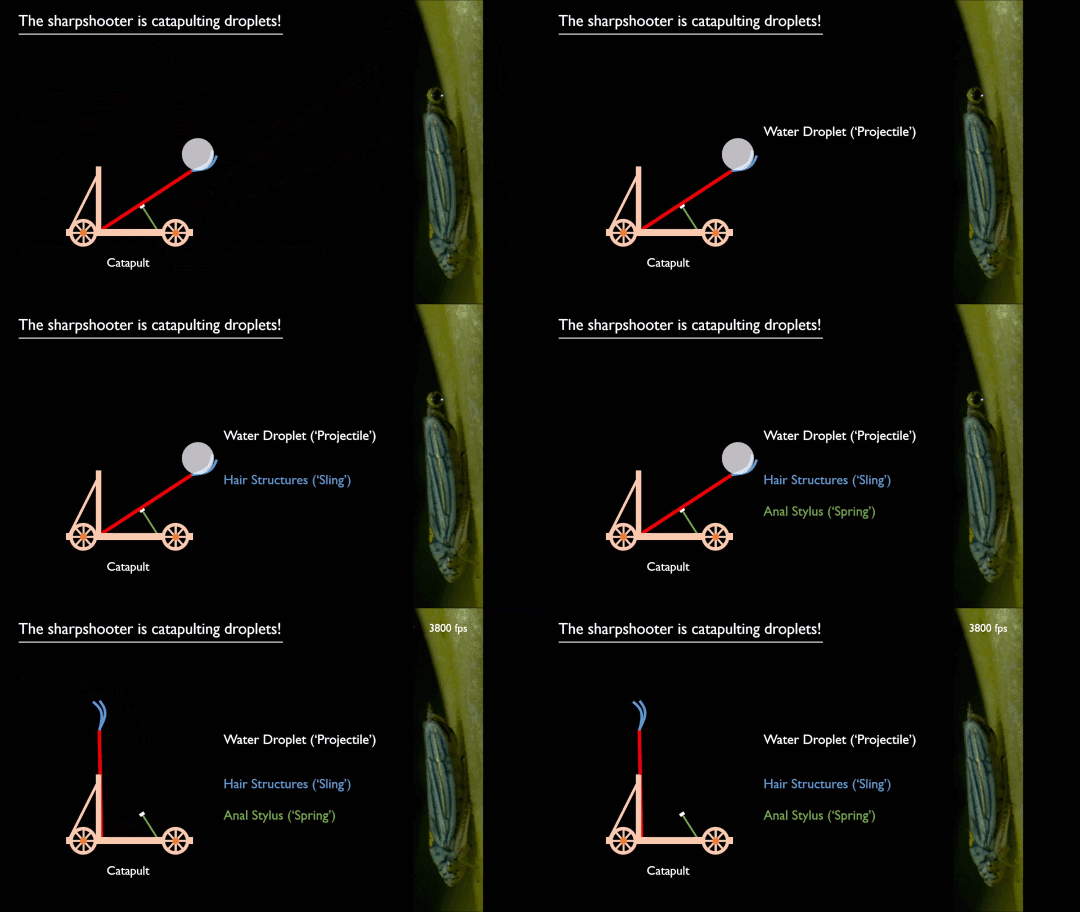
    Individually, the insects form a droplet on hydrophobic hairs near their anus. Once the droplet is large enough, those hairs bend like a spring, and the droplet gets catapulted off the insect with an acceleration greater than 20g. That makes it among the fastest reactions in the natural world – more than twenty times the acceleration of a cheetah. Understanding this mechanism is valuable for engineers building robotics as well as for finding ways to counter the agricultural menace the sharpshooters present when it comes to spreading diseases among infected crops. (Image and video credit: E. Challita et al.; via WashPo; submitted by Marc A.)

  • Featured Video Play Icon

    Making Droplets Stick

    Lots of plants have evolved leaves that are superhydrophobic – that is, water repellent. For a plant, this makes a lot of sense. A superhydrophobic leaf will make water bounce and run off, draining down to where the plants roots can drink it up. But this same feature can be a frustration to farmers who spread pesticides by spraying plants. They need the pesticide to stick to the leaves if it’s to deter insects, and the superhydrophobicity of the leaves forces them to spray more pesticides in the hopes of getting some to stick. Researchers at MIT are looking to change this status quo with a few biodegradable polymer additives that can counter the leaves’ superhydrophobic tendencies and help droplets stick to the surface. This could reduce the amount of pesticides needed to protect crops. (Video credit: MIT)

  • Featured Video Play Icon

    Rain-spread Pathogens

    Like humans, plants can spread pathogens to one another. Although scientists had observed correlations between rainfall and the spread of diseases among plants, this study is one of the first to look at the fluid dynamics of leaf and rainfall interaction. When a raindrop hits a leaf, it doesn’t simply splash as it would against an immobile surface. The impact of the drop deforms the leaf, and the plant’s rebound significantly affects the trajectory and size of the resulting droplets. Depending on factors like the leaf’s stiffness, a large drop, carrying many pathogens, may rebound and splatter onto a neighboring leaf. Other leaves tend to catapult out many smaller droplets, which may fly farther afield but carry fewer pathogens. For more, check out the press release or the original research paper. (Video credit: Massachusetts Institute of Technology; research credit: Bourouiba Research Group)