Tag: fungi

  • Featured Video Play Icon

    Splash-Spread Mushrooms

    Bird’s nest fungi are tiny — only about a centimeter wide. When mature, they form a curved splash cap containing spore sacs known as peridioles. Then they await rain. When a lucky drop hits the mushroom, it flings the peridioles out of their nest. Some will use sticky cords to cling to nearby blades of grass, setting them up to eventually hitch a ride to elsewhere with a grazing herbivore. It’s an impressive journey for a teeny spore sac, and it all starts with a single drop of rain. (Image and video credit: Deep Look)
  • Fungal Fluid Dynamics

    Fungal Fluid Dynamics

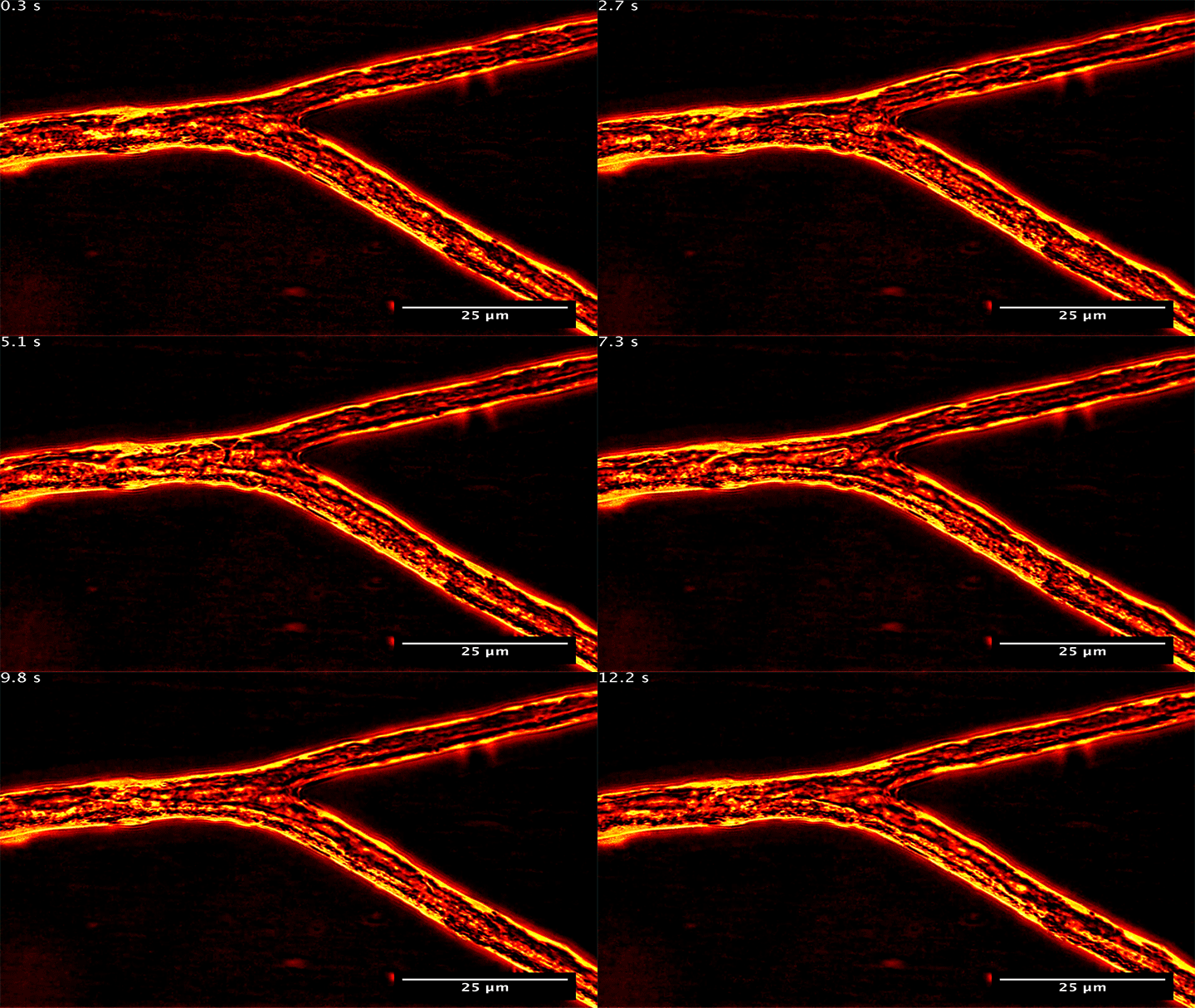
    Many plants gain the soil-bound nutrients they need by trading with symbiotic fungi. Underground, these fungi spread networks that gather and store phosphorus, which they then trade with host plants to get the carbon they need. Research shows that the fungi can be shrewd traders, moving phosphorus from nutrient-rich areas to poorer ones in order to maximize their trade gains.

    What you see above are snapshots of some of this transport within the fungal network. Notice how flow within the branching network changes direction. The fungus can force these flow reversals in a matter of seconds, allowing it to move nutrients to wherever the best returns are found. (Image and research credit: M. Whiteside et al.)

  • Spore Squirting

    Spore Squirting

    The fungus Pilobolus spreads its spores with a squirt cannon. Each spore sits on the end of a round fluid-filled pod. Like many plants, the fungus uses a process called osmosis to pump water into the pod. Through osmosis, the fungus increases the concentration of certain molecules inside the pod, which draws water into the pod and increases its pressure. Eventually, the pod ruptures, sending the spore aloft on a jet of fluid that accelerates it at 20,000+g! (Image credit: BBC Earth Unplugged, source; research credit: L. Yafetto et al.)

  • Featured Video Play Icon

    Mushrooms Make Their Own Breeze

    Mushrooms don’t rely on a stray breeze to spread their spores; they generate their own air currents instead. The key is evaporation. The mushroom cap contains large amounts of water, and, as this water evaporates, it cools the mushroom and the air next to it. This cool air is denser than the surrounding air, and so tends to spread out and convect. At the same time, though, the water vapor that evaporated from the mushroom is less dense than nearby air, which helps it rise. This combination of spreading and rising air carries spores away from the mushroom cap and, as seen in the video above, can combine to form beautiful and complex currents that spread the spores. (Video credit: E. Dressaire et al.)