Month: March 2023

  • Optimal Bubble Clusters

    Optimal Bubble Clusters

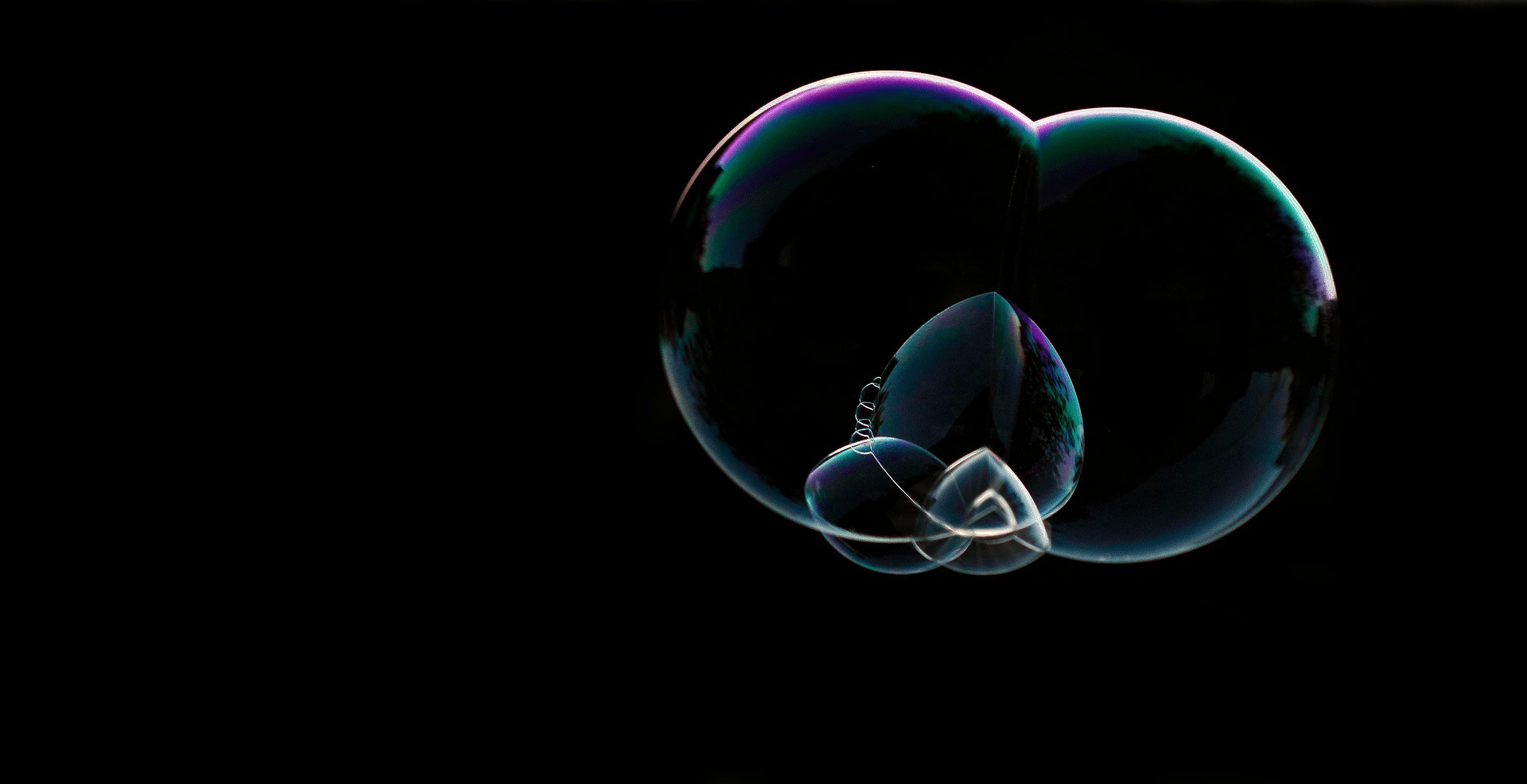
    With a bubble wand, it’s quite easy to create clusters of two or more soap bubbles. These clusters seem to instantly find the lowest energy state, forming a shape that minimizes the cluster’s surface area (including interior walls) for the volume of air they enclose. But mathematicians have struggled for thousands of years to prove that this is actually the case.

    In 1995, mathematician John Sullivan had a breakthrough conjecture, at least for some types of bubble clusters. A proof for double bubble clusters quickly followed. But then progress stalled out, with the triple bubble version seemingly out of reach. But now a duo of mathematicians have published proofs for Sullivan’s bubble clusters in triple and quadruple clusters. Learn their story over at Quanta. (Image credit: N. Franz; via Quanta Magazine)

  • Dandelion Seeds

    Dandelion Seeds

    Each seed on the head of a dandelion has a preferred wind direction, according to new research. Seeds facing the breeze are most likely to release from the head, with those facing other directions holding on tens to hundreds of times harder — until their breeze comes along. To measure the force needed to pluck a dandelion seed, researchers superglued a fine wire to individual seeds and pulled from different directions. This seed-by-seed removal mimics winds from varying angles and allowed the researchers to test the directional dependence of seed release. With seeds poised to release in every direction, the dandelion ensures its successful spread. (Image credit: S. Chaudhry; research credit: J. Shields and C. Roh; via Science News; submitted by Kam-Yung Soh)

  • Turning the Beach Pink

    Turning the Beach Pink

    Lab experiments and numerical simulations can only take us so far; sometimes there’s no substitute for getting out into the field. That’s why a beach in San Diego turned pink this January and February, as researchers released a safe, non-toxic dye into an estuary. The goal is to understand how small freshwater sources mix with colder, saltier ocean waters when they meet in the surf zone. Differences in temperature and salinity both affect the waters’ density and, therefore, how they’ll combine, especially in the face of the turbulent surf. Using drones, distributed sensors, and a specially-outfitted jet ski, the researchers collect data about how the dye (and therefore the estuary’s water) spreads over the 24 hours following each dye release. Check out their experiment’s site to learn more. (Image credits: E. Jepsen/A. Simpson/UC San Diego; via SFGate; submitted by Emily R.)