Month: December 2020

  • Featured Video Play Icon

    Why Masks Cut COVID-19 Transmission So Well

    Face masks are an important tool for curtailing disease transmission, and this video explains how even imperfect masks do a much better job of protecting people than you may think. Strictly speaking, this video is not fluid dynamical — fluid dynamics plays more of a role in the details of what makes a mask effective — but the video is so good and so timely that I just have to share it. Given it a watch and then go explore the interactive essay to get an even better handle on mask mathematics. (Image and video credit: Minute Physics; see also The Multiplicative Power of Masks)

  • Featured Video Play Icon

    An Intro to Liquid Crystals

    There’s a good chance that the screen you’re using to read this uses liquid crystals, but how much do you know about this ubiquitous technology? Liquid crystals are fluids made up of molecules that orient into crystalline structures. Their usefulness for displays comes from the way they interact with light, changing the polarization of light based on their orientation. This Lutetium Project video is a great introduction to liquid crystals and some of their important properties, and, as always with LP videos, the journey is a beautiful one. (Image and video credit: The Lutetium Project)

    Want to learn how to promote your research in traditional media and online? This Friday Tom Crawford and I are presenting a free webinar on the topic as part of the Fluid Mechanics Webinar Series. Be sure to register ahead of time for the link and tune in at 4pm GMT (11am EST) on Friday. See you there!

  • Sensing Obstacles Through Flow

    Sensing Obstacles Through Flow

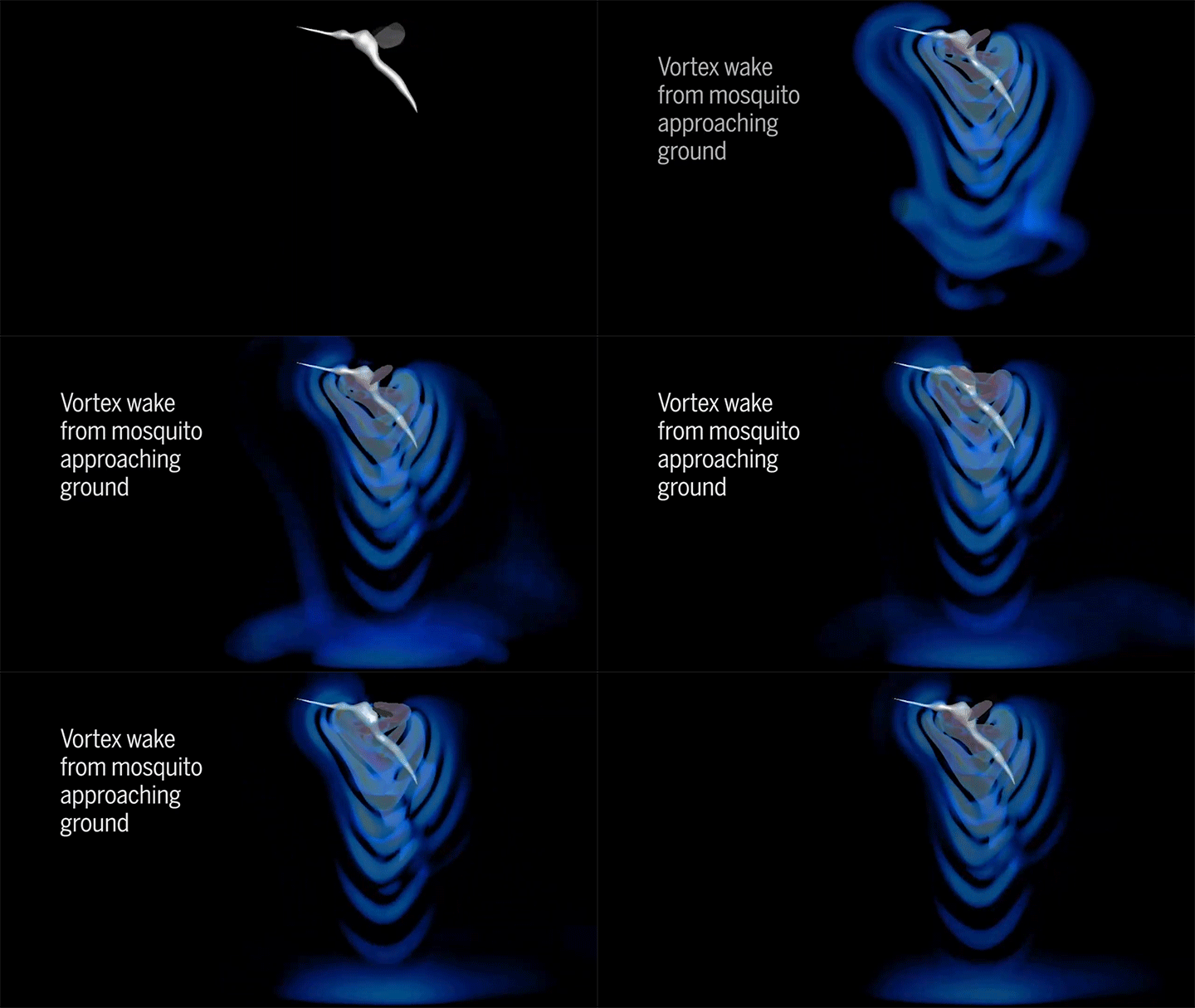
    Mosquitoes, bats, and even eels use non-visual means to sense their environments. For mosquitoes, part of their obstacle avoidance comes from the exquisite sensitivity of their antennae, which are able to sense subtle changes in the air flow around them as they approach a wall or the ground. Researchers used this same technique to help a quadcopter avoid crashing by adding air pressure sensors that respond to the changes in the copter’s wake as it approaches the ground. (Image and research credit: T. Nakata et al.; via Science)