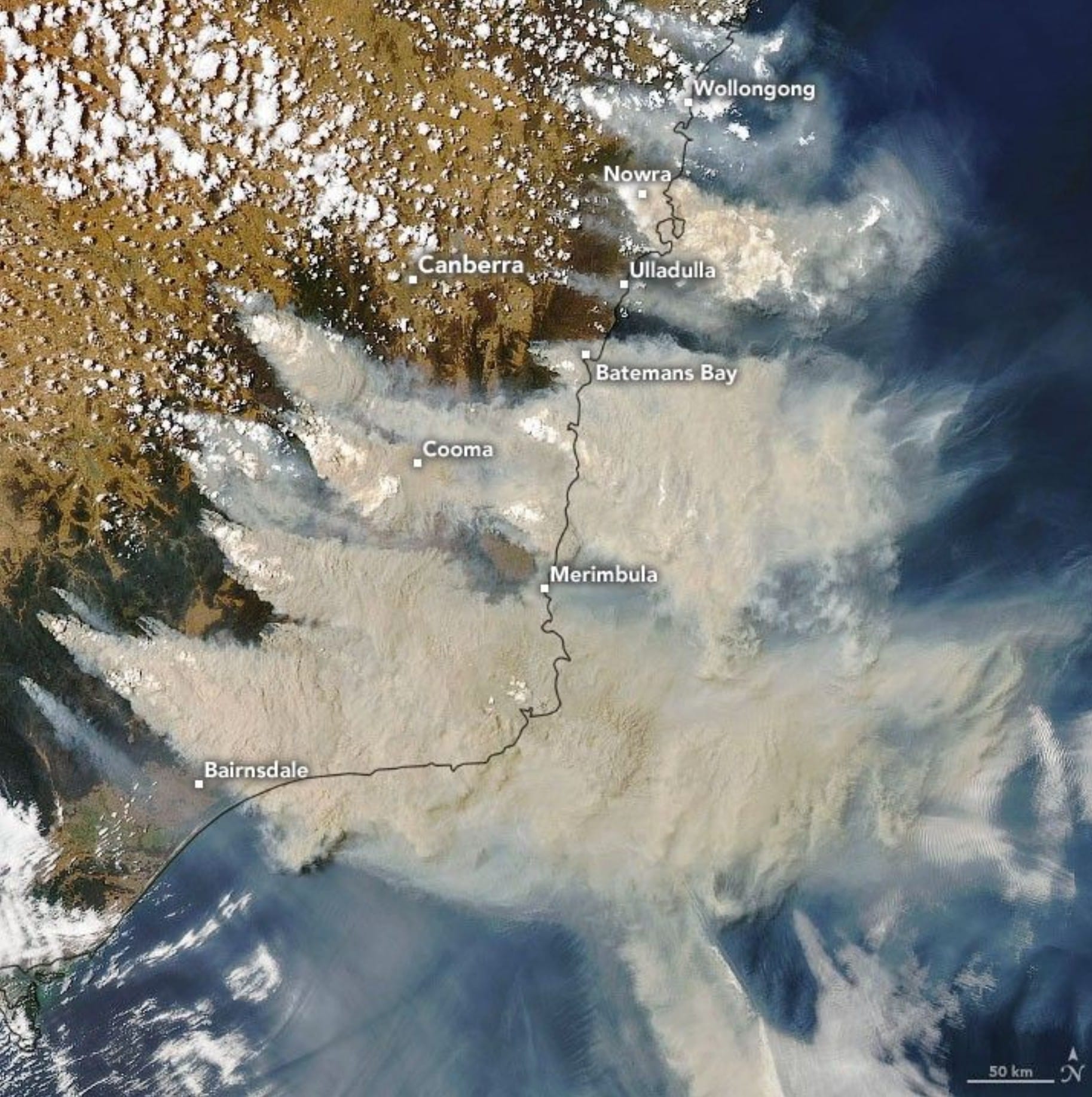
In recent years, smoke from powerful wildfires has raised questions among atmospheric scientists by always swirling in the same direction. The confounding structures were observed in the stratosphere, where smoke injected at around 15 kilometers in altitude absorbed sunlight and rose further, up to about 35 kilometers of altitude. The rising column of fluid would stretch, causing any residual rotation to get stronger and form vortices.
None of this was a surprise. What was surprising is that all of the observed vortices were anticyclones, when theory–at least for a heat-driven vortex from a stationary heating source–called for a cyclone-anticyclone pair.
Researchers looked at how a self-heating (and, therefore, moving) source would rotate. They concluded that this, too, would create a pair of vortices–one cyclonic and one anticyclonic–but the anticyclone would be stronger than the cyclone that trailed behind it. By further considering the vertical shear the vortex pair would encounter, the researchers found that the trailing cyclone could get stripped away, leaving behind only the anticyclone–matching our wildfire observations. (Image credit: J. Stevens/NASA Earth Observatory; research credit: K. Shah and P. Haynes 1, 2; via APS)