Tag: sochi2014

  • Sochi 2014: Luge

    Sochi 2014: Luge

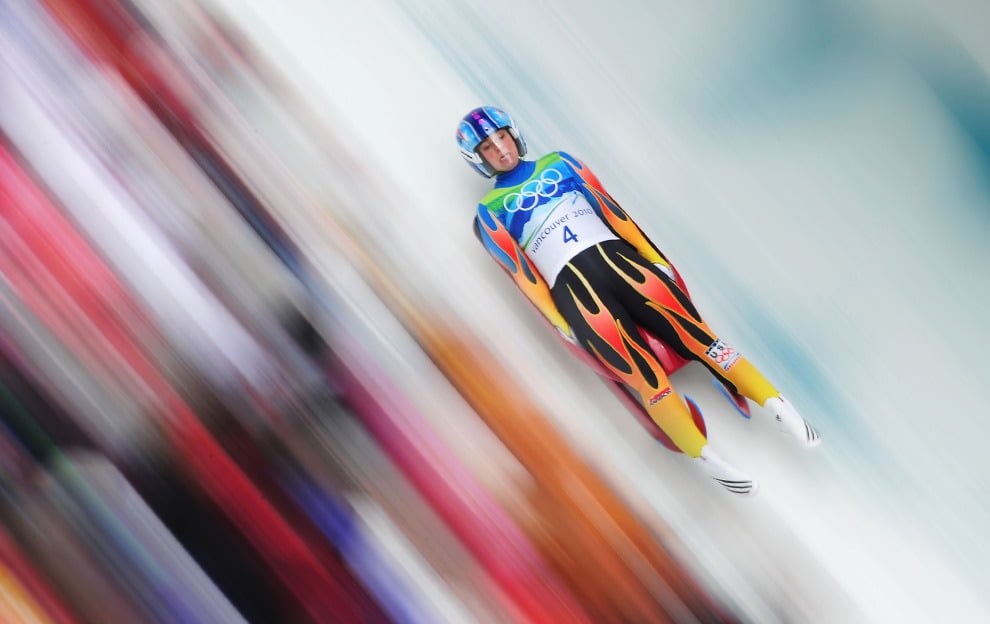
    Like athletes in many of the gravity sports in the Winter Olympics, lugers want to be as aerodynamic as possible to minimize their drag. Once a luger has started sliding, only gravity can increase their speed – every other force, from friction to drag, pulls away valuable time. Luge sleds are built on sharp runners and athletes slide feet-first in a position much more streamlined than the head-first position of skeleton. Both contribute to the much higher speeds in luge – up to 140 kph (87 mph). Luge is also the only sliding sport measured down to thousandths of a second, so every gram of drag* makes a difference. Lugers keep their heads pulled back and wear full helmets to keep the air flow consistent and attached as much as possible. It is also typical for them to spend time in the wind tunnel, testing their sled’s aerodynamics, adjusting their position, and even testing their suits. (Photo credit: S. Botterill)

    * For those wondering, yes, drag is a force and a gram is a unit of mass, not force. However, it is not unusual when testing athletes in wind tunnels to compare drag between configurations in terms of grams.

    FYFD is celebrating the Games with a series on fluid dynamics in the Winter Olympics. Stay tuned for more!


  • Sochi 2014: Why is Ice Slippery?

    Sochi 2014: Why is Ice Slippery?

    Ice is a key component of many Winter Olympic disciplines, including figure skating, hockey, speed skating, curling, and the sliding sports. The low friction and slippery nature of the ice are vital to the events, but oddly enough, scientists don’t yet fully understand why ice is slippery. A common explanation is that the narrow blades on which athletes compete cause extremely high pressures that locally melts the ice, creating a thin layer of water upon which the athlete glides. The trouble with this explanation is that it only accounts for ice being slippery within a few degrees of its melting point. Not only that, anyone who has fallen when walking on ice knows that it is slippery even without ice skates. In 1859 physicist Michael Faraday suggested that ice may be covered in a thin liquid-like layer even at temperatures well below freezing. Experiments since then suggest that this layer is tens or hundreds of nanometers thick, depending on the purity of the surface film. Robert Rosenberg has an excellent review of the subject in Physics Today. (Image credit: Reuters/D. Gray via The Big Picture)

    This post opens up our series on fluid dynamics in the Winter Olympics. Stay tuned for more over the next two weeks. Got a question in mind? Seen a great article? Feel free to ask questions or submit links on Tumblr, Twitter, or by email.

  • Sochi 2014 Incoming

    Sochi 2014 Incoming

    The Winter Olympics are underway in Sochi, Russia, and here at FYFD, I am busy preparing a special series of posts on fluid dynamics in the Winter Games. Look for the first of those starting on Monday.  In the meantime, you can check out some of FYFD’s previous themed series now compiled into a special archive. (Photo credit: B. Armangue)