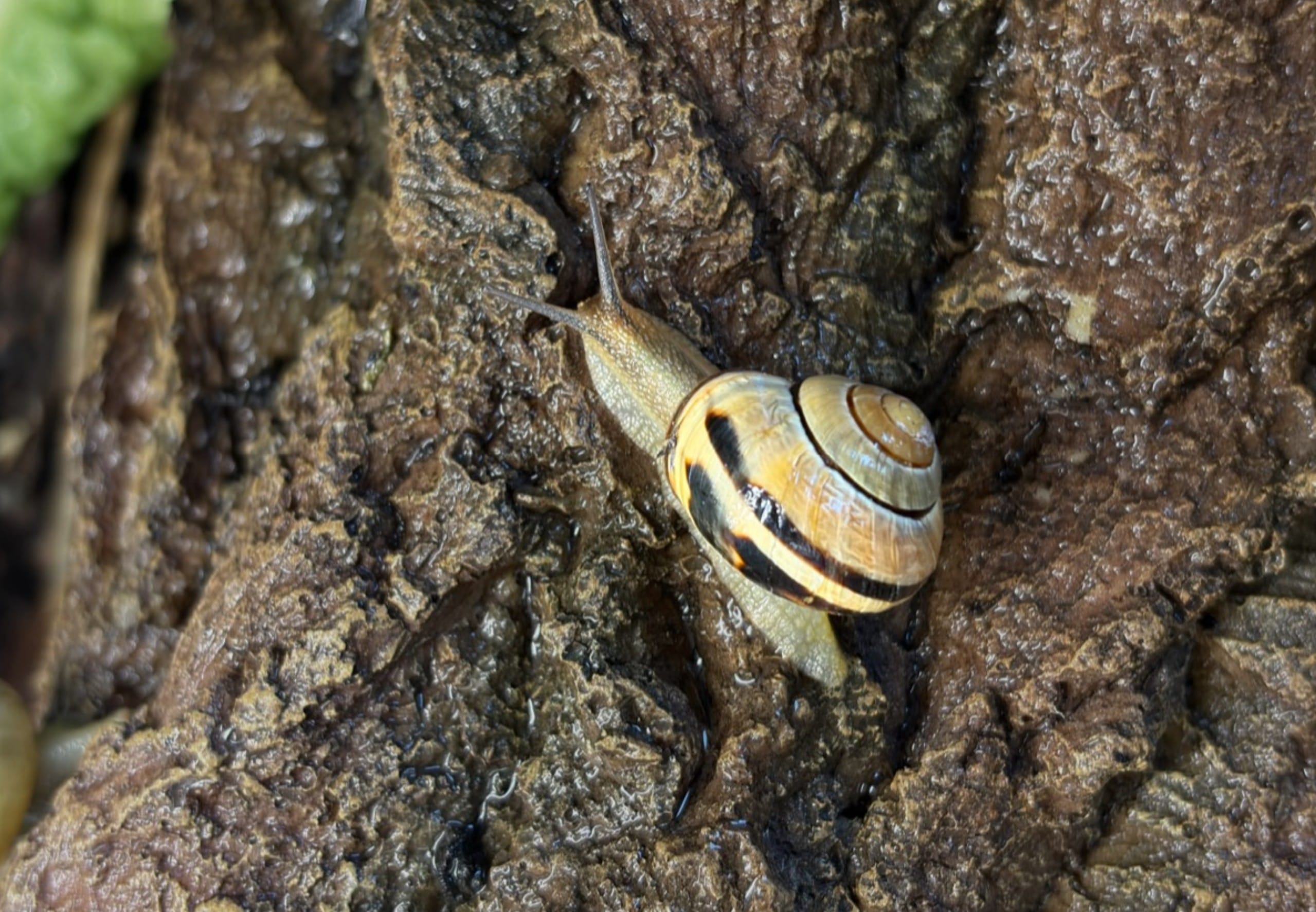
Snails have a mucus for every occasion. The grove snail/lemon snail makes five different varieties: one for lubricating its motion, one for adhering to surfaces, one to seal it in its shell for winter, and two to protect against predators. A new study looks at how those different types of mucus differ.
The basic building blocks of a snail’s mucus don’t vary much. It’s mostly water, spiked with proteins and carbohydrates that give it its complex properties. For the grove snail, collogen VI acts as the main structural component and amorphous calcium carbonate gets added in varying amounts during secretion. By tuning the amount of protein and added calcium, the snails tweak their mucus’ viscoelasticity for each purpose. (Image credit: Max Planck Institute of Colloids and Interfaces; research credit: M. Gabler et al.; via Ars Technica)


