Tag: pelican

  • Featured Video Play Icon

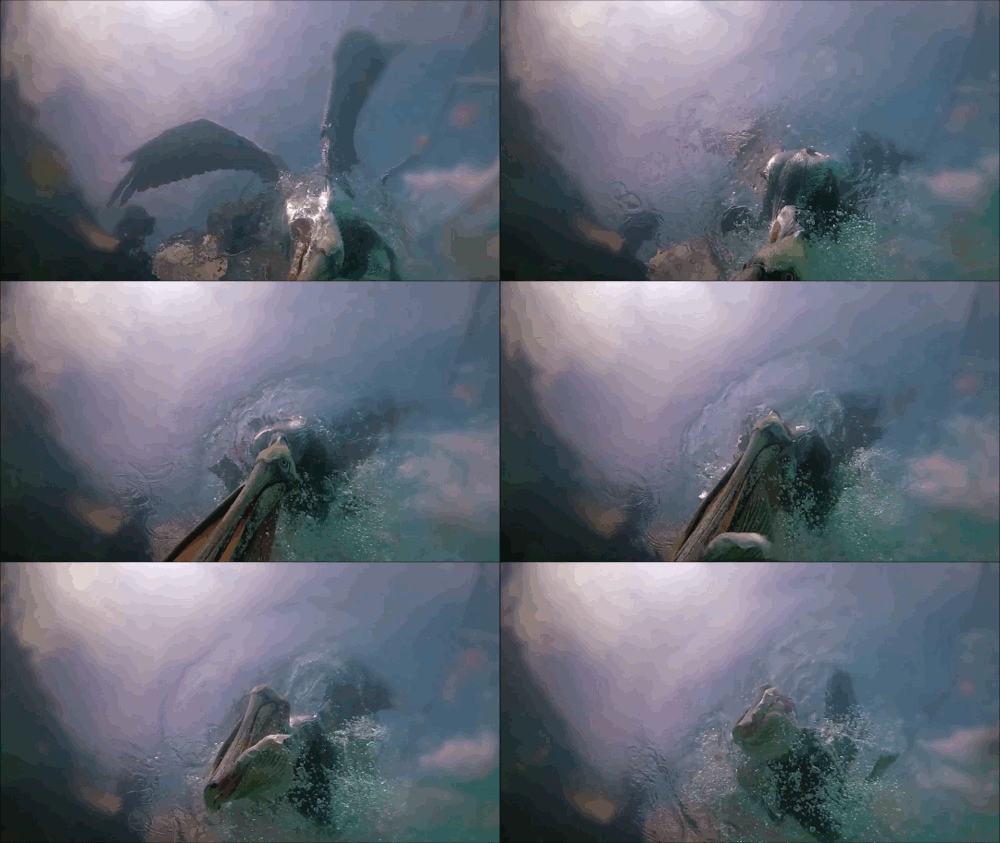
    Pelican Diving

    Pelicans, like many sea birds, are aerial divers. They spot their prey from high above, bank, and dive into the water to catch the fish. Although they hit the water at high speeds, pelican diving techniques differ somewhat from plunge divers like gannets or boobies. Pelicans are only aiming for a shallow dive, so they have features – like their expandable neck pouch – that help them decelerate quickly instead of taking a full-body plunge. The goal is to increase drag after the head enters, slowing everything down. That can add more stress to the bird’s neck – the rest of the body is still moving quickly even after the head begins to slow. To counter this compression, the birds must have strong neck muscles to stabilize their spines during the impact process. (Video and image credit: Deep Look)
  • Soaring Pelicans

    Soaring Pelicans

    Earlier this summer, I looked up on a bright, sunny day and saw a quartet of black and white figures soaring overhead. Initially, I thought it might be a formation of kites or unmanned aerial vehicles (UAVs) because I saw no flapping as the group wheeled about. With the help of the Cornell Lab of Ornithology’s awesome Merlin app, I was able to identify the soarers as American white pelicans – not a species I’d expected to find flying along the Front Range of the Rocky Mountains! (Turns out, they breed on lakes around here.)

    The reason I saw so little flapping is that the birds were riding thermals. As the sun heats the ground, air near the surface warms up and begins to rise due to its buoyancy. Pelicans interested in flying between breeding and foraging grounds will start testing the thermals early in the day, as soon as they begin to form. As the heating continues, the intensity of thermals strengthens and they extend higher into the atmosphere. This is where the birds can really excel at using atmospheric energy for their flight. Pelicans will circle within a thermal until they reach roughly the middle of its height. Then they will glide, gradually losing altitude until they reach another thermal where they can climb without expending their own energy. With a 2.7 meter wingspan and a relatively low drag coefficient, the pelicans can glide and soar remarkably well. Researchers have even suggested using them as a sort of biological UAV for studying atmospheric dynamics! (Image credits: D. Henise, M. Stratmoen; research credit: H. Shannon et al., pdfs – 1, 2)

  • Pelican Surfing

    Pelican Surfing

    Birds can be incredibly clever about using their surroundings to enhance their flight. Pelicans will even surf! As a line of waves rolls toward shore, it pushes a small updraft ahead of it – just like a line of mountains creates a windy updraft. Pelicans save energy by riding the updraft just like a surfer would ride the swell. Once the wave breaks, the air and water become turbulent and less useful, so the pelican cuts away to find his next ride. (Image and submission credit: N. Yarvin, source)