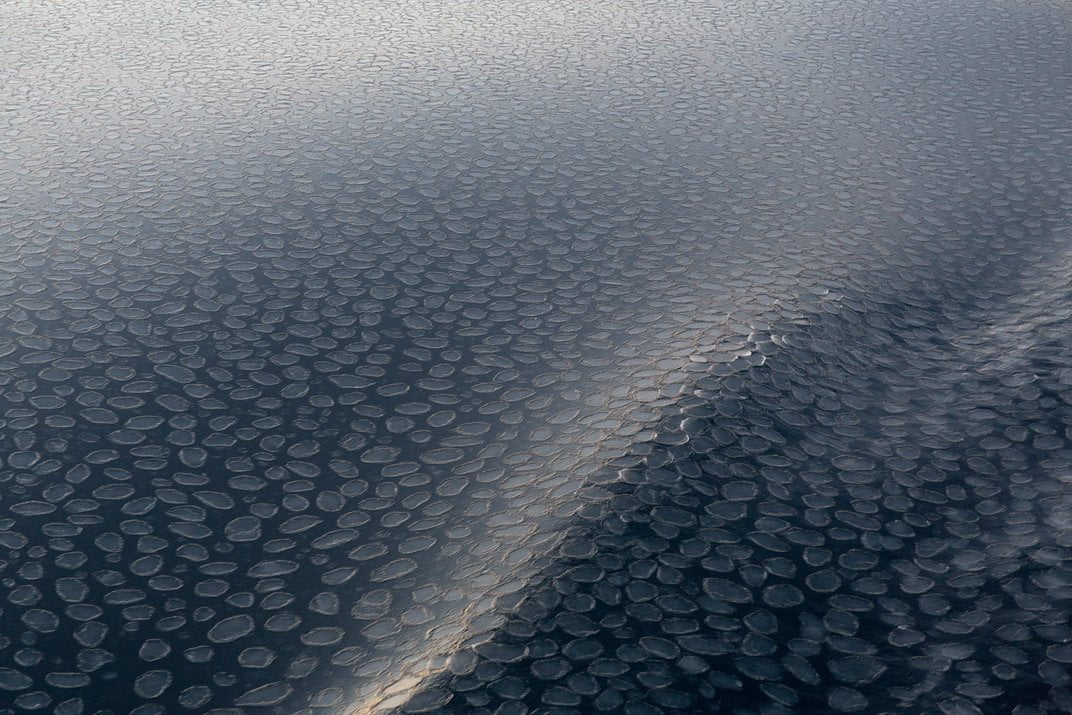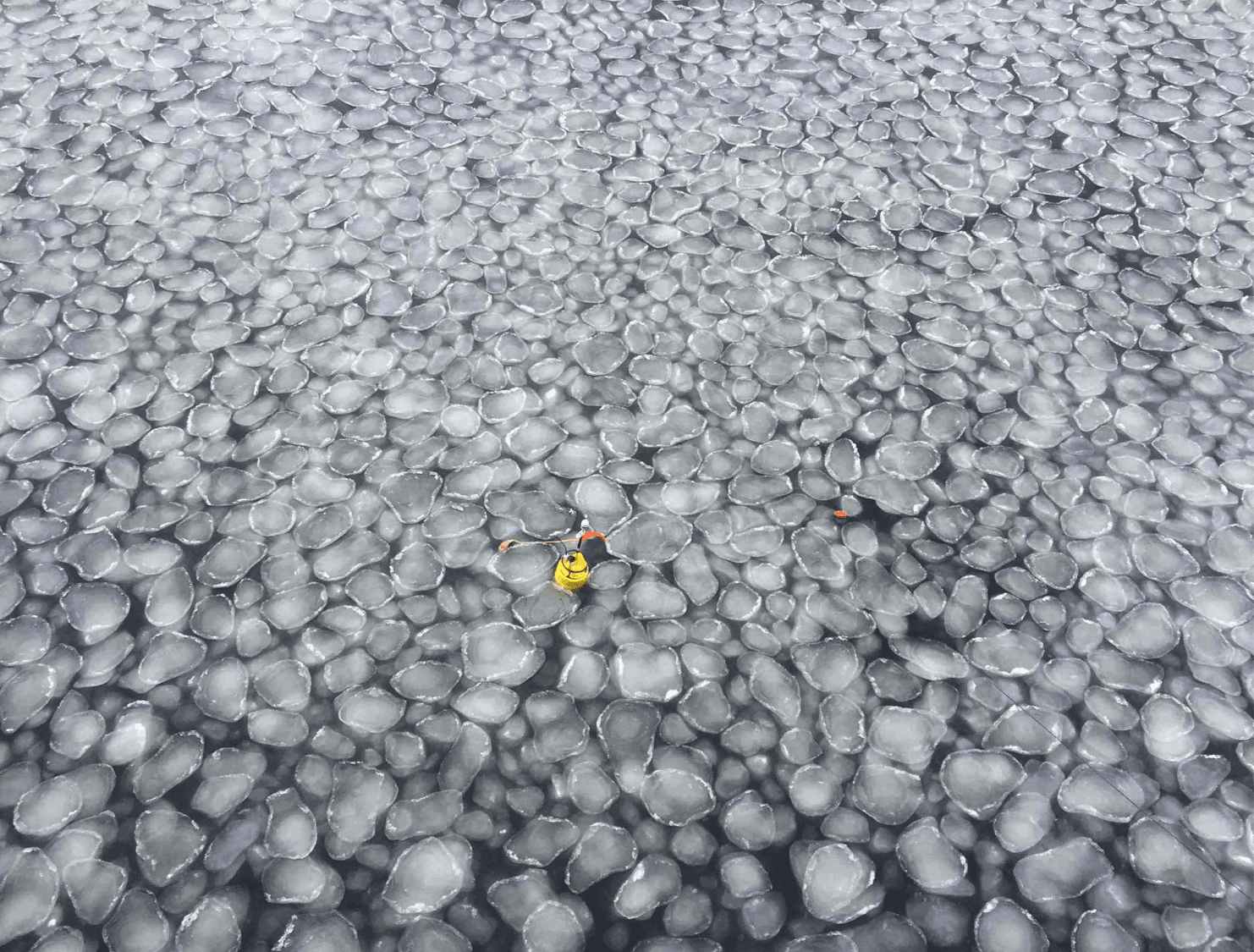
While much attention is given to the summer loss of sea ice, the birth of new ice in the fall is also critical. Ice loss in the summer leaves oceans warmer and waves larger since wind can blow across longer open stretches. Those warmer waters and more dynamic waves affect how ice forms once autumn sets in. Higher waves mean that ice tends to form in “pancakes” like those seen here. Pancake ice is small — typically under 1 meter wide — and can only be observed from nearby, since they’re smaller than typical satellite resolution. Only once there’s enough pancake ice to dampen the waves will the pieces begin to cement together to form larger pieces that will form the basis of the year’s new ice. (Image credit: M. Smith; see also Eos)
Tag: pancake ice

Pancake Ice in the Sea
Sea ice forms in patterns that depend on local ocean conditions. Pancake ice, like that shown in the above photo from the Antarctic Ross Sea, is formed in rough ocean conditions. Each individual pancake has a raised ridge along its edge, due to wave-induced collisions with other pieces of ice. Over time the smaller pieces of ice will merge together, forming large sheets. Evidence of its turbulent formation will persist, however, in the rough surface of the ice’s underside. For more, check out the National Snow and Ice Data Center. (Image credit: S. Edmonds; via Flow Visualization)
Do you enjoy FYFD and want to help support it? Then please consider becoming a patron!
Reminder: If you’re at the University of Illinois at Urbana-Champaign, I’m giving a seminar this afternoon. Not in Illinois? I’ve got other events coming up, too!