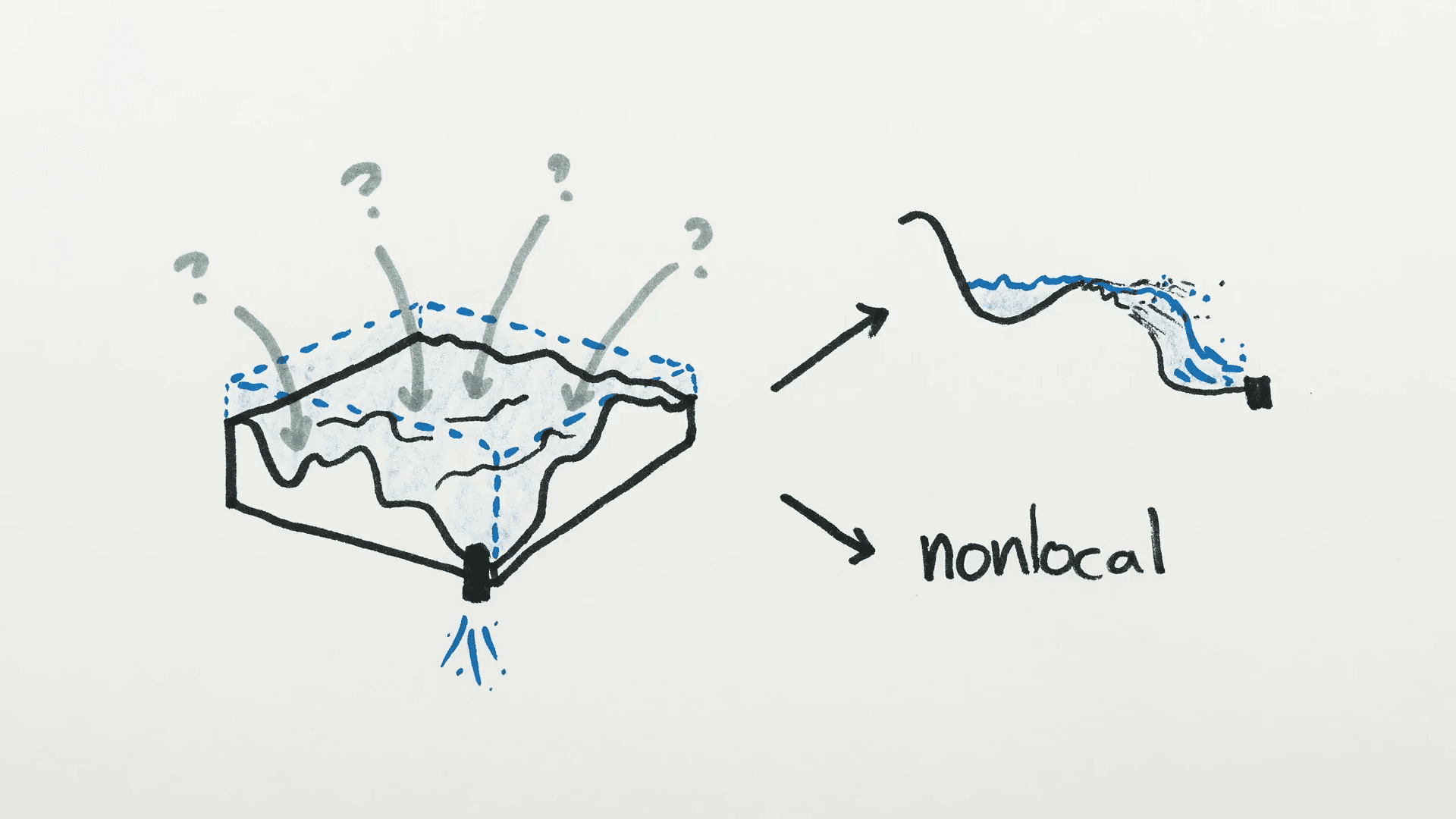

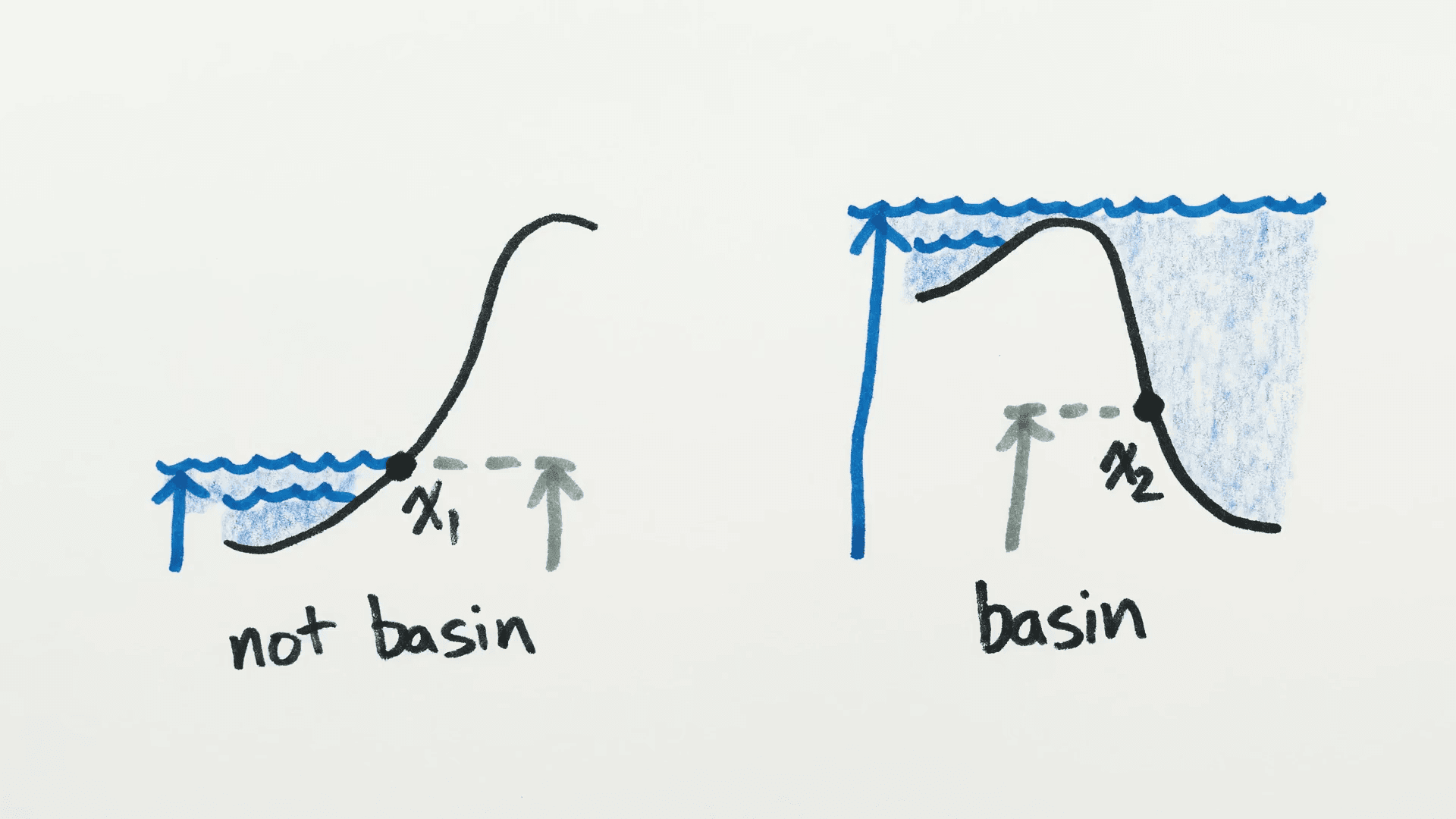
At first glance, draining an ocean seems simple like a simple problem: just put a drain at the lowest point. But, as shown in this Minute Physics video, the problem is harder than it sounds because drainage depends not just on a point’s elevation but also on the path that leads to the drain. Fortunately, Henry has some clever methods for figuring out which areas would drain and how. (Video and image credit: Minute Physics)
Tag: oceans

Founts of Enceladus
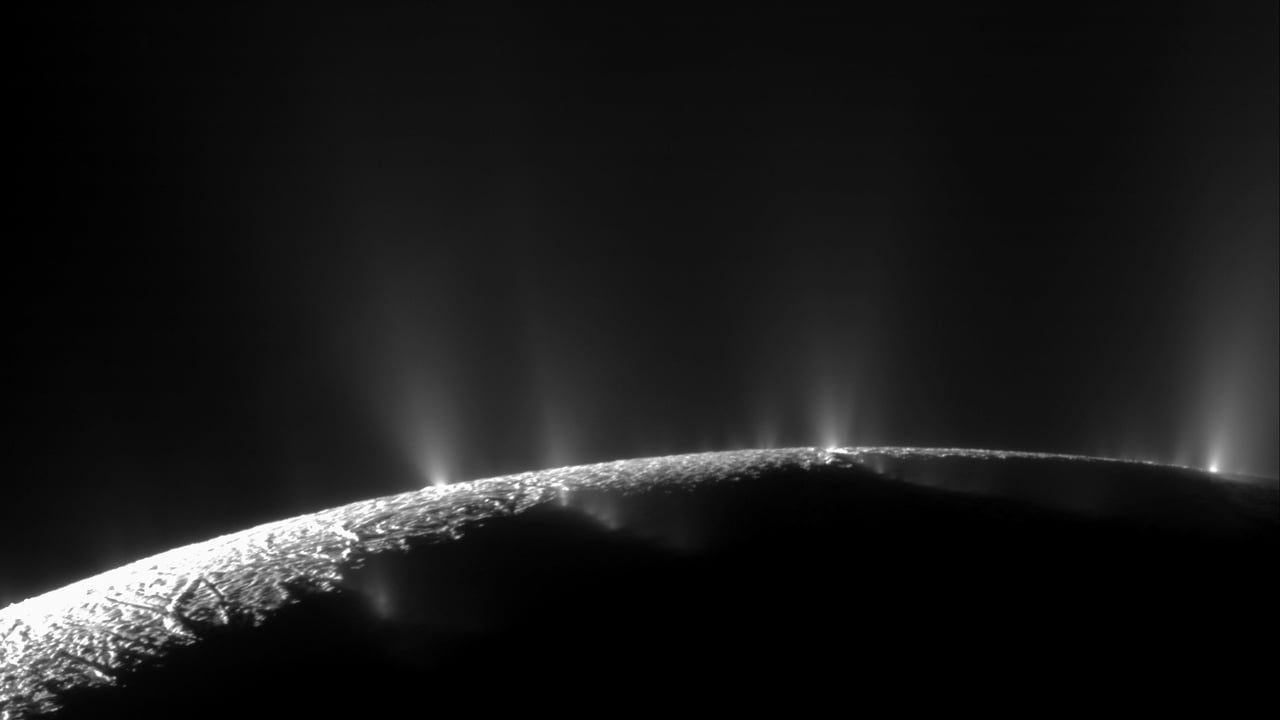
In its exploration of Saturn, Cassini discovered that the moon Enceladus is home to icy eruptions. Beneath its shell of ice, Enceladus has a global ocean of salty liquid water. The average thickness of the ice is 20 kilometers, putting the ocean seemingly out of reach — except at the moon’s southern pole, where icy plumes of ocean water jet out.
Here, where the ice is thinnest, the tidal forces Enceladus experiences from Saturn and its fellow moon Dione break through the ice. As the cracks open and close, liquid from the ocean sprays out, freezing into plumes that Cassini measured. Plans are underway for new missions that prioritize further sampling of Enceladus’ ocean. For now, we can only imagine what hides in its interior ocean. (Image credit: NASA/JPL-Caltech/SSI; for more, see M. Manga and M. Rudolph)

Predicting Alien Ice
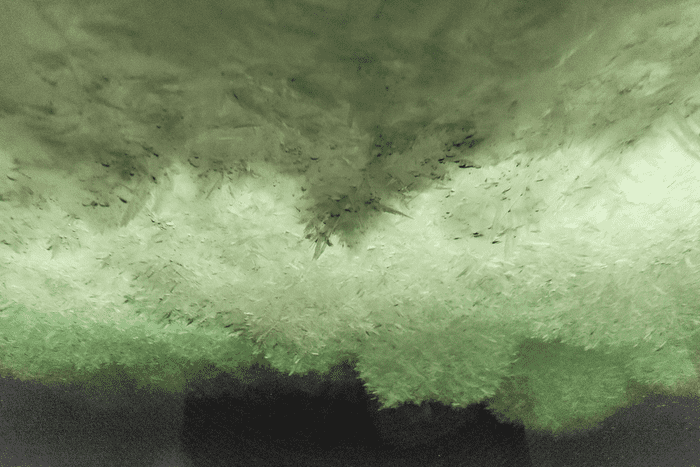
Europa is an ocean world trapped beneath an ice shell tens of kilometers thick. To better understand what we might find in those oceans, researchers turn to analogs here on Earth, looking at Antarctica’s ice shelves. Beneath those shelves, ice forms via two mechanisms: the first, congelation ice, freezes directly onto the existing ice-water interface. The second, frazil ice, forms crystals in supercooled water columns, which drift upward in buoyant currents and settle on the ice shelf like upside-down snow (pictured above).
Based on Europa’s conditions, the researchers conclude that congelation ice would gradually thicken the ice shell as the moon’s interior cools. But in areas where the shell is thinned by local rifts and Jovian tidal forces, frazil ice is likely to form. (Image credit: H. Glazer; research credit: N. Wolfenbarger et al.; via Physics World)