Tag: lakes

  • In Deep Lakes, Mixing is Disappearing

    In Deep Lakes, Mixing is Disappearing

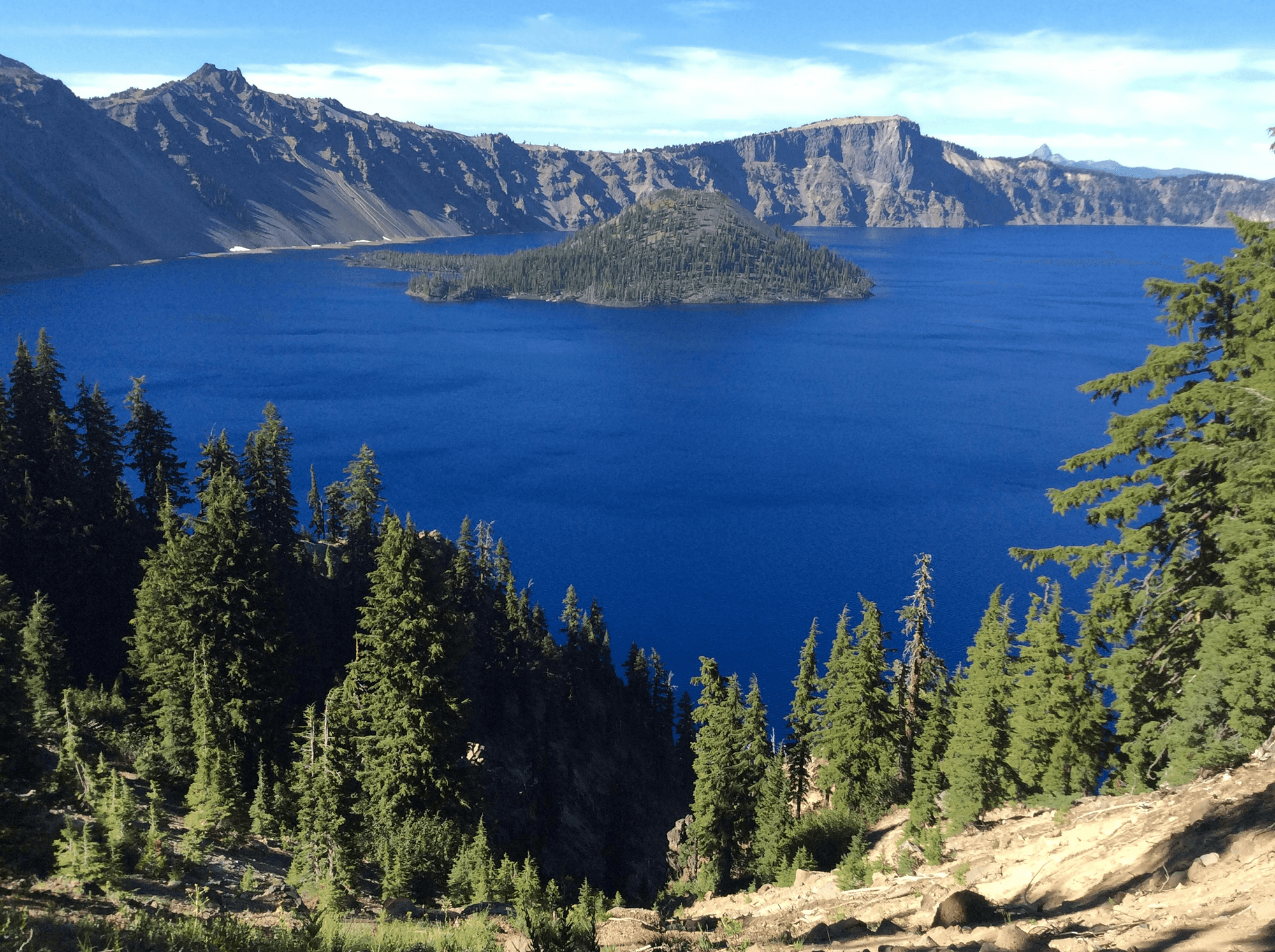
    With a depth of nearly 600 meters, Crater Lake in Oregon is the deepest lake in the United States. It’s known for its brilliant blue hue and startling clarity. But, like other deep lakes, Crater Lake is changing as temperatures warm. It’s edging ever closer to a day where its deep, cold waters no longer mix.

    Although the details of mixing vary from lake to lake, older records show that most deep lakes would overturn and fully mix on a frequency that ranged from twice a year to every seven years. This overturning happens when winds push frigid, near-frozen water. As that water approaches the shoreline, it gets forced downward, where the pressure at depth makes the cold water denser still, causing it to sink beneath the warmer water layer near the lake bottom. That kicks off larger-scale mixing that redistributes oxygen, nutrients, and toxins in the lake.

    When this regular mixing stops, the entire ecosystem gets affected. Over time, oxygen gets depleted in deeper in the lake, leaving a dead zone unable to support fish and other aquatic life. Meanwhile, longer and warmer growing seasons favor phytoplankton and algae that cloud the waters and disrupt a lake’s unique ecology.

    For a much more detailed look at deep lake mixing and the changes we’re seeing, check out this article over at Quanta Magazine. It’s a longer read but well worth your time. (Image credit: N. Perez Aguilar; see also: Quanta Magazine)


    Fediverse Reactions
  • Mixing in a Winter Lake

    Mixing in a Winter Lake

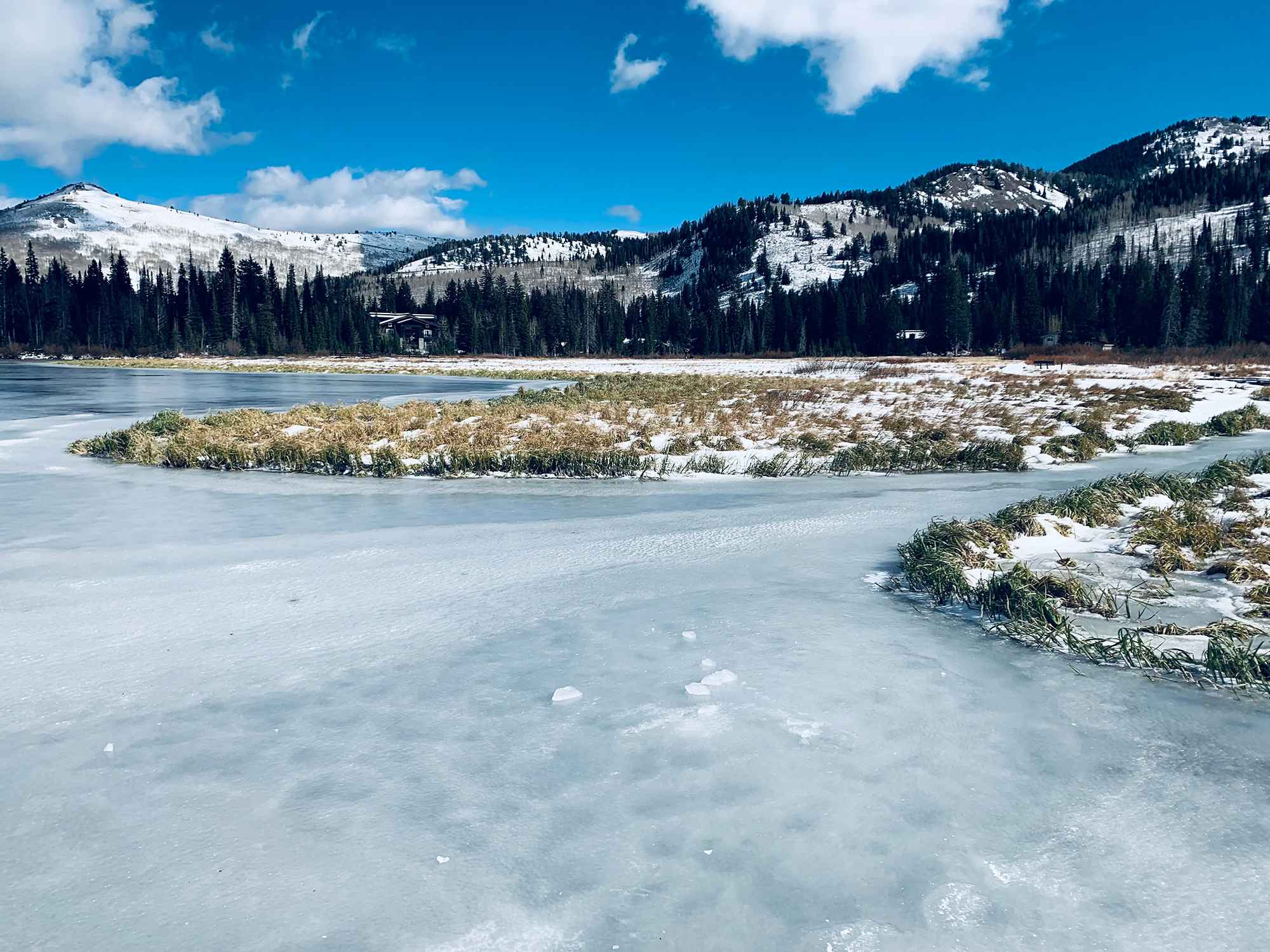
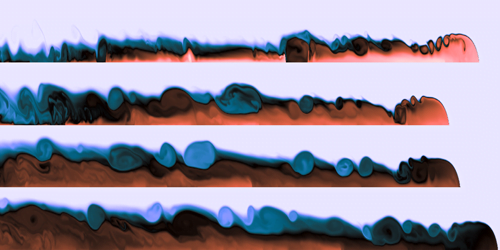
    A frozen winter lake can hide surprisingly complex flows beneath its placid surface. Since water is densest at 4 degrees Celsius — just above the freezing point — mixing two water sources can lead to counterintuitive effects. A cold lake, for example, may contain water below 4 degrees Celsius, while a stream running into the lake is a bit warmer than 4 degrees Celsius. When the two parcels of water meet, they mix to form water at an intermediate temperature. But because of water’s density anomaly, that mixed water can wind up denser than the average of its parents. This is known as cabbeling.

    Mixing patterns within a cold lake with a slightly warmer inflow. Image from A. Grace et al.
    Mixing patterns within a cold lake with a slightly warmer inflow. Image from A. Grace et al.

    As shown in a recent study, this newly mixed water sinks to the bottom of the lake, forming a warm current that heats the lake from below. The researchers were able to model this current and its behavior over a range of conditions. Understanding these winter circulation patterns is key to tracking both nutrient transport and how pollutants spread in the ecosystem. (Image credit: lake – G. Murry, simulation – A. Grace et al.; research credit: A. Grace et al.; via APS Physics)