


Last December, the collapsing flank of the Anak Krakatoa volcano caused a deadly tsunami in Indonesia. Using satellite imagery, scientists have now constructed a timeline of the island’s dramatic restructuring. In the process, they found that the landslide that triggered the tsunami was likely much smaller than originally estimated.
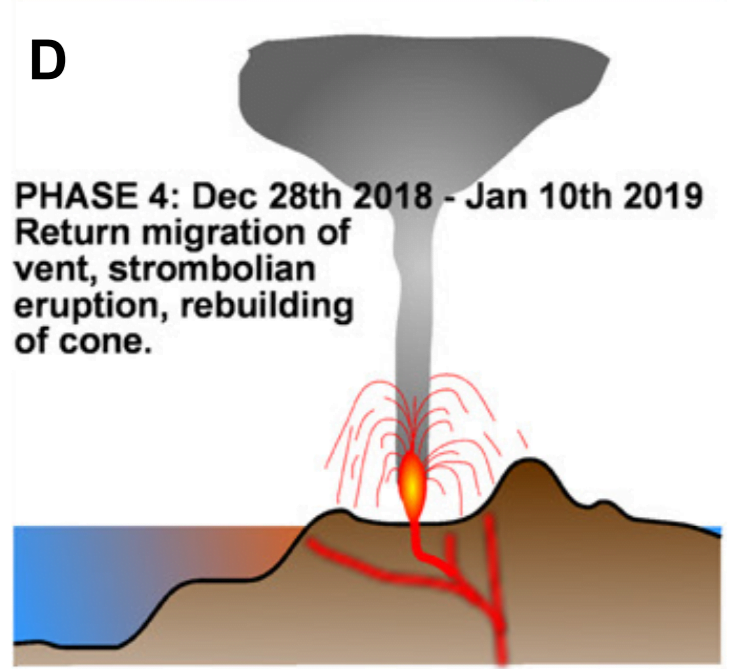
Their evidence shows that the landslide and tsunami (Image B) occurred before the eruption that destroyed the volcano’s cone. In fact, the landslide seems to have created a vent that opened directly underwater, which explains the increased violence of the eruption in late December and the eventual destruction of the volcano’s cone (Image C). After that, the underwater vent closed off and the eruption returned to its quieter state as the volcano began rebuilding its cone (Image D).
The key finding here is that the initial landslide contained roughly a third of the material originally estimated. That means our tsunami models have been seriously underestimating the catastrophic potential of smaller volcanic landslides. Hopefully the lessons we learn from Anak Krakatoa will help us avoid future tragedies. (Image and research credit: R. Williams et al.; via BBC; submitted by Kam-Yung Soh)
