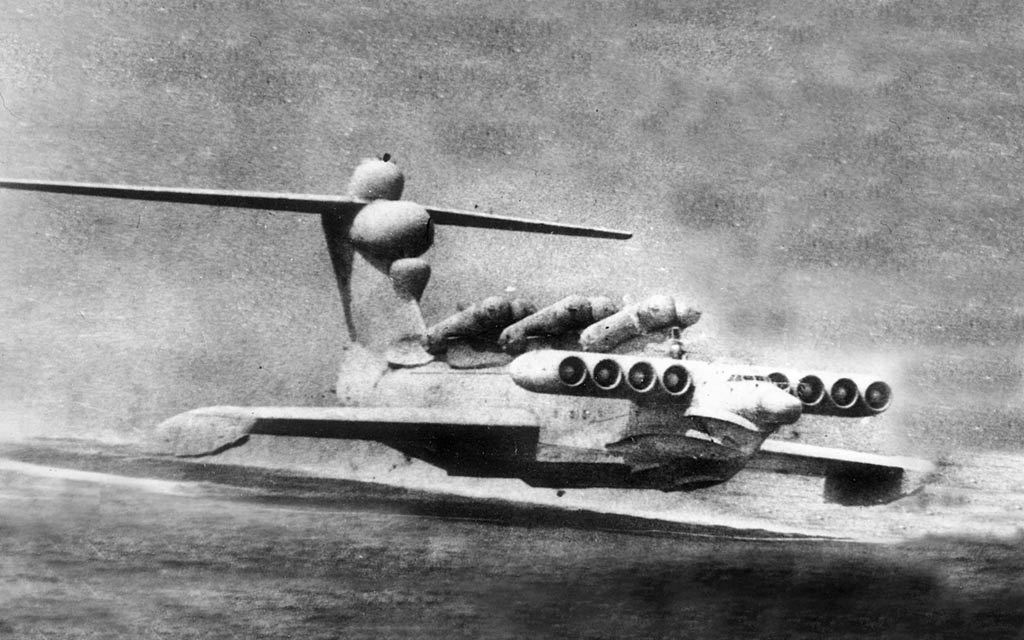
The ekranoplan was a massive, Soviet-era aircraft that relied on ground effect to stay aloft. In this video, RC pilots test out their own homemade version of the craft, including some neat flow visualization of the wingtip vortices. When an aircraft (or, for that matter, a bird) flies near the ground, it experiences less drag than at higher altitudes. This happens primarily because of the ground’s effect on wingtip vortices.
In normal flight, the vortices from an aircraft’s wingtips create a downwash that reduces the wing’s overall lift. But in ground effect, the vortices cannot drift downward as they normally do. Instead, they spread apart from one another, thereby reducing the drag caused by downwash from the aircraft. The end result is better performance, though it comes with added risk since there’s very little time to correct an error when flying at an altitude less than half the aircraft’s wingspan. (Video and image credit: rctestflight; submitted by Simplicator)