Tag: dynamics and controls

  • Dragonfly Dogfights

    Dragonfly Dogfights

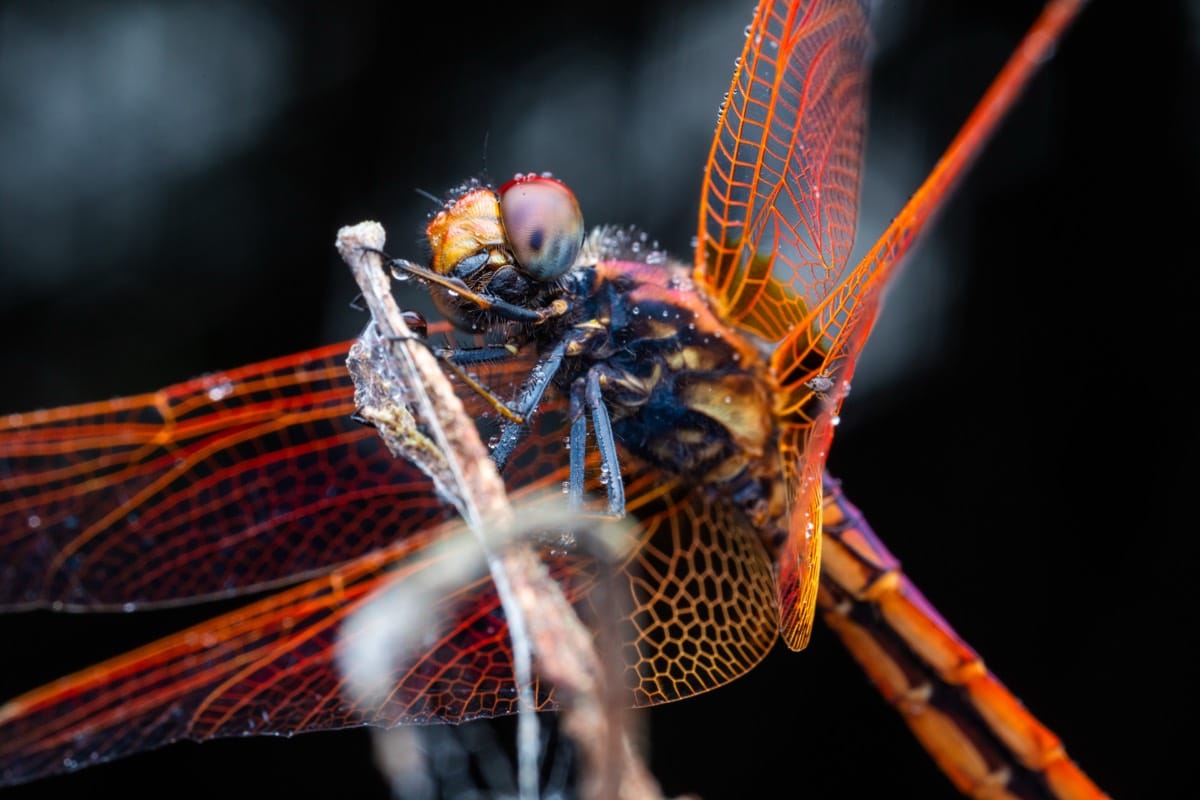
    Like fighter pilots of old, male dragonflies engage in aerial combat where each tries to outmaneuver the other to keep a sight on their rival’s tail. A recent study observed this combat in the field and uncovered some surprising similarities to dogfighting. Like pilots, dragonflies used spiraling turns and other high-g moves to gain an advantageous position behind the other. In human combat, that position favors the forward-facing weapons of the pilot in back; for dragonflies, it keeps their rival in the part of their vision that best detects movement.

    Interestingly, the team found that–even in the midst of combat–dragonflies spent at least a third of their time gliding. It’s unclear whether they glide to conserve energy or because it’s easier to track a rival when gliding.

    The authors dig into the control rules needed for dragonflies to execute these chases and found that even relatively simple control schemes–constrained by the dragonfly’s physical limits–result in complex flight contests. (Image and research credit: S. Fabian et al.; via Ars Technica)


    Fediverse Reactions
  • Hydrofoils and Stability

    Hydrofoils and Stability

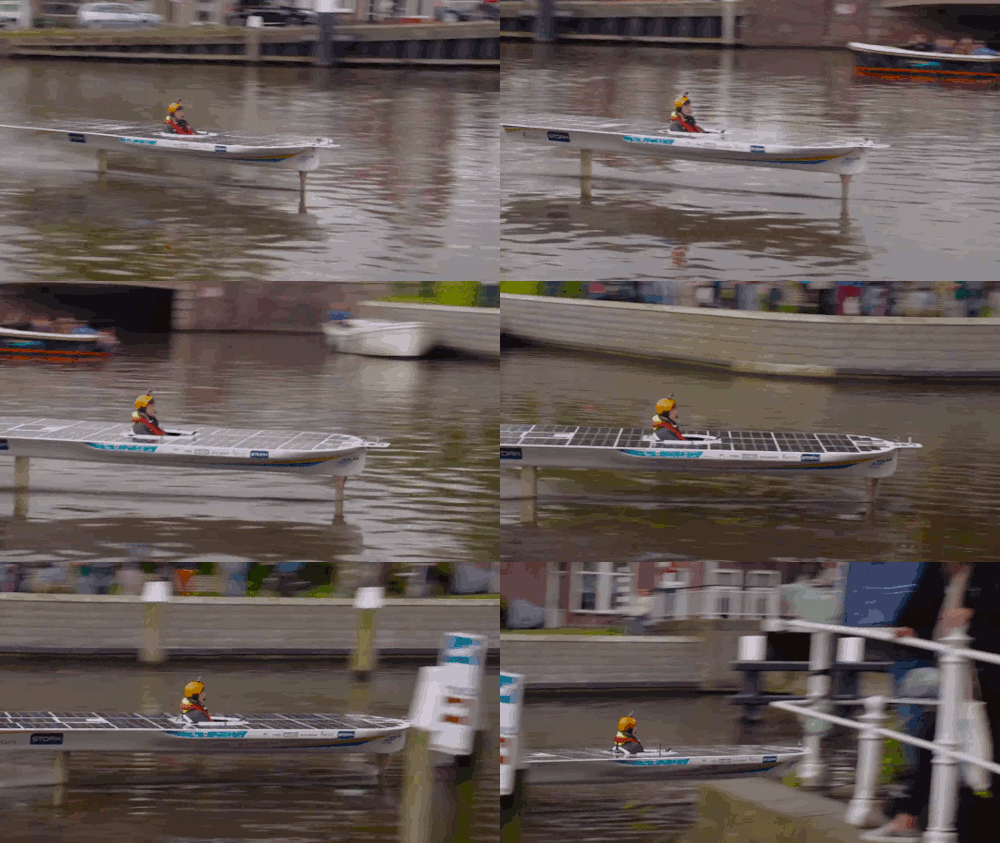
    Today’s fastest boats use hydrofoils to lift most of a boat’s hull out of the water. This greatly reduces the drag a boat experiences, but it can also make the boat difficult to handle. One style of hydrofoil boat, called a single-track hydrofoil, uses two hydrofoils in line with one another to support and steer the boat. The pilot can steer the lead hydrofoil into the direction of a fall to correct it. Stability-wise, this is the same way that you keep a bicycle upright. On a boat, the situation is a bit tougher to manage, and, like riding a bike, it takes practice. A group of students published a full mathematical model for the dynamics of this kind of boat, which allows designers to test a prototype’s stability early in the design process and enables student teams to use computer simulators to train their pilots to drive a boat before putting them out on the water, similar to the way that airplane pilots train. (Image credit: TU Delft Solar Boat Team, source; research credit: G. van Marrewijk et al., pdf; via TU Delft News; submitted by Marc A.)