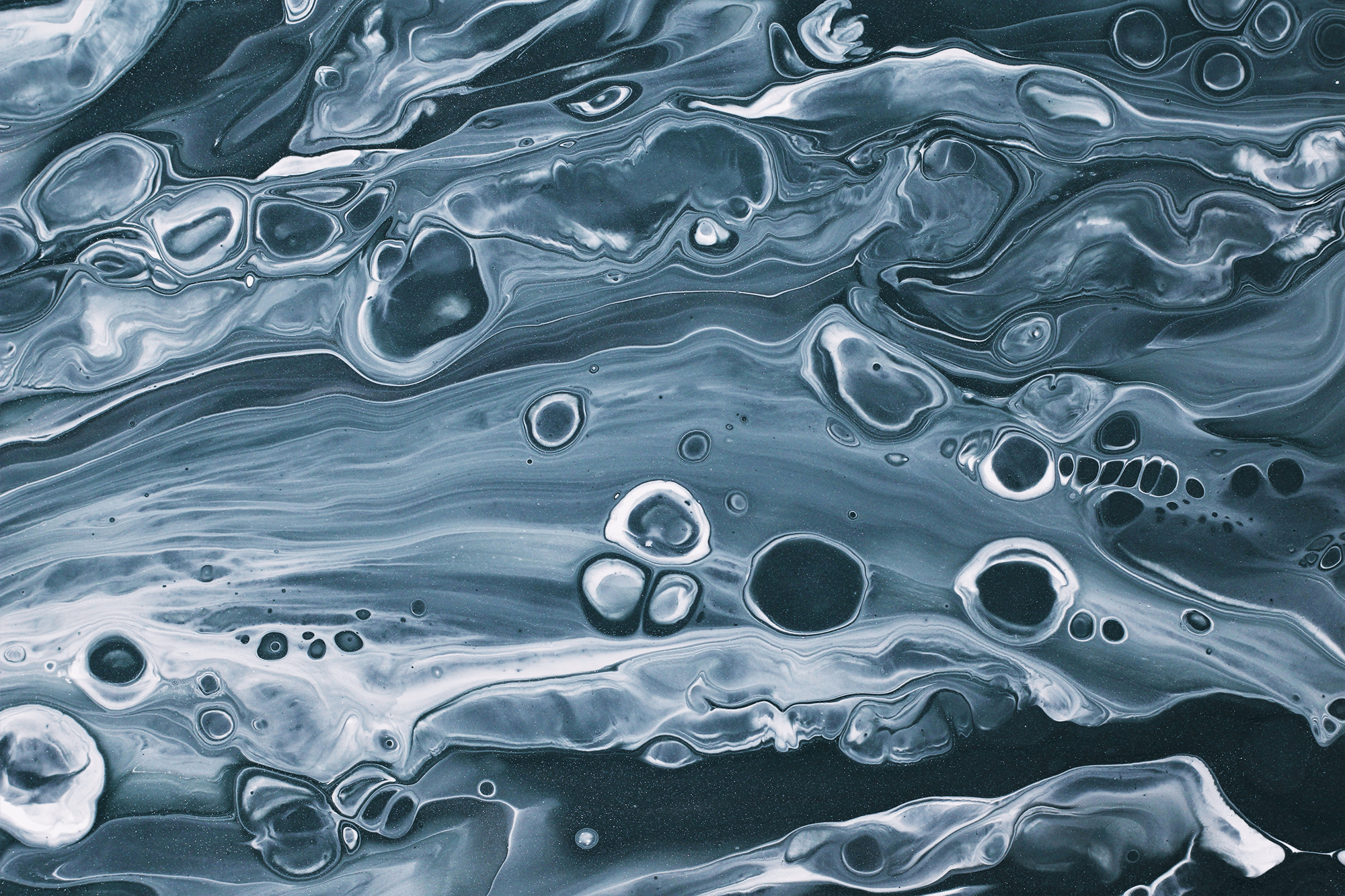
Adding just a little polymer to a pipe flow speeds it up by reducing drag near the wall. But the effects on turbulence away from the wall have been harder to suss out. A new experiment shows that added polymers suppress eddy formation in the flow and reduce how much energy is lost to friction and, ultimately, heat. In particular, the researchers found that polymer stress helped stabilize shear layers in the flow and prevent them from destabilizing into more turbulent flow. (Image credit: S. Wilkinson; research credit: Y. Zhang et al.; via APS)
Tag: dissipation

Marshland Wave Damping
Coastal marshes are a critical natural defense against flooding. The flexible plants of the marsh both slow the water’s current and help damp waves. As a result of that hydrodynamic dissipation, marshes help protect against erosion and reduce the magnitude of flooding events. But coastal managers looking to maintain or improve their marshes in order to mitigate climate-change-driven storms need to be able to predict what level of vegetation they need.
To that end, a team of researchers has built a new model to better capture the flow effects of marsh grasses. Building from an individual, flexible plant (as opposed to a rigid cylinder, as grass is often represented), the authors constructed a model able to predict wave dissipation for many marsh configurations, which should help better predict the infrastructure changes needed in different coastal regions. (Image credit: T. Marquis; research credit: X. Zhang and H. Nepf; via APS Physics)

Contact-Line Dissipation
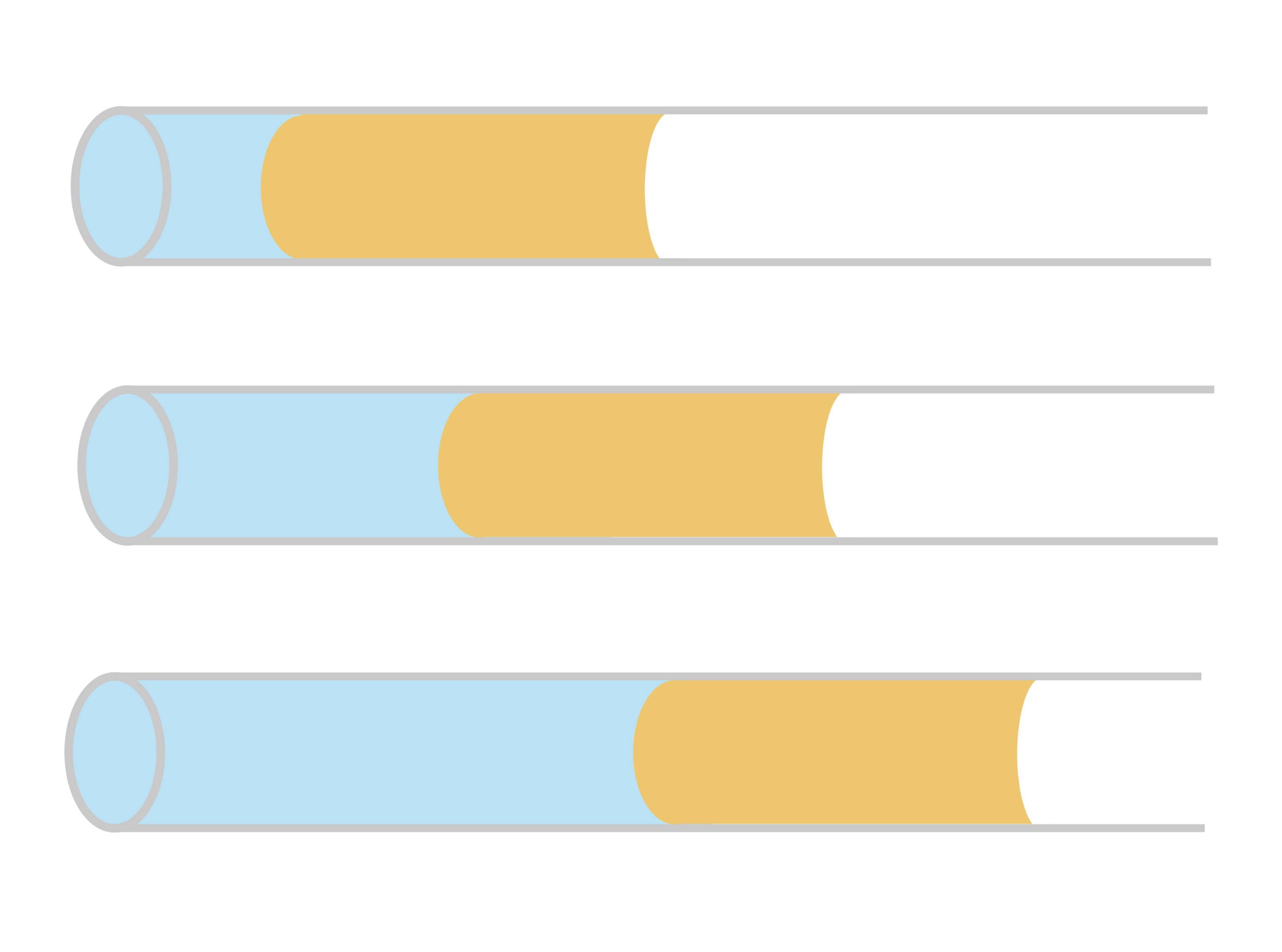
In the confines of a narrow tube, a flow’s energy gets dissipated in two places: inside the bulk fluid and along the contact line. The former is standard for all flows; viscosity acts like internal friction in the fluid and dissipates a flow’s kinetic energy into heat. Contact line dissipation is trickier. While it isn’t hard to imagine that a moving contact line would dissipate energy, it’s been unclear just how much energy the contact line eats up.
To answer that question, researchers performed a novel experiment using an extremely narrow capillary tube, initially filled with air. By dipping one end of a horizontal tube in an oil reservoir, they sucked some oil into the tube. Then they set the oil-filled end of the tube against a water reservoir, causing it to suck up water. The oil slug then moves along the tube at a constant speed, which enables the team to separate out the two sources of dissipation. They found that contact-line dissipation accounted for a surprisingly large amount of the overall dissipation — between 20 and 50 percent, depending on the length of the oil slug! (Image credit: N. Sharp; research credit and submission: B. Primkulov et al.)

Reader Question: Waves Breaking
As a follow-up to the recent waves post, reader robotslenderman asks:
What does it look like when the wave breaks? And why do waves sometimes push us back? Why are we able to ride them?
I wasn’t able to find an equivalent breaking wave version of that dyed wave – side note: readers with flumes, please feel free to make one and share it! – but here’s an undyed breaking wave for our reference.
Waves break, or get that white, frothy look, when they reach shallower water. In the previous post, the waves we saw were effectively deep-water waves, so they didn’t change in height as they rolled across the tank. Here there’s an incline to simulate a beach, which causes the water to slow down and steepen. That forms the characteristic curl of a plunging breaker, seen here.
At the beach, a wave runs out of water to pass through and all the energy that wave was carrying has to go somewhere. Some is lost as heat, some turns into the sound of that classic crashing wave, and a lot of it gets dissipated as turbulence that pushes us, sand, shells, and anything else its way.
As for why we can ride waves, there’s some special physics at play when it comes to surfing. To catch a wave, a surfer has to paddle hard to get up to the wave’s speed just as it reaches them. Too slow and the wave will just pass them by, leaving them bobbing more or less in place. (Image credit: T. Shand, source)

Shrinking Red Spot
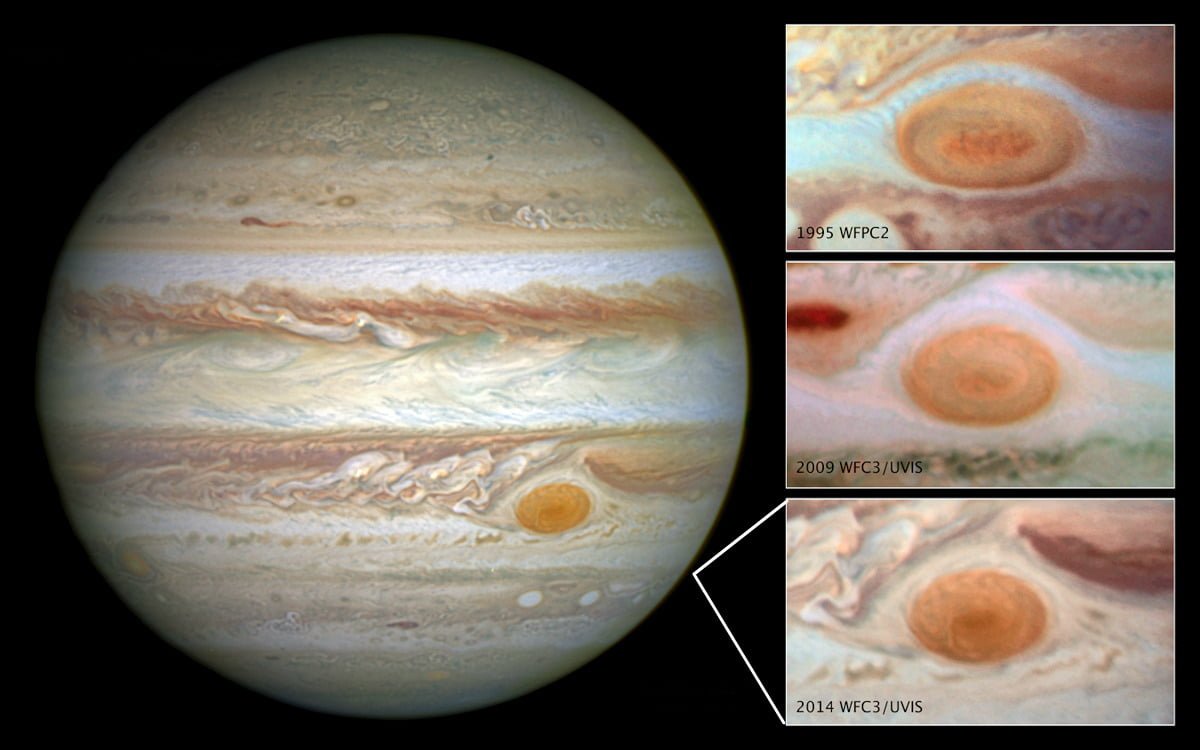
Observations show Jupiter’s iconic Great Red Spot is shrinking, most recently at a rate of more than 900 km a year. As it gets smaller, the storm is also changing shape and becoming more circular. Scientists don’t yet have an explanation for the shrinkage or its recent acceleration, but this is unsurprising given the rich complexity of the storm. For example, the source of the Red Spot’s longevity–it may be more than 300 years old–is still an open topic of research. Some of the most recent observations show smaller eddies feeding into the storm; the current hypothesis is that these eddies may be increasing the Red Spot’s dissipation and accelerating its breakup. (Photo credit: NASA/ESA; h/t to io9)