
Tag: damping

  • Featured Video Play Icon

    Damping a Skyscraper

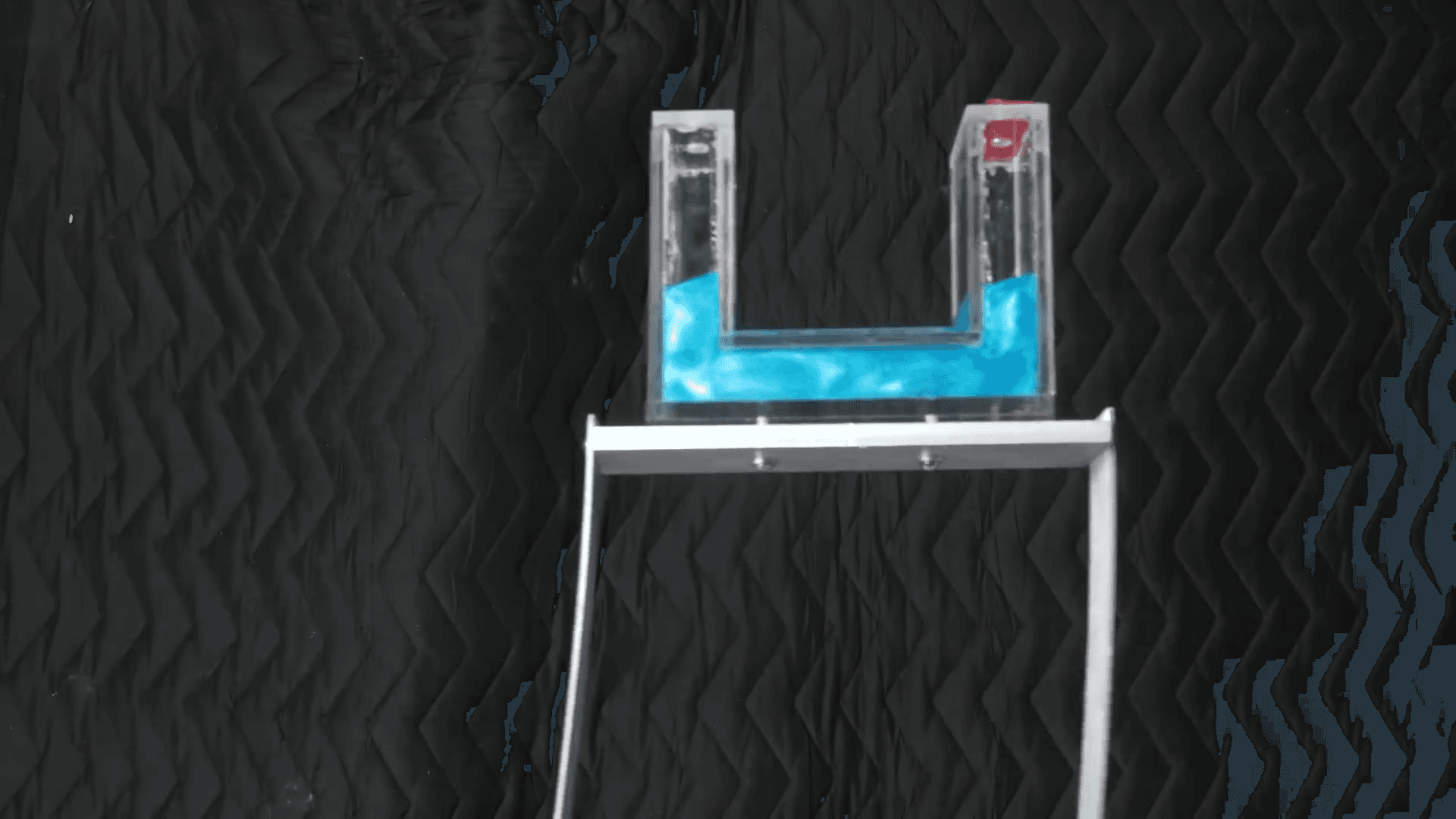
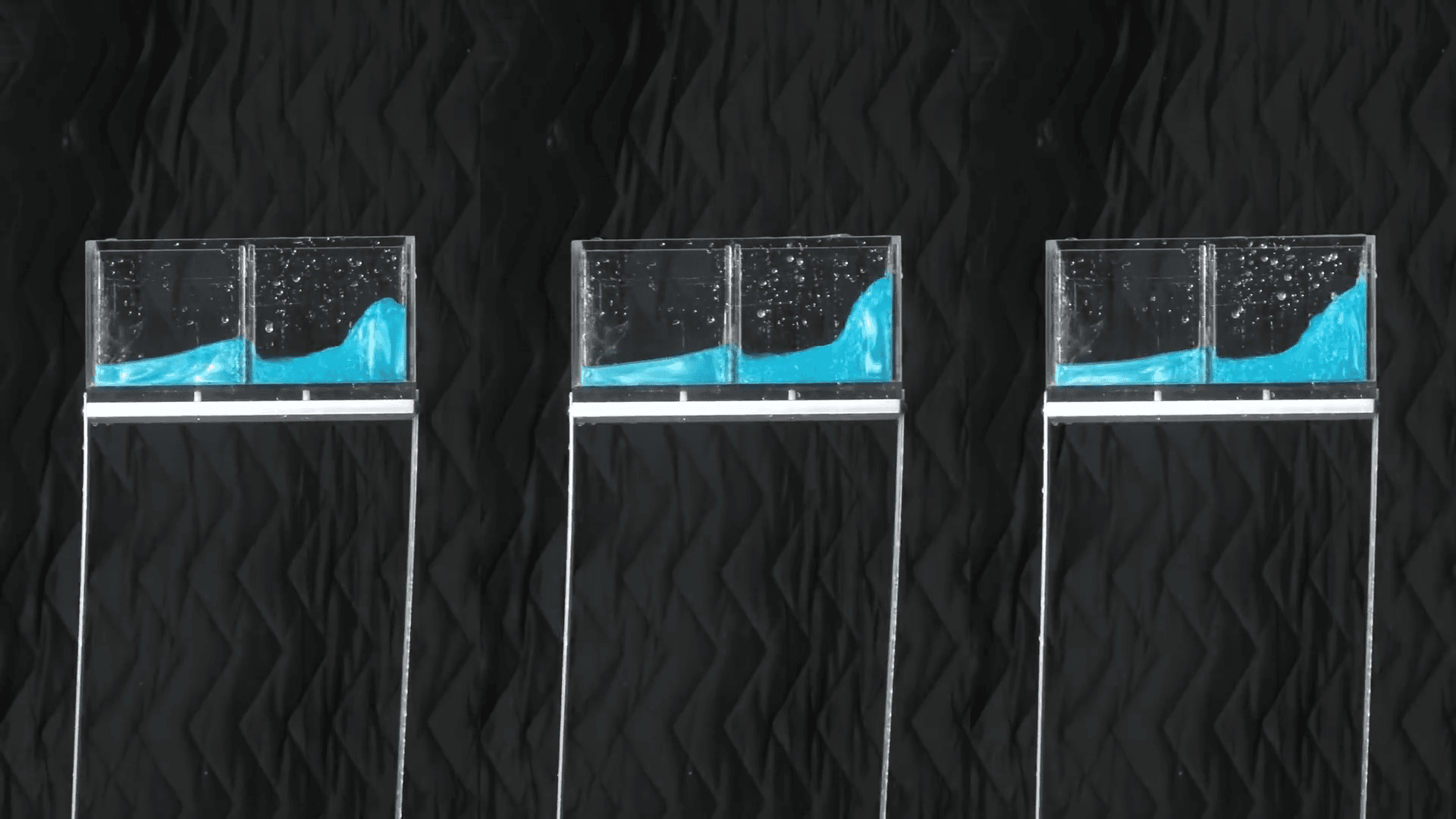
    Wind forces on a skyscraper can set it swaying, so engineers design dampers to stop the motion and keep users comfortable. Some buildings use suspended solid mass dampers to counter a building’s motion, but others take a liquid approach. Whether by shifting water through specially shaped chambers or by sloshing it back and forth in a tank, a tuned liquid damper system can quickly bring a building back to rest. In this Practical Engineering video, Grady discusses the challenges of designing these systems and demonstrates how they work with a cool tabletop version. As a reminder, sloshing also helps in water-bottle flipping and stopping a bouncing ball. (Video and image credit: Practical Engineering)


    Fediverse Reactions
  • Featured Video Play Icon

    Perturbations

    At first glance, today’s video appears to have little to do with fluid dynamics since it’s a demonstration of interactions between magnets. But for those who’ve delved into the mathematics of fluid dynamics — especially subjects like perturbation theory — there’s a lot to appreciate here. In the video, we see systems of magnets constructed and then manipulated, often by moving a single magnet and watching how the rest respond. Visually, this demonstrates how disturbances move in complex, interconnected damped systems. The auditory component — definitely turn the sound on for this video — is an extra layer of fluids-related goodness that also shows how reconfiguring a system changes its resonant frequencies. (Image and video credit: Magnetic Tricks and Magnetic Games; via Colossal)

  • Hiding From Waves

    Hiding From Waves

    Ocean waves can be dangerous for boats, particularly when operating near off-shore platforms. But a new study, inspired by electromagnetic waveguides, demonstrates a lab-scale water waveguide capable of damping out a range of waves experienced by any ship inside its protected area. The water waveguide sits below the surface, changing the water depth and therefore the propagation of surface waves. 

    When properly positioned, the waveguide nearly eliminates wave motion in a protected channel. You can see this in the right image, where waves are clearly present in the foreground but the toy boat hardly moves. Contrast this with the image on the left, where the boat bobs and rocks under the same wave conditions without the waveguide. The researchers hope their waveguide concept can help protect ships in wharves and harbors soon. (Image and research credit: S. Zou et al.; via APS Physics; submitted by Kam-Yung Soh)