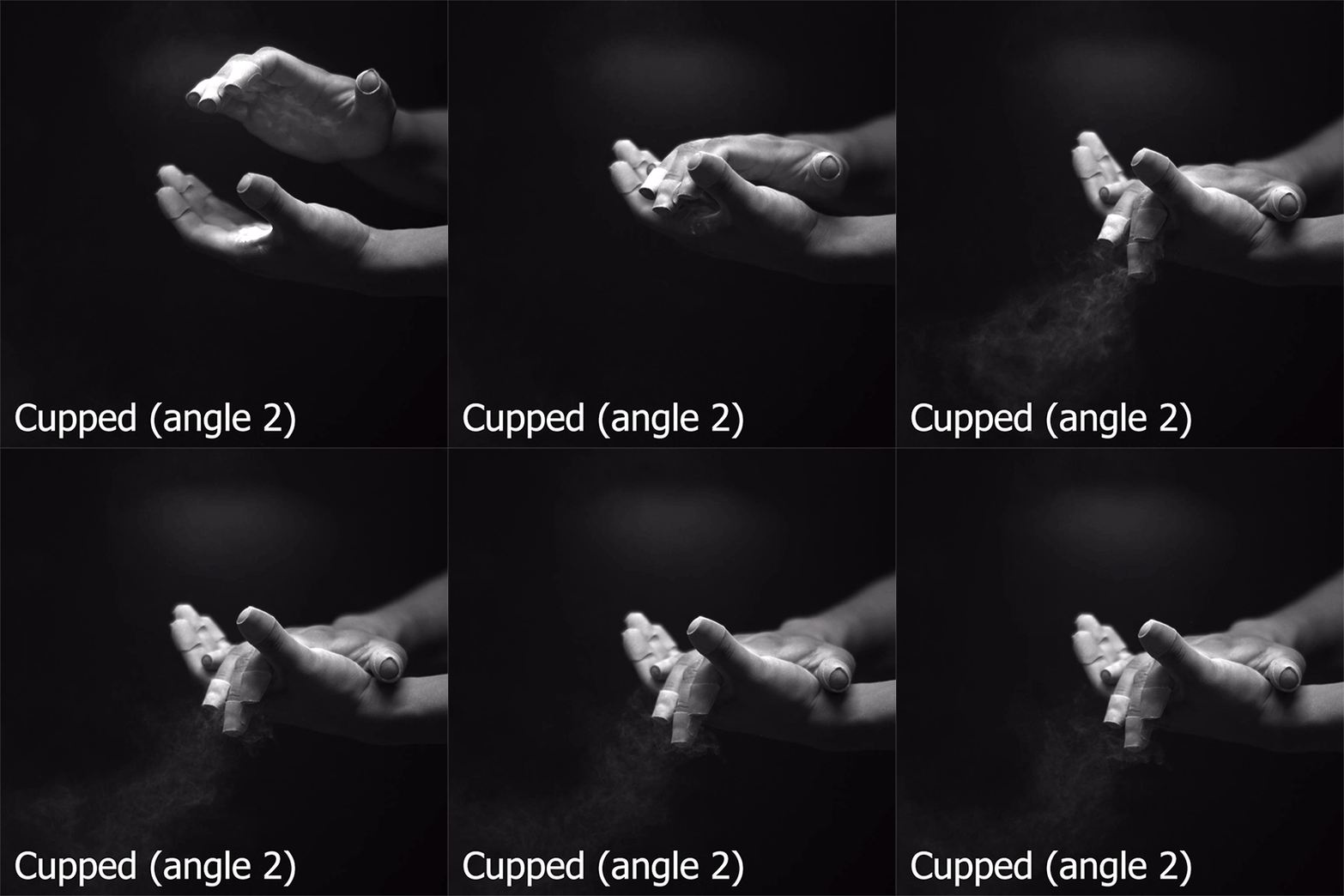
Although often associated with applause, hand clapping is more universal than that. The distinctive sound can mark rhythms, draw attention, and even test the surrounding acoustics. But how exactly does hand clapping work? A recent study shows that the acoustics of hand clapping come from more than just the collision of hands. Especially in a cupped configuration, clapping hands act like a Helmholtz resonator (think blowing across a bottle top), producing a resonant jet that squeezes out between the forefinger and thumb of the impacted hand. Check out the images above to see how that jet appears in various clapping configurations. (Image and research credit: Y. Fu et al.; via Physics Today)
Tag: applause

Bravo!
Applauding is a familiar activity, but, as you stand for an encore in the concert hall, do you think about how you hold your hands and how that affects your clap? That question prompted two scientists to embark on an acoustical exploration of clapping. By testing 11 different ways to hold their hands during clapping, the duo found some interesting results.
The loudest clap — achieving an average of 85 decibels — held the hands at 45 degrees to one another, with palms partially overlapping (A2 in the figure). But the clap that most pleased the ear was a little different (A1+). It kept the 45 degree orientation, but the palms overlapped fully with a domed shape between them. In that configuration, the palms form a little resonance chamber that makes the clap sound deeper and richer. (Image credits: top – G. Latorre, others – N. Papadakis and G. Stavroulakis; research credit: N. Papadakis and G. Stavroulakis; via Physics World)

Scientists studied the sounds made from clapping in 11 different hand configurations.