Tag: water anole

  • Anoles Revisited

    Anoles Revisited

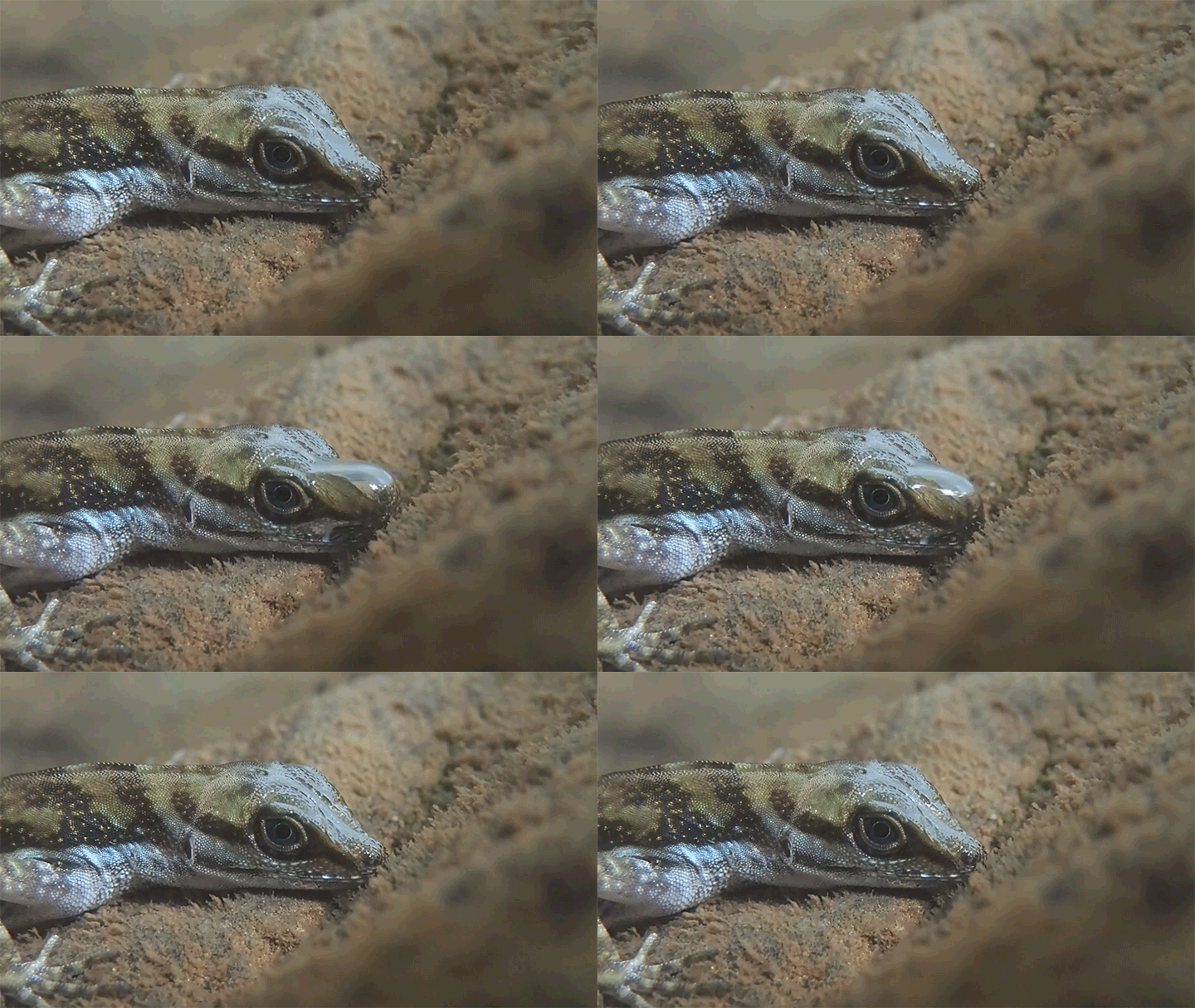
    Longtime readers may recall seeing this little bubble-crowned anole previously. This species dives underwater to escape predators and will breathe and rebreathe a bubble of air for as much as 18 minutes before resurfacing. At the time of my original post, I speculated that the reptile’s hydrophobic skin might provide a large enough bubble surface area to provide some diffusion of fresh oxygen from the surrounding water.

    Since then, there’s been at least one study of this anole rebreathing process. Researchers found that many anole species share this behavior, but aquatic species use it more regularly. They noted that the plastron — that flat, silvery bubble that’s spread over the lizard’s skin — helps hold the bigger, exhaled bubble in place and might facilitate a little of the diffusion I speculated about but the results are unclear on that last point. The authors note that it’s unlikely that the anoles could support their full metabolism through rebreathing and diffusion but that the plastron may yet support some rejuvenation of oxygen, which would help prolong anoles’ dives. (Image and research credit: C. Boccia et al.)

  • Water Anoles Breathe Underwater

    Water Anoles Breathe Underwater

    Meet the water anole, a small lizard native to the tropics of Central America. While studying these anoles, researchers discovered that they could flee underwater and remain submerged for 16 minutes or more at a time. Curious to see how the lizard manages this feat, they filmed them underwater, discovering that the anole seems to exhale a small bubble that sticks on its face and then re-inhale it.

    How exactly this built-in “scuba gear” works is still under investigation, but here’s my guess. Fresh oxygen can diffuse from water into a bubble; some insects use this to breathe underwater. The natural, random motion of molecules tends to cause chemicals to move from areas of high concentration to those of low concentration. But this molecular diffusion is extremely slow. That tiny bubble you see isn’t around long enough for any significant molecular diffusion of fresh oxygen. But what if the surface of the bubble is actually much larger?

    Notice the silvery shininess we see on the anole. That’s because most of the lizard isn’t actually wet. The anole is superhydrophobic, so its skin has trapped a thin layer of air that appears to extend over a large part of its body. I think perhaps the anole has fresh oxygen diffusing into the air layer across most of its skin, and the large bubble it inhales and exhales serves as a sort of pump to help draw that fresh oxygen through the air layer and into its body. That could help explain how the anole can stay submerged for so long.

    As researchers continue to investigate this little aquanaut, it will be interesting to discover just what its secrets are! (Image and video credit: L. Swierk; via Gizmodo)