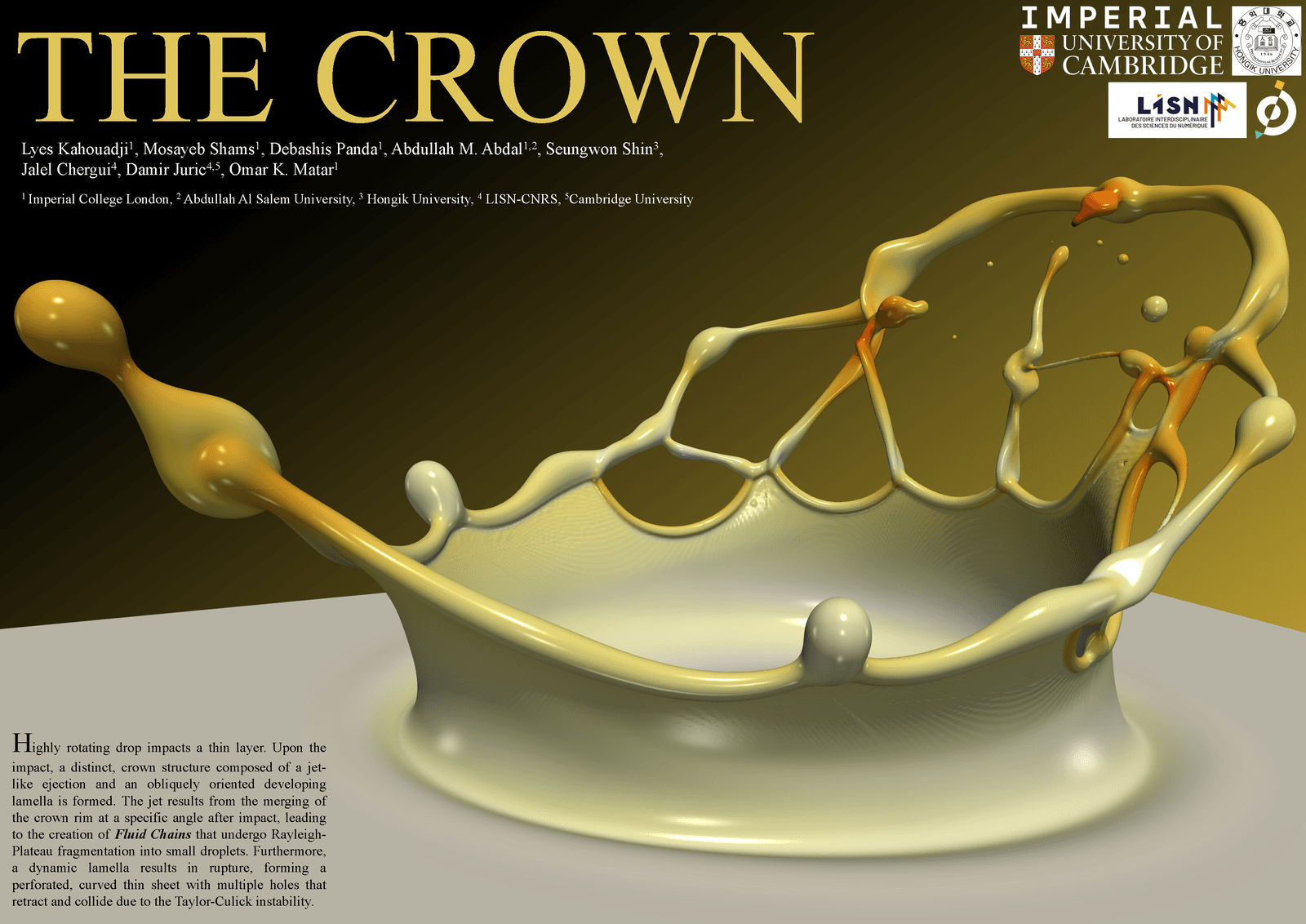
When a falling drop hits a thin layer of water, the impact sends up a thin, crown-shaped splash. This research poster shows a numerical simulation of such a splash in the throes of various instabilities. The crown’s thick edges are undergoing a Rayleigh-Plateau instability, breaking into droplets much the way a dripping faucet does. On the far side, the crown has rapidly expanding holes that pull back and collide. The still-intact liquid sheet at the base of the crown shows some waviness, as well, hinting at a growing instability there. (Image credit: L. Kahouadji et al.)
Tag: crown splash

Drops on the Edge


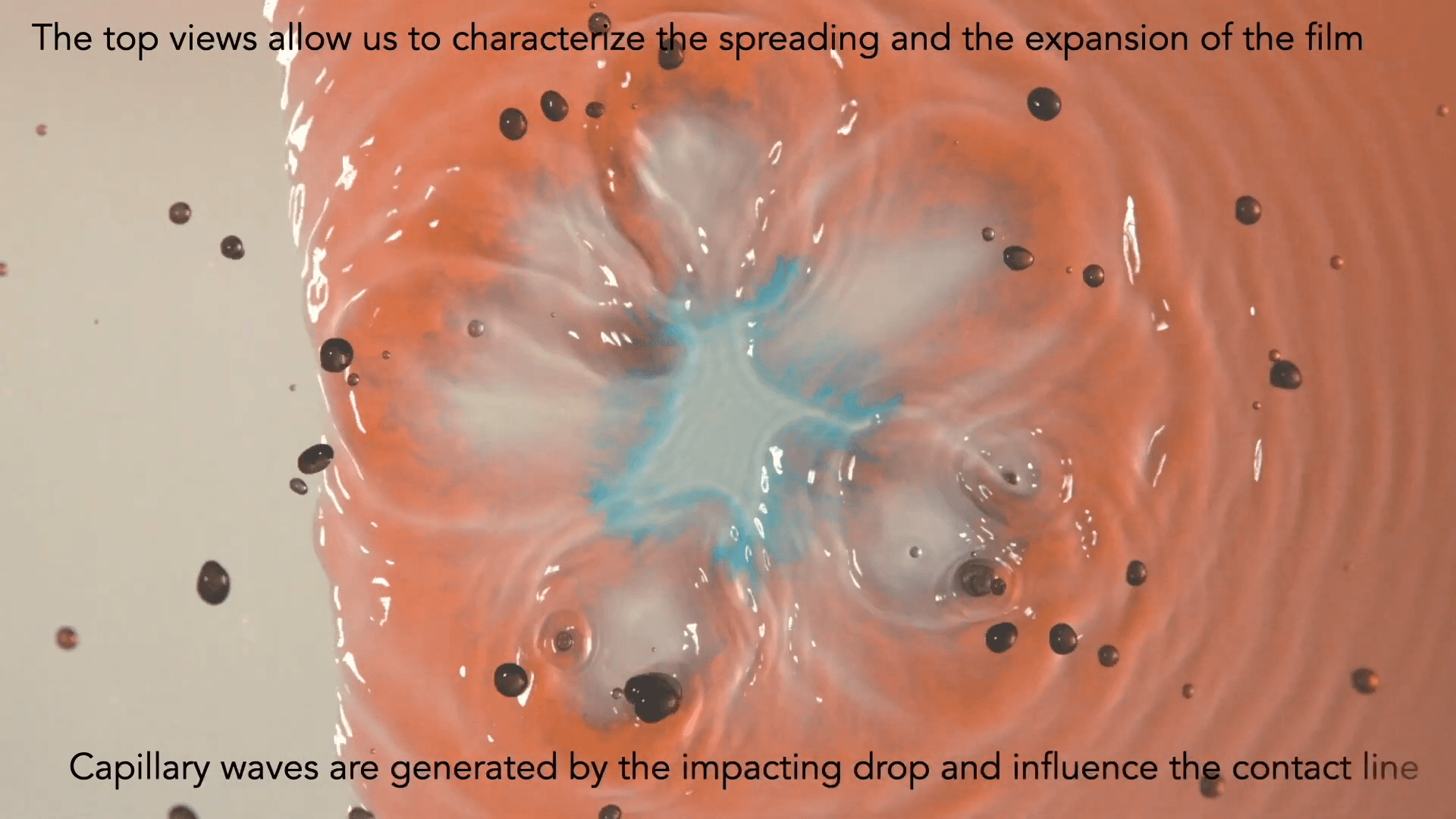
Drops impacting a dry hydrophilic surface flatten into a film. Drops that impact a wet film throw up a crown-shaped splash. But what happens when a drop hits the edge of a wet surface? That’s the situation explored in this video, where blue-dyed drops interact with a red-dyed film. From every angle, the impact is complex — sending up partial crown splashes, generating capillary waves that shift the contact line, and chaotically mixing the drop and film’s liquids. (Video and image credit: A. Sauret et al.)

Making a Splash
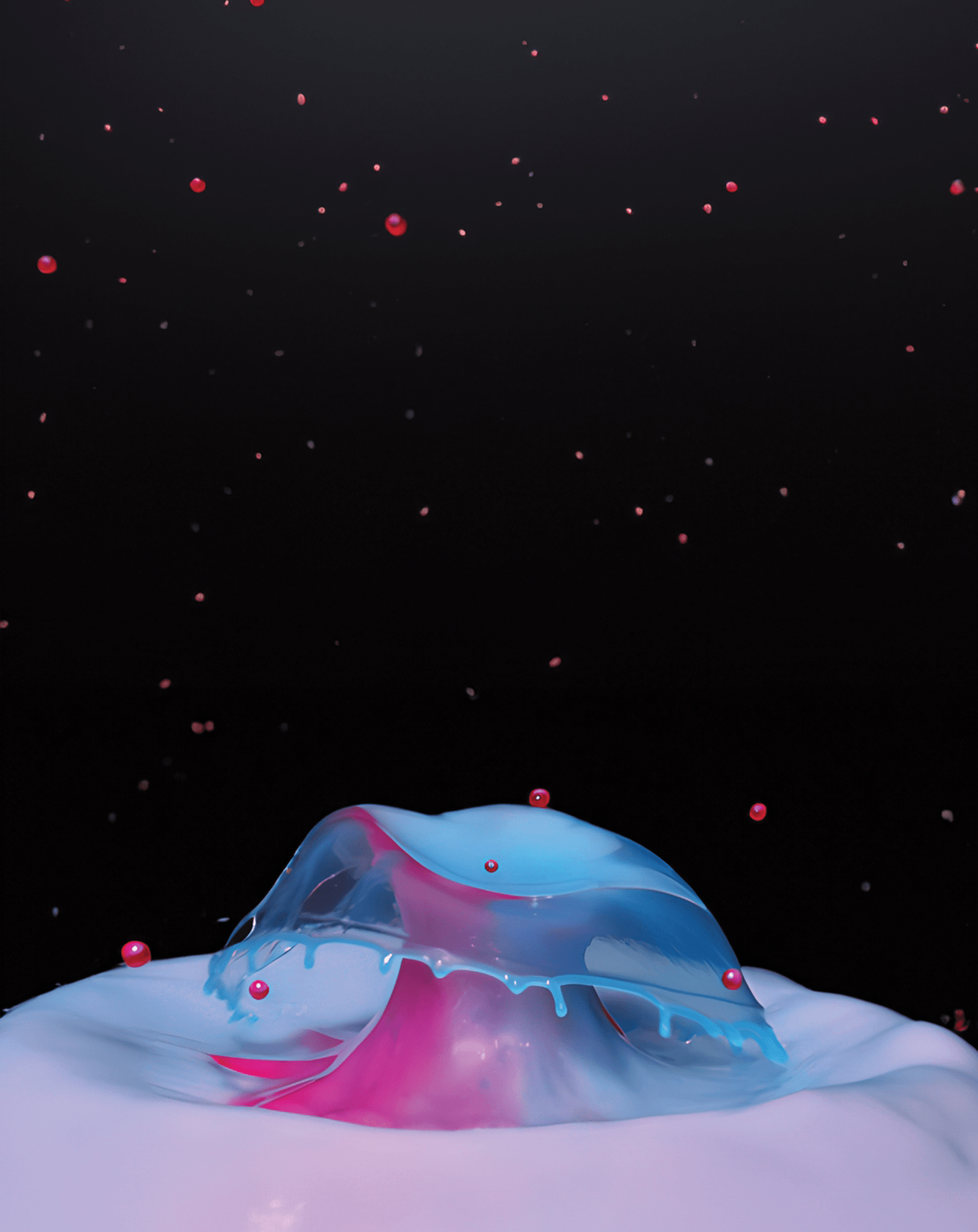
Since Harold Edgerton’s experiments with stroboscopic photographs in the 1930s, we’ve been fascinated by the shape of splashes. These days students and artists can take advantage of programmable external flashes to capture this split-second moment of impact. Here, a pink-dyed drop of ethanol strikes a jet rising from a pool of glycerin, milk, and food coloring. The resulting splash is umbrella-like, with a thickened rim that shows tiny ligaments of fluid — an early sign of the instability that will ultimately detach droplets from the splash. This image was taken by students in a course that connects art and fluid mechanics. (Image credit: L. Sharpe et al.; via Physics Today)

Variations on a Theme by Edgerton
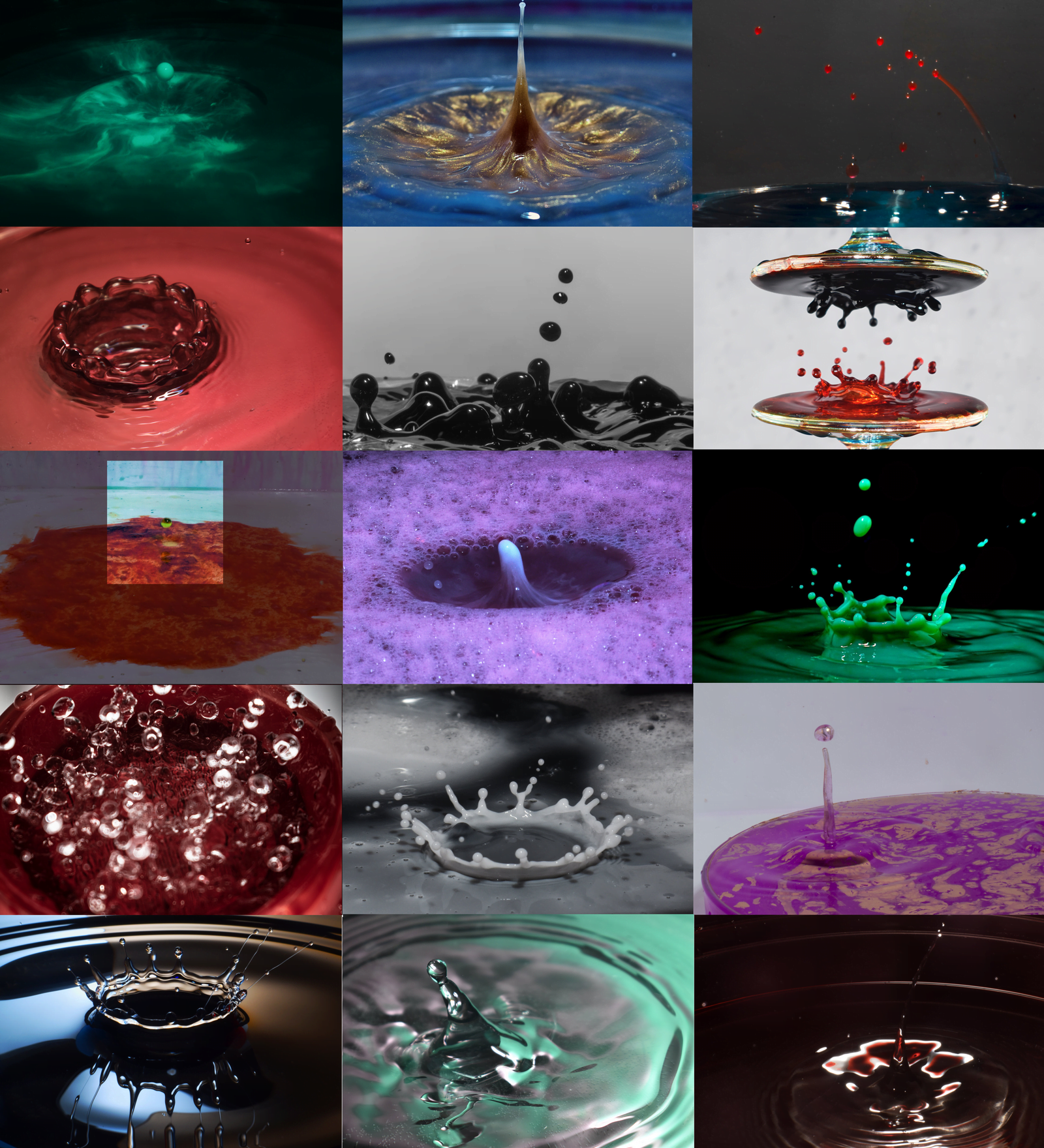
In the 1930s, Harold Edgerton used strobed lighting to capture moments too fast for the human eye, including his famous “Milk-Drop Coronet”. Recreating his set-up is far easier today, thanks to technologies like Arduino boards that make timing the drop-strobe-camera sequence simple. This poster is a collage of Edgerton-like images captured by students at Brown University. Even nearly a century after Edgerton, there are countless variations on this beautiful slice of physics: all from the splash of a simple drop striking a pool. (Image credit: R. Zenit et al.)

Reader Question: Splashes
Reader effjoebiden asks:
So is the crown splash the curving wave of water on either side of the tire, the spikes of water in the middle behind the tire, or both? And is the Worthington jet also the same phenomenon that can happen with a massive meteorite impact?
Here the term “crown splash” refers to the curving sheets of water spreading on either side of the tire. Those liquid sheets (or lamella) break down at the edges into spikes and droplets just like the ones seen when a drop falls into a pool, which is the traditional source of the term “crown splash” because it resembles a crown.
And, yes, enormous meteor impacts can create Worthington jets (that column of fluid that pops up after a droplet impacts)! This is why some craters have peaks in the middle. There are actually some surprising similarities between meteor impacts and fluid dynamics.
(Image credits: S. Reckinger et al., original post)