Tag: internal flow

  • Spiral Shark Intestines

    Spiral Shark Intestines

    We’ve seen previously just how fluid dynamically impressive sharks are on the outside, but today’s study demonstrates that they’re just as incredible on the inside. Researchers used CT scans of more than 20 shark species to examine the structure of their intestines. Sharks have spiral intestines that come in four different varieties; two of those types look like a stacked series of funnels (either pointing upstream or downstream). These funnel-filled spirals, the researchers found, are incredibly good at creating uni-directional flow without any moving parts, much like a Tesla valve does. The spiral structure also seems to slow down digestion, which may factor into the shark’s ability to go long periods between meals. Incredibly, the fossil record indicates that spiral intestines — in some form — evolved in sharks about 450 million years ago — before mammals even existed! Clearly we engineers are way behind sharks when it comes to controlling flows!

    Animation of a 3D scan of a shark's intestine, showing the spiral internal structure.

    (Image credit: top – D. Torobekov, scan – S. Leigh; research credit: S. Leigh et al.; via NYTimes; submitted by Kam-Yung Soh)
  • Fungal Fluid Dynamics

    Fungal Fluid Dynamics

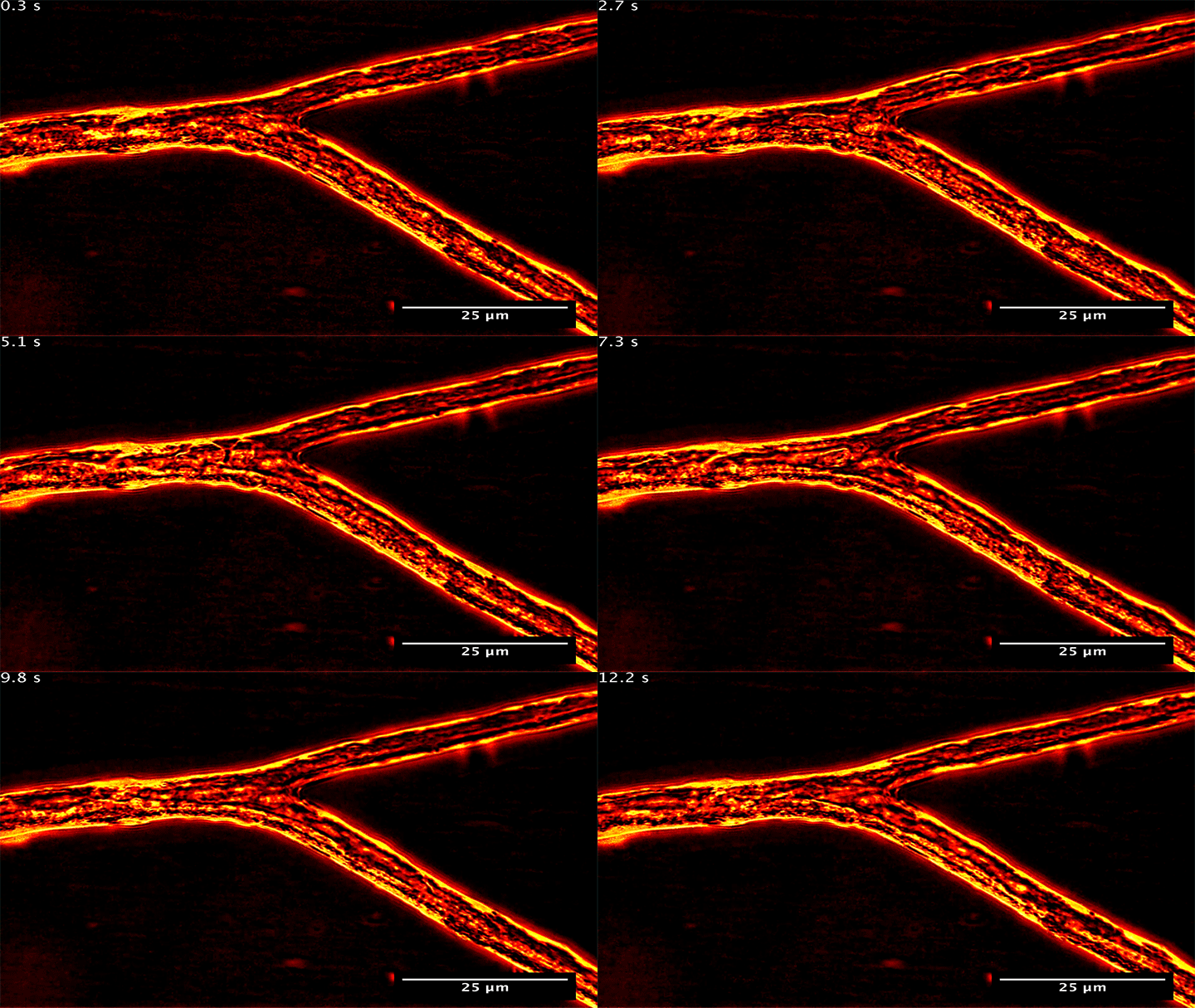
    Many plants gain the soil-bound nutrients they need by trading with symbiotic fungi. Underground, these fungi spread networks that gather and store phosphorus, which they then trade with host plants to get the carbon they need. Research shows that the fungi can be shrewd traders, moving phosphorus from nutrient-rich areas to poorer ones in order to maximize their trade gains.

    What you see above are snapshots of some of this transport within the fungal network. Notice how flow within the branching network changes direction. The fungus can force these flow reversals in a matter of seconds, allowing it to move nutrients to wherever the best returns are found. (Image and research credit: M. Whiteside et al.)

  • Reader Question: Fire as a Fluid?

    Reader Question: Fire as a Fluid?

    Reader David L asks:

    I understand that fire is a form of energy rather than a fluid in the physical/tangible sense. However, is it possible for fire to exhibit fluid-like behaviours to a certain extent.

    In other words, could the dynamic properties of fire be described with pseudo-variables analogical to variables that describe a physical fluid (i.e. viscosity, density, Re, etc.)?

    Actually, combustion is a major topic of research among fluid dynamicists. Since the part of fire that we identify as visible flame is a reacting mixture of gas and some solid particles, it moves according to the same equations of motion as any other gas. However, when studying combustion thermodynamical equations and chemical reactions must also be tracked in addition to mass and momentum, which makes modeling fire very difficult. Combustion plays a major role in internal flows like those in car, jet, and rocket engines. (Photo credit: master.blitzy)