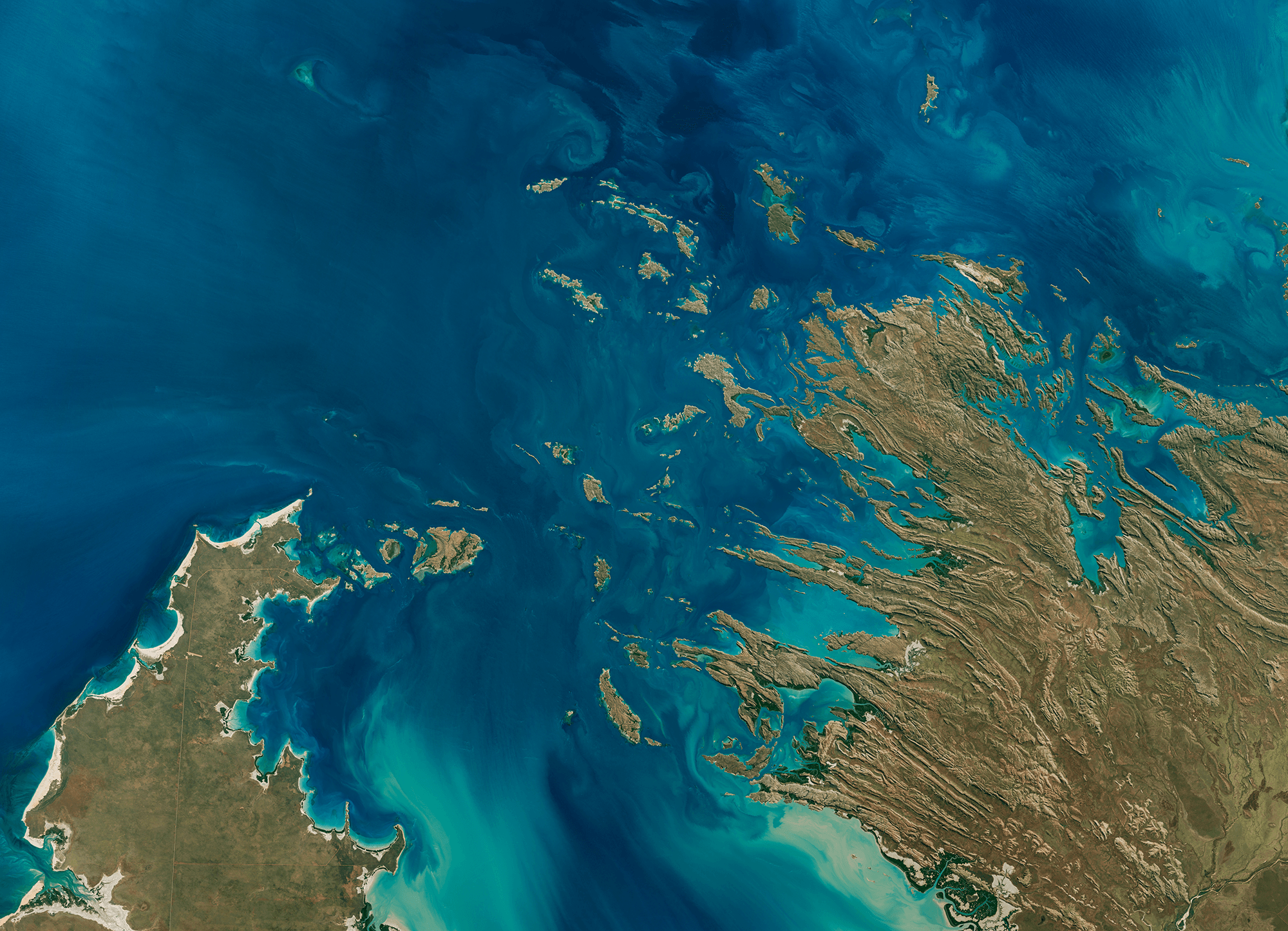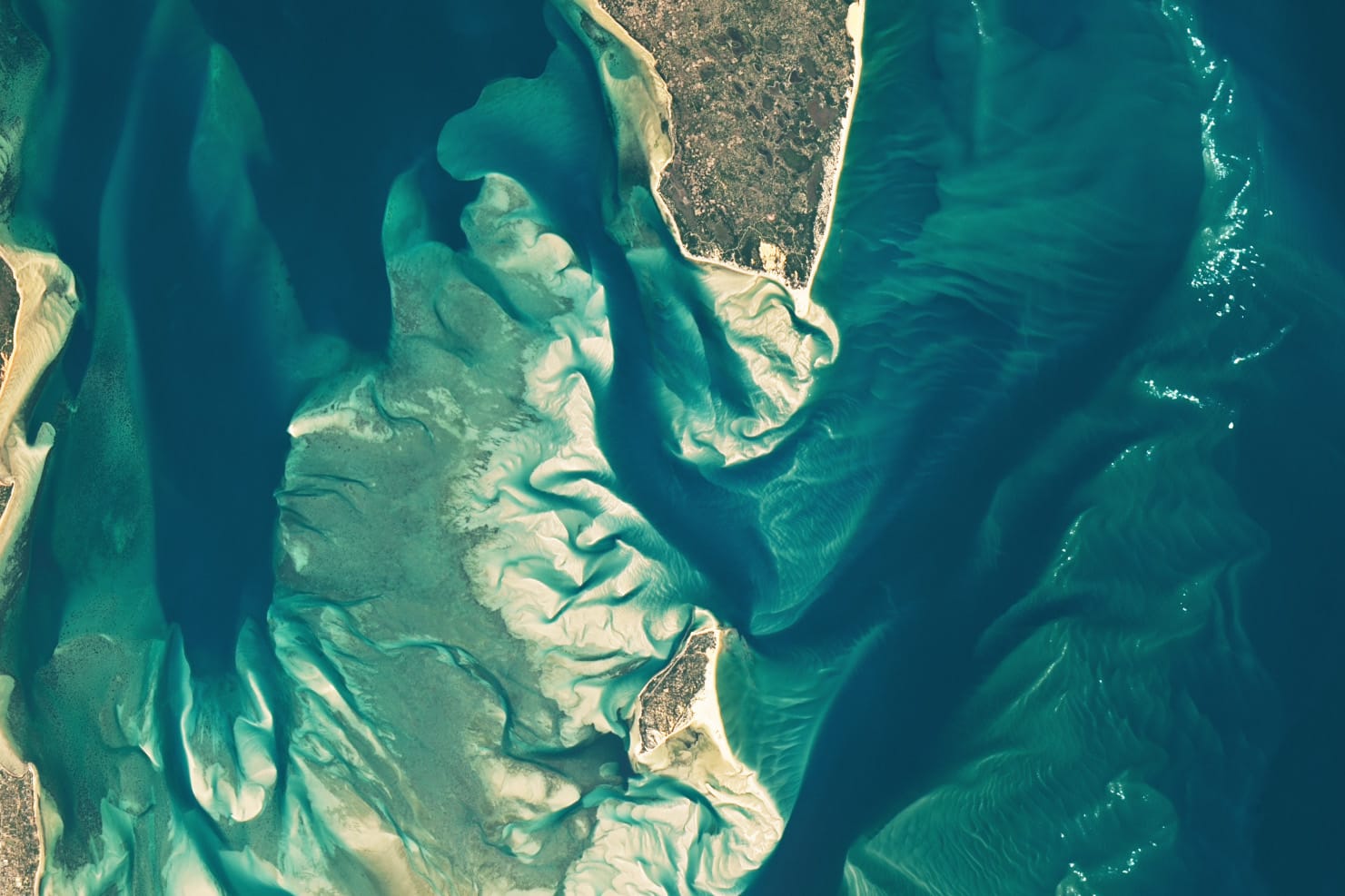
The colorful coastline of the Bazaruto Archipelago extends off East Africa. Regions of shallow waters, seagrass meadows, and coral reefs appear in shades of tan, green, and turquoise. Deeper waters appear blue. The coastlines, deltas, and tidal flats are shaped by moderate tides that rise and fall a few meters each day; strong currents run in the channels between islands, carving and reshaping the sediment. (Image credit: W. Liang; via NASA Earth Observatory)
Tag: ocean tides

Buccaneer Archipelago
Off western Australian, hundreds of low-lying islands and coral reefs jut into the ocean as part of the Buccaneer Archipelago. Tides here have a range of nearly 12 meters, so water rips through the narrow channels as the tide ebbs and flows. These fast flows lift sediment that dyes the water a bright turquoise. (Image credit: M. Garrison; via NASA Earth Observatory)
Fediverse Reactions
-

Tides Widen Ice Cracks
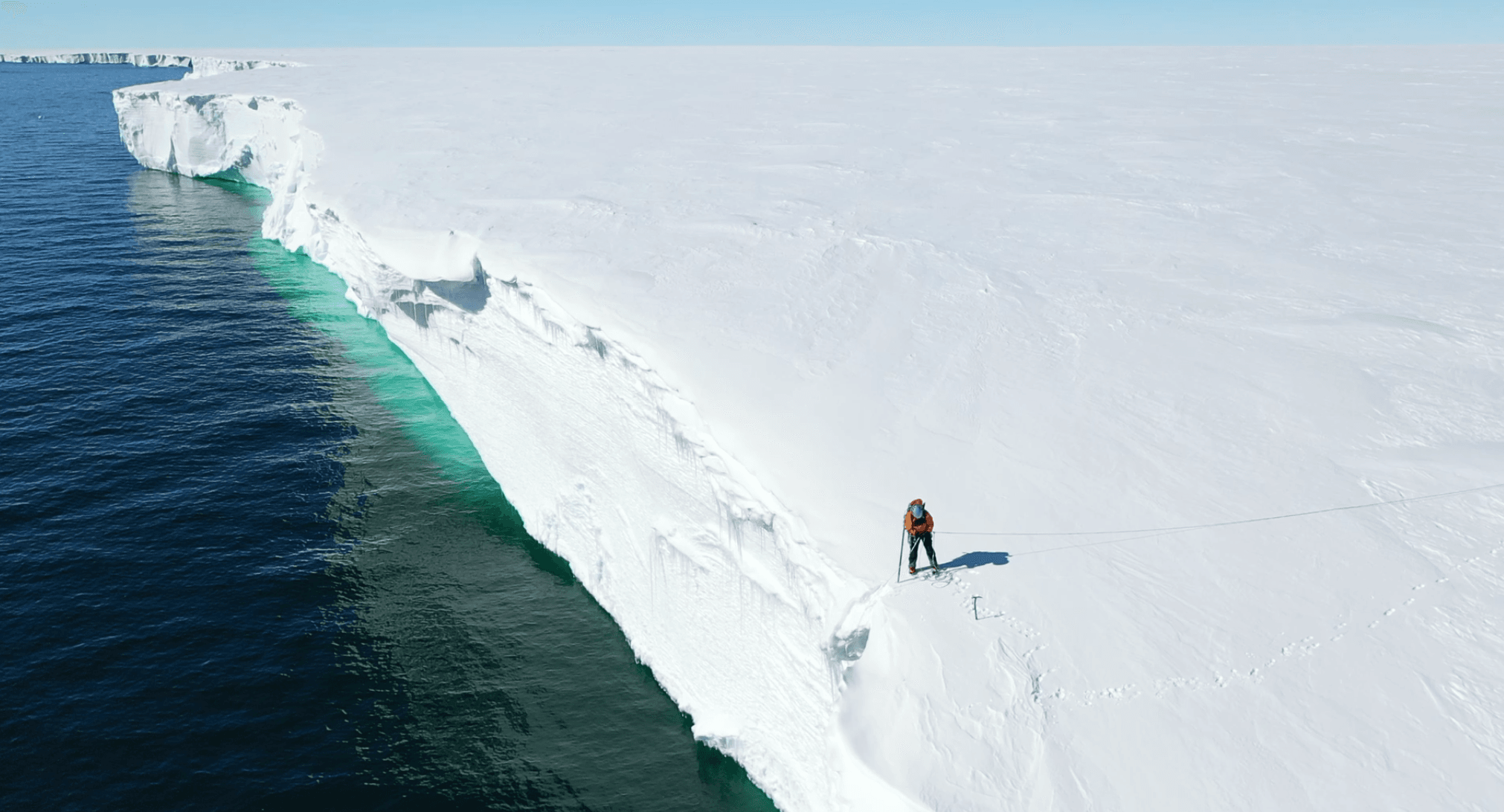
When icebergs calve off of Arctic and Antarctic coastlines, it affects glacial flows upstream as well as local mixing between fresh- and seawater. A recent study points to ocean tides as a major factor in widening the ice cracks that lead to calving. The team built a simplified mathematical model of an ice shelf, taking into account the ice’s viscoelasticity, local tides, and winds. Then they compared the model’s predictions with satellite, GPS, and radar data of Antarctica’s Brunt Ice Shelf, where an iceberg the size of Greater London broke off in 2023.
Between their model and the observation data, the team was able to show that the crack that preceded calving consistently grew during the spring tides, when tidal forces were at their strongest. The work gives us one more clue for refining our predictions of when major calving events are likely. (Image and research credit: O. Marsh et al.; via Gizmodo)
Fediverse Reactions
-

Tides
Most of us think we understand why Earth’s oceans have tides, but it turns out that there are some misconceptions in the common explanation. Yes, it’s true that the moon’s gravity pulls on water in the ocean, but it equally pulls on everything else, too, and we don’t levitate at high tide! In reality, it’s the distribution of tidal forces across the enormity of the ocean that causes the ocean to bulge along the Earth-moon line and create high and low tides. Lakes, puddles, and humans experience tides, too, but we’re so small that the tidal forces we experience are too tiny to be noticeable. For the full explanation, I encourage you to watch PBS Space Time’s video. Don’t let the 15 minute run-time deter you; the tidal explanation is contained within the first 9 minutes. (Video credit: PBS Space Time; via It’s Okay To Be Smart)