
Month: October 2023

  • Scooting Droplets

    Scooting Droplets

    As a child, I always loved watching rain on the windows as I rode in the car. Hemispherical droplets got stretched by the wind flowing over them. But they never stretched smoothly; instead they seemed to shiver and shake unevenly. A recent study looks at a similar situation: drops of glycerin forced to slide along a horizontal surface under the force of the wind. Like the drops on my parents’ car, the glycerin gets stretched out into an elongated oval. Surface waves develop atop the drop and move downstream. The drops, the authors observe, move a bit like a crawling caterpillar, pilling up and smoothing out as they move. (Image credit: rain – A. Alves, experiment – A. Chahine et al.; research credit: A. Chahine et al.; via APS Physics)
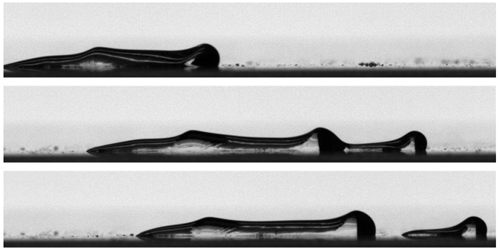
    This series of images shows an elongated droplet subjected to airflow moving from left to right. Waves form on the drop and move downstream in a fashion similar to a caterpillar crawling.
    This series of images shows an elongated droplet subjected to airflow moving from left to right. Waves form on the drop and move downstream in a fashion similar to a caterpillar crawling.
  • Field of Dunes

    Field of Dunes

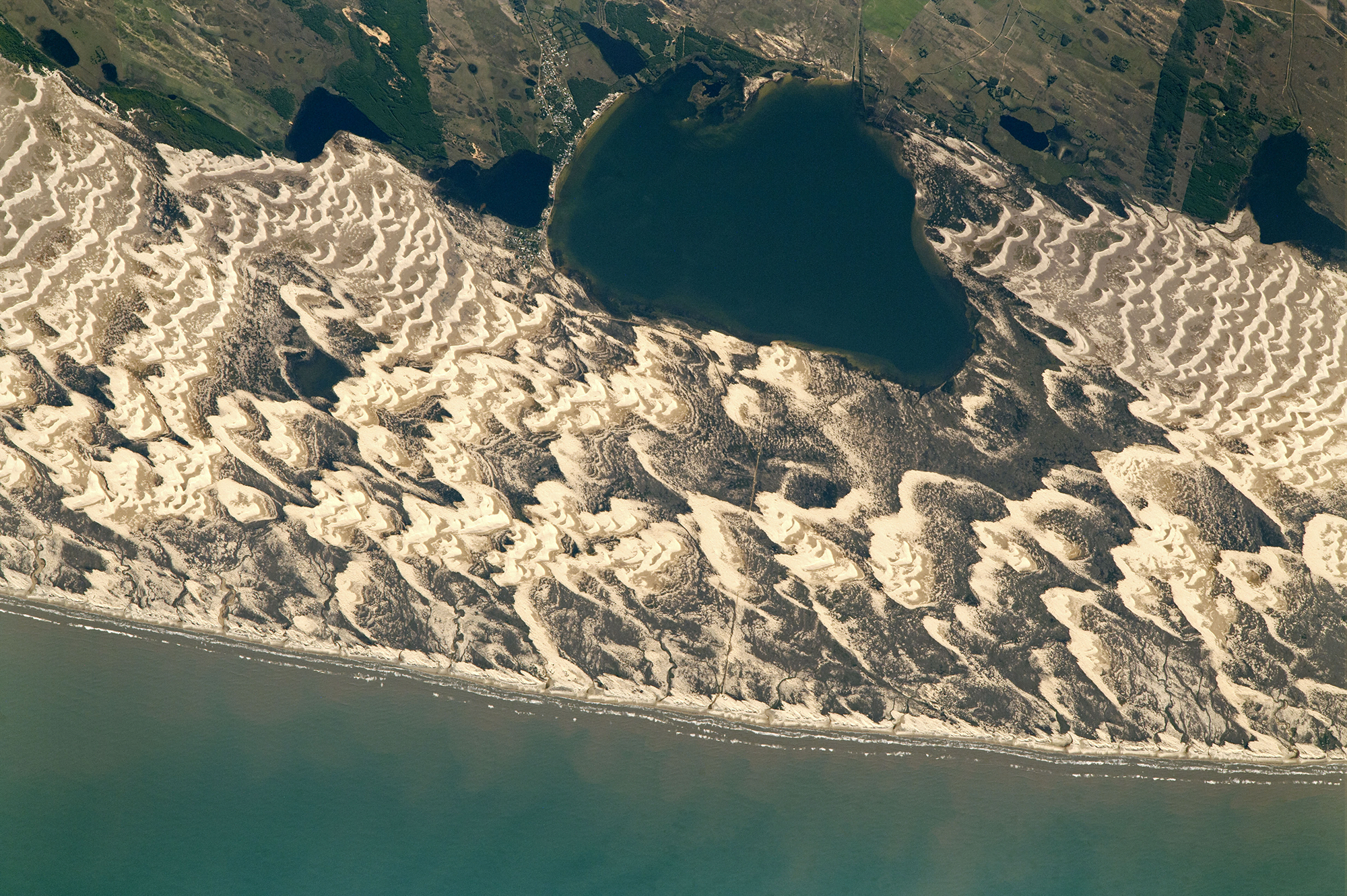
    Barchan dunes collide in this astronaut image of Brazil’s southern coastline. Barchan (pronounced “bar-kahn”) dunes are crescent-shaped; their tips point downwind into their direction of travel. When many barchan dunes overlap, they coalesce into a dune field like the one seen here. A dune’s speed depends on many factors, including the wind speed, dune size, and its proximity to other dunes. In experiments, dunes have even chased one another and changed speeds to avoid collision. (Image credit: NASA; via NASA Earth Observatory)