When particles of different sizes fall in an avalanche, they separate out by size. Smaller particles form one layer with another layer of larger particles over the top. This happens because the smaller particles tend to fall in between the larger ones, similar to the percolation theory in the Brazil nut effect. In a slowly rotating drum, this size segregation during an avalanche forms a distinctive pattern (above) called a Catherine wheel pattern. Here, the gray layers form from smaller iron particles, while the white layers are large particles of sugar. Notice that the pattern starts to form during each avalanche, but it freezes in place after grains pile up against the drum wall and cause a shock wave to run back up the avalanche. (Image credit: J. Gray and V. Chugunov, reprinted in J. Gray, source)
Month: May 2018

Hydrofoils and Stability
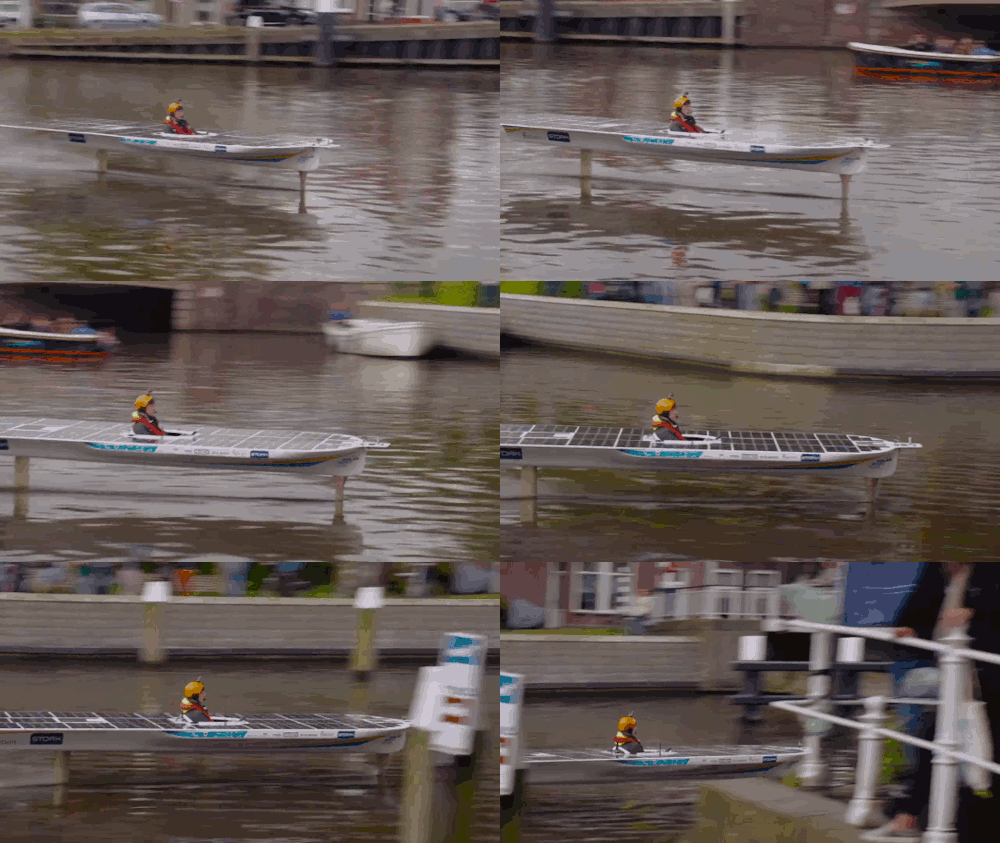
Today’s fastest boats use hydrofoils to lift most of a boat’s hull out of the water. This greatly reduces the drag a boat experiences, but it can also make the boat difficult to handle. One style of hydrofoil boat, called a single-track hydrofoil, uses two hydrofoils in line with one another to support and steer the boat. The pilot can steer the lead hydrofoil into the direction of a fall to correct it. Stability-wise, this is the same way that you keep a bicycle upright. On a boat, the situation is a bit tougher to manage, and, like riding a bike, it takes practice. A group of students published a full mathematical model for the dynamics of this kind of boat, which allows designers to test a prototype’s stability early in the design process and enables student teams to use computer simulators to train their pilots to drive a boat before putting them out on the water, similar to the way that airplane pilots train. (Image credit: TU Delft Solar Boat Team, source; research credit: G. van Marrewijk et al., pdf; via TU Delft News; submitted by Marc A.)

Colorful Erosion
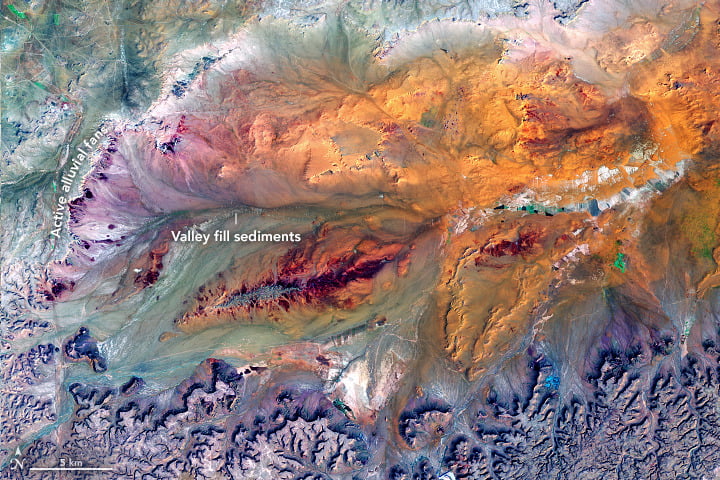
Wind, water, and gravity are great sculptors of our world. This false-color satellite image shows the Ga’ara Depression in Iraq, which formed some 300 million years ago beneath a shallow sea. The steep cliffs along the southern edge of the depression continue moving southward as they’re eroded by wind and run-off. When infrequent but intense rains pour down the channels of the southern cliffs, it carves away sediment which the water carries onward. In the flatter basin, these sometimes-rivers slow and spread out, eventually dropping the sediment they carry into sandbars. The build-up of sandbars causes the slower-moving water to shift its course back-and-forth over time, creating the alluvial fans seen along the southern and western borders. (Image credit: J. Stevens, via NASA Earth Observatory)