Tag: snow

  • Featured Video Play Icon

    “Winter”

    Little by little, snow and ice transform the landscape in Jamie Scott’s film “Winter.” From individual snowflakes to entire forest vistas, the timelapses showcase how winter remakes every surface in its image. The growing icicles show freezing in action, but I especially love seeing the “flow” brought about by progressively greater snowfall. Tree limbs bow, shrubs swell, and riverbanks contract as the snow gets thicker. And that final shot that pulls out from single snowflakes to the entire forest? Stunning! (Video and image credit: J. Scott et al.; via Colossal)

  • Snow-Covered Trees

    Snow-Covered Trees

    In the Hakkōda Mountains of Japan, snow encases the trees, transforming the ski slopes into a hoodoo-filled winter wonderland. Photographer Sho Shibata captured these images while journeying through the area a few years ago. The combination of wind and snow sculpts the trees into surprisingly similar shapes! (Image credit: S. Shibata; via Colossal)

  • “Elements”

    “Elements”

    Photographer Mikko Lagerstedt specializes in Nordic landscapes, like the windswept snow seen here. I love the way he’s captured the snow that gets picked up and blown by the wind. Notice the hazy layer of snow hovering over the foreground. This snow is saltating, just as sand does in the desert. When flakes get picked up by the wind, they follow a ballistic trajectory, much like a cannonball in a high-school physics class. As the snow crashes back down, its impact knocks up more flakes, and the process continues. Repeat enough times, and you’ll see this hazy layer of blowing snow blanketing a snowscape. (Image credit: M. Lagerstedt; via Colossal)

  • Slab Avalanche Physics

    Slab Avalanche Physics

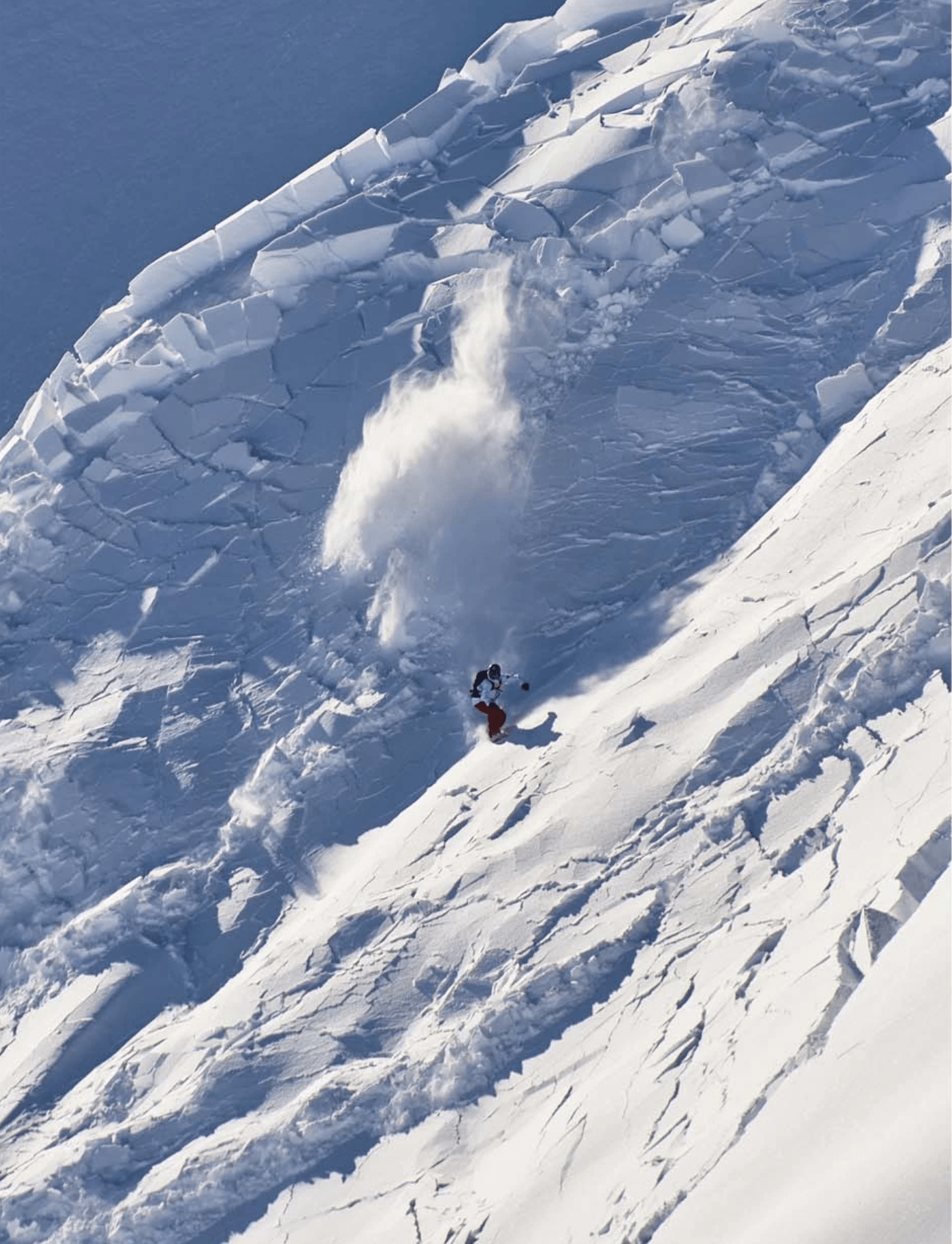
    Slab avalanches like the one shown here begin after weak, porous layers of snow get buried by fresher, more cohesive snow layers. On a steep slope, the weight of the new snow can be too great for friction to hold the slab in place, causing the upper layer to crack and slide at speeds up to 150 meters per second. Scientists had two competing theories for how slab avalanches began. One theory presumed that the weak layer of snow failed under shear; the other argued that the collapse of the lower, porous layer was at fault.

    In a new study combining large-scale numerical simulation with real-life observations, scientists came to a new conclusion: cracks began to form in the porous layer as the weight of heavier snow crushed down, but once the cracks formed, the shear mechanism took over. Cracks formed by shear could propagate along the existing cracks in the porous layer, allowing faster crack propagation than through undamaged snow. In the end, it’s the combination of the two mechanisms that triggers the avalanche. (Image credit: R. Flück; research credit: B. Trottet et al.; via Physics World)

  • Beijing 2022: Why Are Ice and Snow Slippery?

    Beijing 2022: Why Are Ice and Snow Slippery?

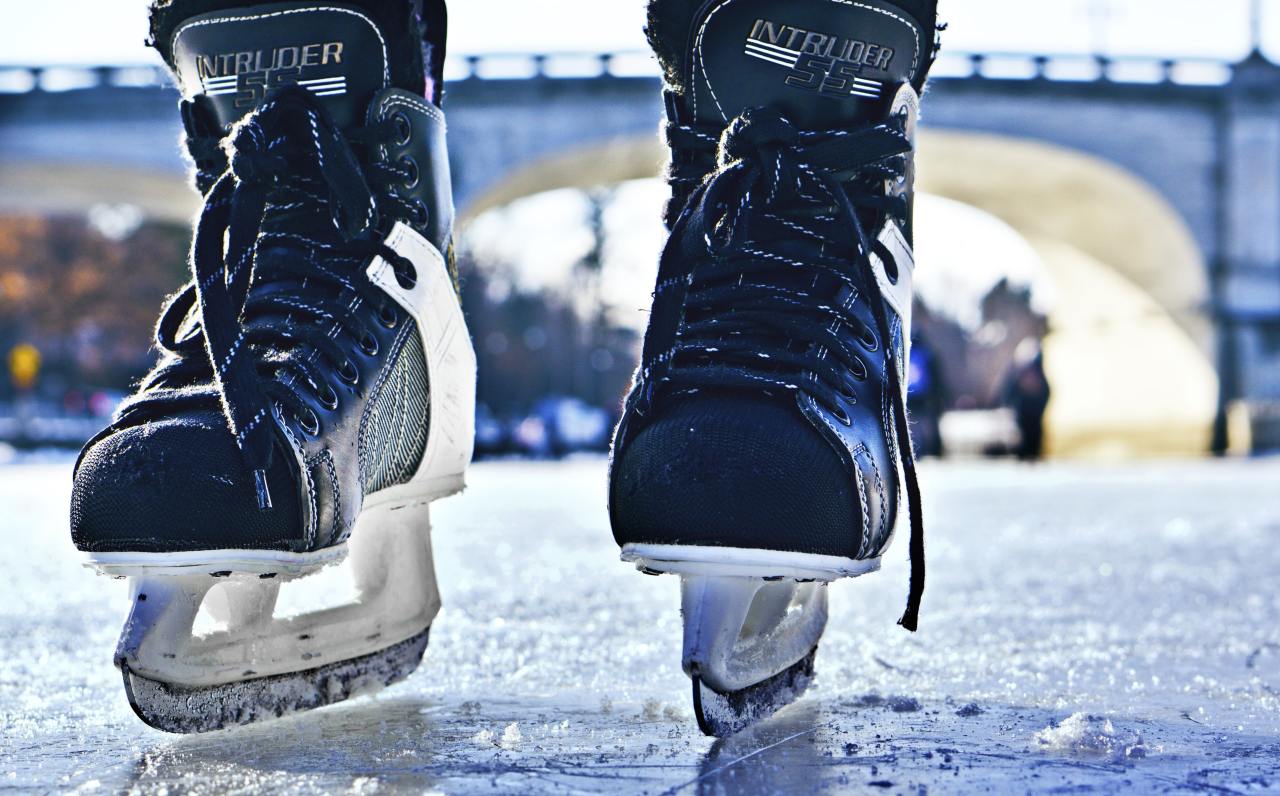
    Although every Olympic winter sport relies on the slippery nature of snow and ice, exactly why those substances are so slippery has been an enduring mystery. Michael Faraday hypothesized in the nineteenth century that ice may have a thin, liquid-like layer at its surface, something that modern studies have repeatedly found.

    One recent study used an entirely new instrument to probe the characteristics of this lubrication layer and found that it is only a few hundred nanometers thick. But the fluid in this layer is nothing like the water we’re used to. Instead it has a viscosity more akin to oil and its response to deformation is shear-thinning and viscoelastic, more like the complex fluids in our kitchens and bodies than pure, simple water. They found that using a hydrophobic probe modified the interfacial viscosity even further, which finally provides a hint at the mechanism behind waxing skis and skates. 

    Fortunately for us, we’ve found plenty of ways to employ and enjoy water’s slipperiness, even as the mystery of it slowly gives way to understanding. (Image credit: M. Fournier; research credit: L. Canale et al.; via Physics World; submitted by Kam-Yung Soh)

  • Snowflake Still-Life

    Snowflake Still-Life

    To take these high-resolution images of individual snowflakes, Nathan Myhrvold and his collaborators built a special camera. Their apparatus keeps the snowflakes chilled despite the strong illumination cast on them. It uses a 500 microsecond shutter and focus-stacking to produce incredibly detailed portraits of these ephemeral subjects. Each snowflake’s shape is the result of the temperature and humidity that crystal experienced as it grew. Since these are natural snowflakes, no two are alike, but, with enough environmental control, it is possible to make twin snowflakes. (Image credit: N. Myhrvold; via Colossal)

  • Snowflake Velocimetry

    Snowflake Velocimetry

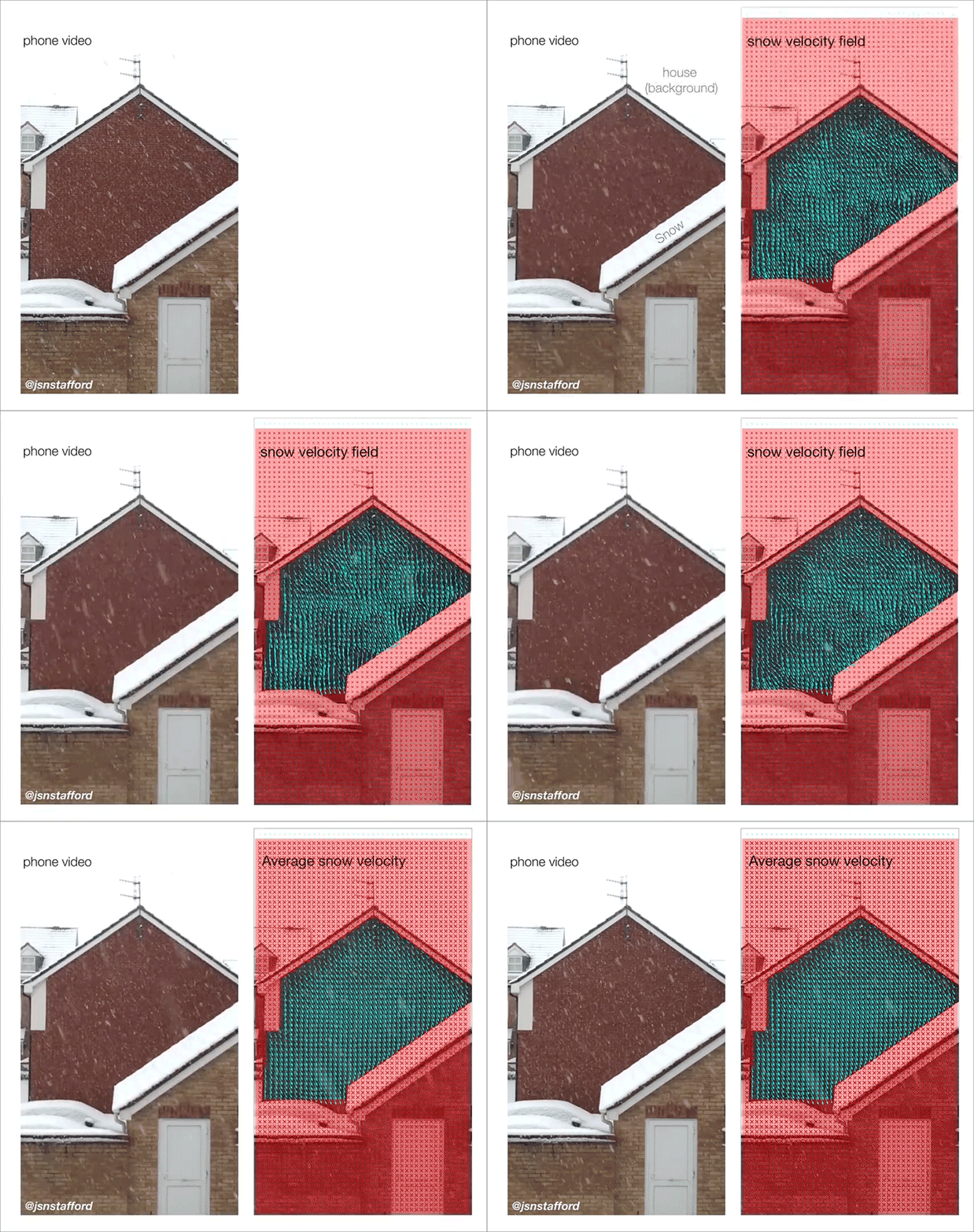
    In our era of remote learning, students don’t always have a chance to do hands-on lab experiments in the usual fashion. But that doesn’t mean they can’t explore important flow diagnostic techniques. Here a simple smartphone video of snow falling gets turned into a lesson on particle image velocimetry, or PIV, a major technique for measuring flow velocities.

    A nearby house acts as a fixed backdrop, and by comparing snowflake positions from one frame to the next, students can measure the instantaneous flow patterns in the snowfall. Of course, that’s a tedious task to do by hand, but luckily there are computer programs that do it automatically. Simply run the smartphone video through the software, and analyze the patterns it reveals!

    As a bonus, students don’t have to get distracted by the complexities of laser sheets and flow seeding that are normally a part of PIV. Instead, the flow and the lighting are already right outside their window, and they can concentrate instead on learning the principles of the technique and how to use the software. (Image and submission credit: J. Stafford)

  • Inside Avalanches

    Inside Avalanches

    Avalanches have traditionally been difficult to model and predict because of their complex nature. In the case of a slab avalanche, the sort often triggered by a lone skier or hiker, there is a layer of dense, cohesive snow atop a layer of weaker, porous snow. The presence of the skier can destabilize that inner layer, causing a fracture known as an anticrack to propagate through the slab. Eventually, it collapses under the weight of the overlying snow and an avalanche occurs.

    What makes this so complicated is that the snow behaves as both a solid – during the initial fracturing – and as a fluid – during the flow of the avalanche. Researchers are making progress, though, using new models capable of simulating the full event (shown above) by leveraging techniques developed and used in computer animation for films. That’s right – the physics-based animation used in films like Frozen is helping researchers understand and predict actual avalanche physics! (Image and research credit: J. Gaume et al.; via Penn Engineering; submitted by Kam-Yung Soh)

  • Icy Penitentes

    Icy Penitentes

    At high, dry altitudes, fields of snow transform into rows of narrow, blade-like formations as tall as 2 meters. Known as penitentes – due to their similarity to kneeling worshipers – these surreal snow sculptures form primarily due to solar reflection. Surrounded by dry air and intense sunlight, the snow tends to sublimate directly into water vapor rather than melt into water. This turns an initially flat snowfield into one randomly dotted with little depressions. The curved surface of those depressions helps reflect incoming sunlight, causing the indentations to grow deeper and deeper over time. Although the high Andes are best known for their penitentes, they form elsewhere as well. Recent work has even identified them on Pluto! (Image credit: G. Hüdepohl; research credit: M. Betterton)

  • Snowmelt

    Snowmelt

    Much of the rain that falls on Earth began as snow high in the atmosphere. As it falls through warmer layers of air, the snowflakes melt and form water droplets. The details of this melting process have been difficult to capture experimentally, but a new computational model may provide insight. The basic process has a couple stages. As snow begins to melt, surface tension draws the water into concave areas nearby. When those regions fill up, the water flows out and merges with neighboring liquid, forming water droplets around a melting ice core.

    Although this same sequence was observed for many types of snow, scientists also observed some important differences between rimed and unrimed snowflakes. Rime forms when supercooled water droplets freeze onto the surface of a snowflake. Lightly rimed snow still looks light and fluffy, like the animation above, but heavily rimed snow forms denser and more spherical chunks. Because there are lots of porous gaps in heavily rimed snow, water tends to gather there during initial melting. Rimed snow was also more likely to form one large water droplet rather than breaking into multiple droplets like snow with less rime. For more, check out NASA’s video and the Bad Astronomy write-up. (Image credit: NASA, source; research credit: J. Leinonen and A. von Lerber; via Bad Astronomy; submitted by Kam Yung-Soh)