Tag: 2024gosm

  • Featured Video Play Icon

    Growing Hydrogels in an Active Fluid

    Active nematic fluids borrow their ingredients from biology. Using long, rigid microtubules and kinesin motor proteins capable of cross-linking between and “walking” along tubules, researchers create these complex flow patterns. Here, a team took the system a step further by seeding the flow with a hydrogel that turns into a polymer when exposed to light. Then, by shining light patterns on the flow, the scientists can create rigid or flexible structures inside the active fluid. In this case, they show off some of the neat flow patterns they can create. (Video and image credit: G. Pau et al.)

    Fediverse Reactions
  • Featured Video Play Icon

    Making Magnetic Crystals From Ferrofluids

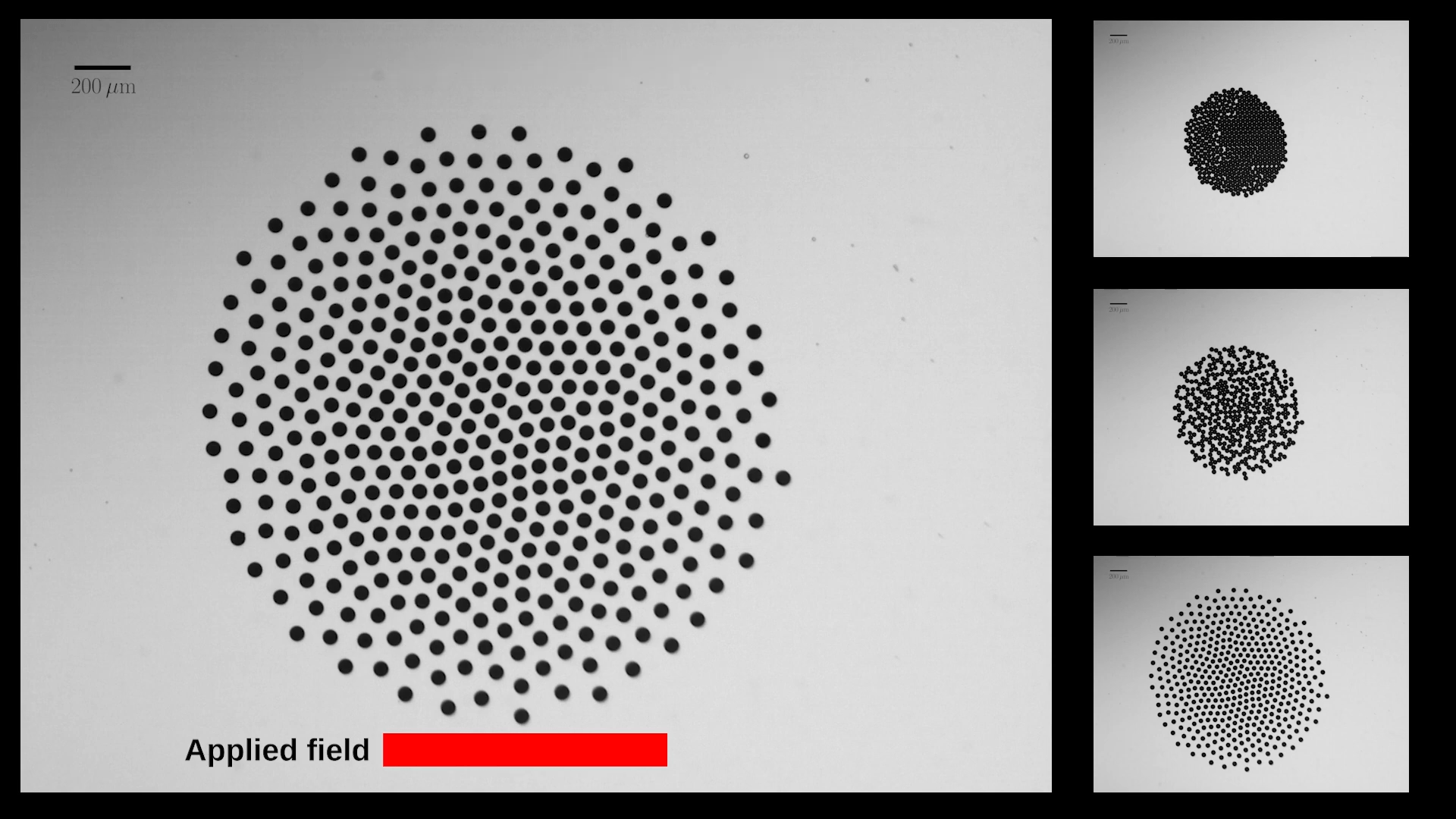
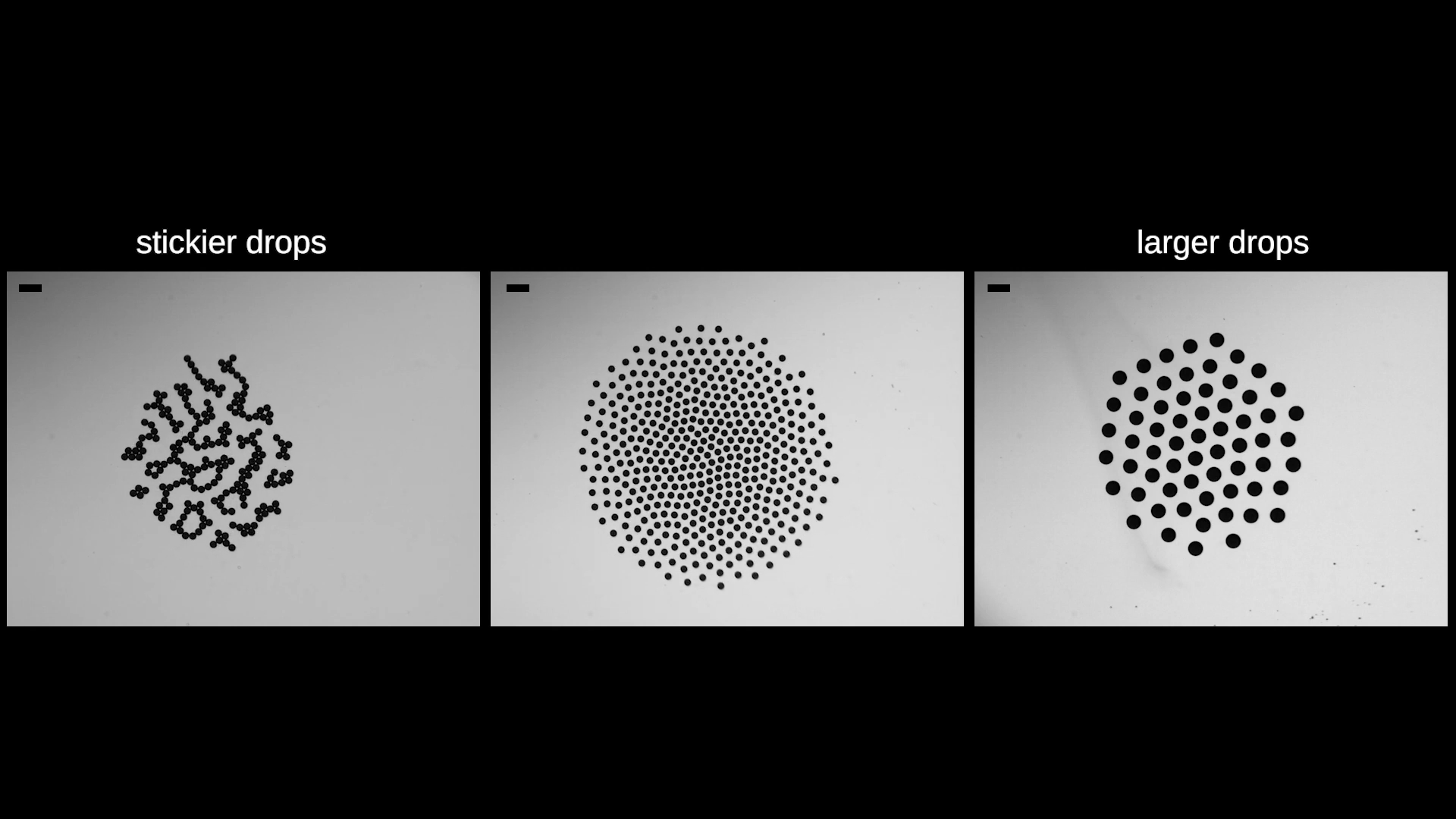
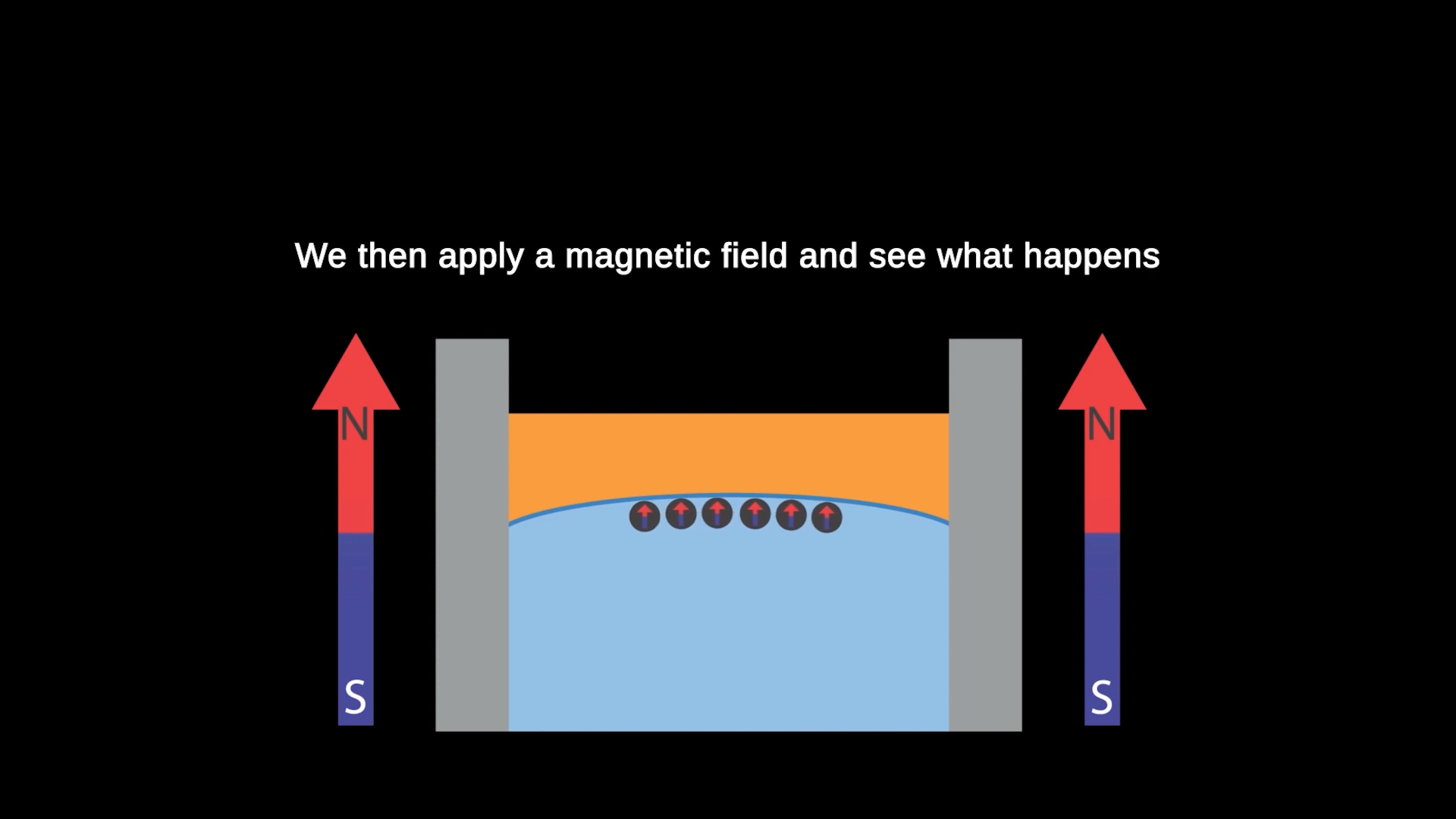
    Ferrofluids are a great platform for exploring liquids and magnetism. Here, researchers trap ferrofluid droplets along an oil-water meniscus and then apply a magnetic field that makes the drops repel one another. The results are crystalline patterns formed from magnetic droplets. For a given patch of drops, increasing the magnetic field’s strength pushes drops further apart. But changing the drops’ size and levels of self-attraction also shifts the patterns. Check out the video to see the crystals in action. (Video and image credit: H. Khattak et al.)

  • Featured Video Play Icon

    Kirigami Parachutes

    To fly stably, parachutes need to deform and allow some air to pass through their canopy. In this video, researchers investigate kirigimi parachutes, inspired by a form of paper art that uses cuts to create three-dimensional shapes. After laser-cutting, these disks are dropped — or placed in a wind tunnel — to observe how they “fly” at different speeds. Sometimes they flutter or bend; other shapes elongate in the flow. (Video and image credit: D. Lamoureux et al.; via GoSM)

  • Bubbles Encased in Ice

    Bubbles Encased in Ice

    If you’ve ever made ice in a freezer, you’ve probably noticed the streaks of frozen bubbles inside the ice. In its liquid state, water is good at dissolving various gases — like the carbon dioxide in sparkling water. During freezing, though, those gases cannot remain in solution; the water simply doesn’t have space between its crystalline ice lattice for non-water molecules. So the gases are forced out of solution, where they form bubbles. The final shape of the frozen bubble depends on the interplay between the speed of a bubble’s growth and how quickly the ice freezes. Here, the researchers used polarized light to outline the bubbles in color, highlighting the wide array of possible shapes. (Image credit: J. Meijer and D. Lohse; via GoSM)

  • Featured Video Play Icon

    Floating in Sync

    Objects on a vibrating liquid bath can interact with each other through the waves they make as they bounce. Here, researchers look at three-armed spinners interacting in pairs and in larger groups. A pair of spinners can synchronize so that they spin together or so that they spin in opposing phases. With more spinners, more complex patterns are possible. The spinners can even “freeze” one another by forming a pattern of standing waves that keep them locked in their orientation. (Video and image credit: J. Barotta et al.; via GoSM)