Month: January 2022

  • Changing with the Flow

    Changing with the Flow

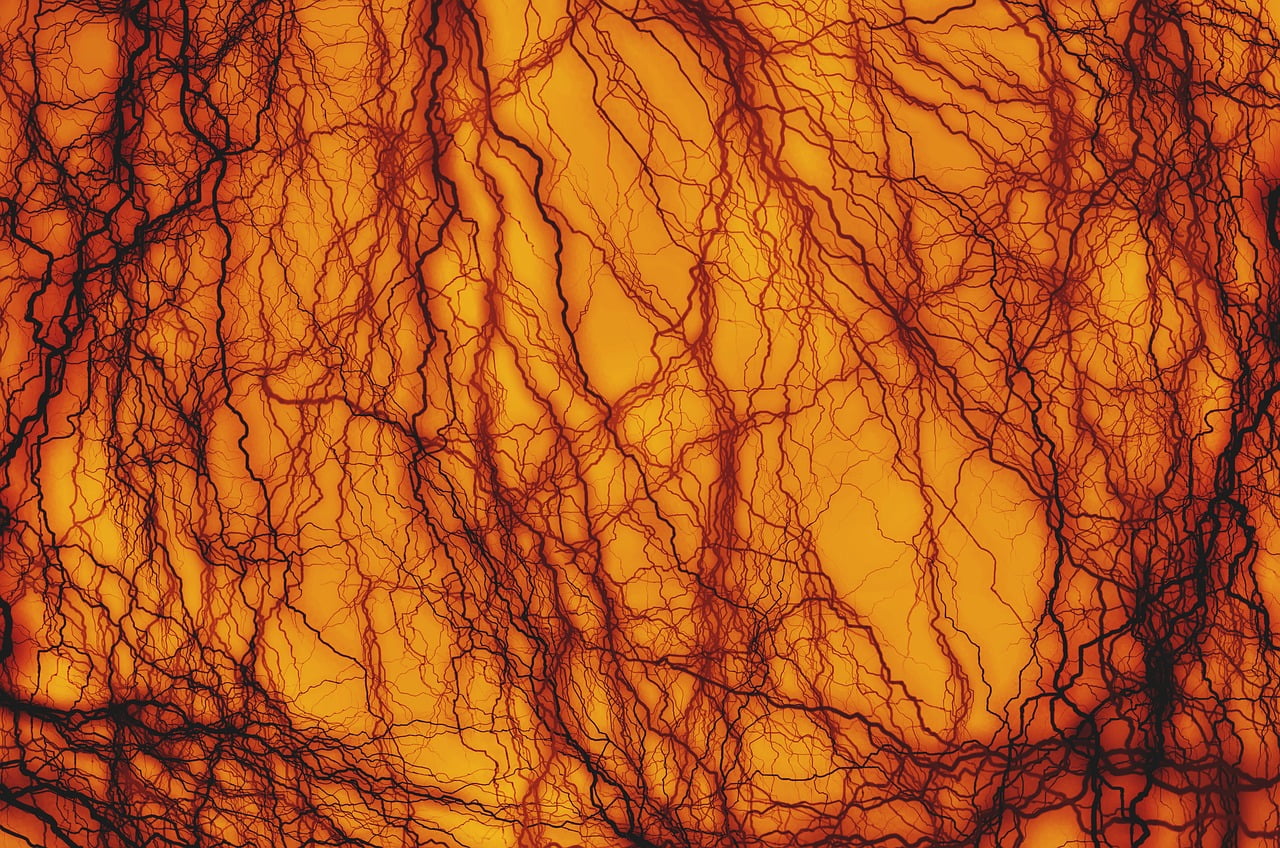
    Chemically-reacting flows are some of the toughest problems to unravel. In this new study, researchers found that the very act of flowing through narrow channels can change the speed of chemical reactions. In particular, they found that protein molecules carried through a capillary tube (comparable in size to human capillaries) changed their local shape as a result of the shear forces they experienced. Those changes actually sped up the proteins’ chemical reactions compared to the reaction speed for the chemicals in bulk.

    That finding suggests two important takeaways: 1) chemicals may be absorbed in the human bloodstream differently in capillaries than in other parts of the cardiovascular system, and 2) mimicking these tiny capillaries in microfluidic devices could be useful in speeding up certain biochemical reactions. (Image credit: top – KazuN, visual abstract – T. Hakala et al.; research credit: T. Hakala et al.; via Science; submitted by Kam-Yung Soh)

    Graphical abstract showing that shear forces in small channels can cause local changes to protein structure that affect the rate of chemical reactions.
  • Featured Video Play Icon

    “One Month of Sun”

    Get lost in the beauty of our star with Seán Doran‘s film “One Month of Sun”. Constructed from more than 78,000 NASA Solar Dynamics Observatory images, the video shows solar activity from August 2014, particularly the golden coronal loops that burst forth from the sun’s visible surface. These bursts of hot plasma follow the sun’s magnetic field lines, often emerging from sunspots. (Image and video credit: S. Doran, using NASA SDO data; via Colossal)

    Golden coronal loops spring from the sun's photosphere.
    Plasma follows the magnetic field lines of the sun in this coronal loop.
  • Cracking Droplets

    Cracking Droplets

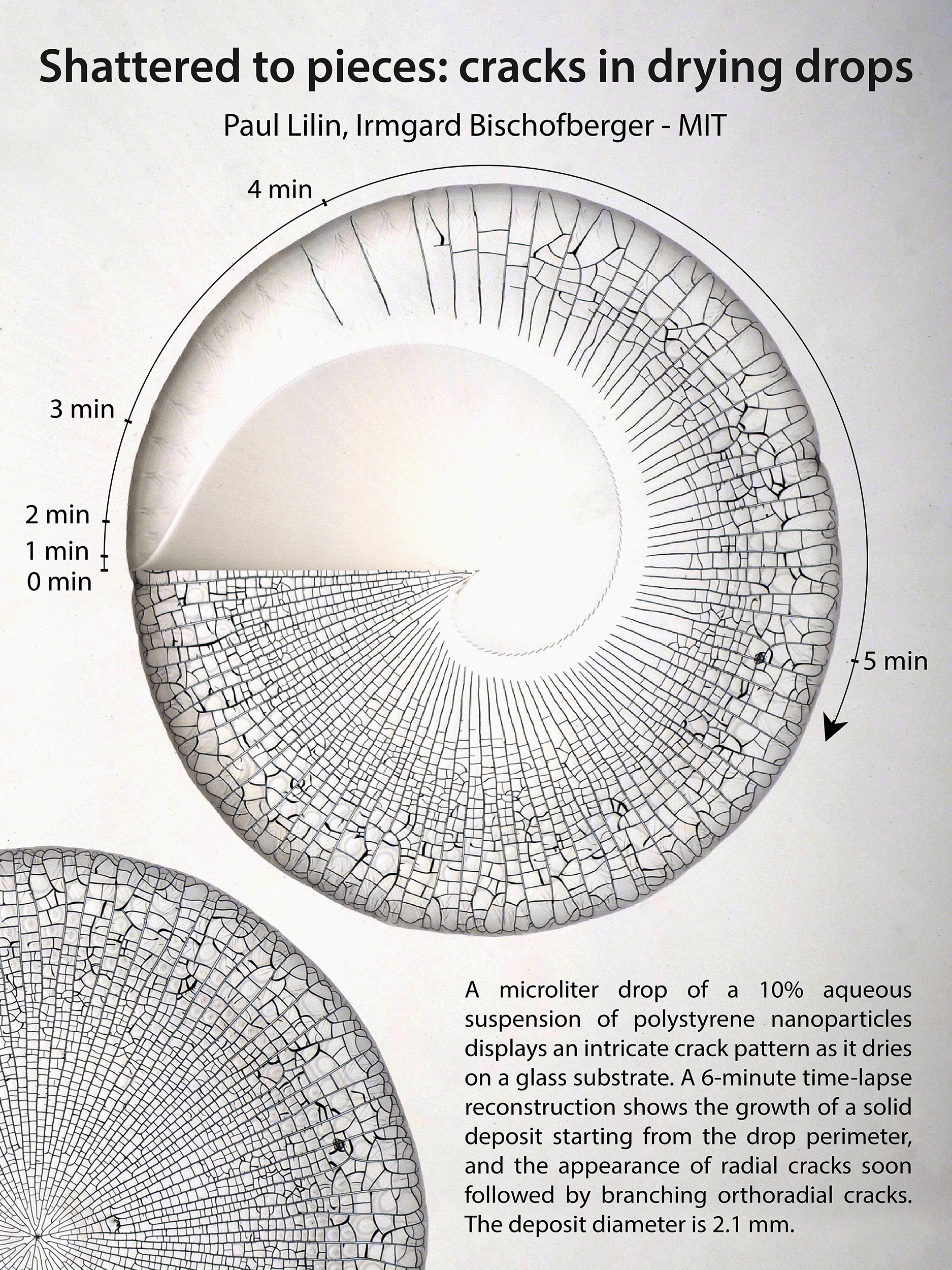
    Droplets infused with particles — like coffee — can leave complex stains once they evaporate. Here researchers show the complex cracking pattern that develops as a droplet with nanoparticles evaporates. The central image in the poster actually shows the drop’s pattern changing in time. The initial drop is shown at 9 o’clock, and as you move clockwise around the drop, time passes and the crack structure becomes more complex. What a neat way to visualize the changes! (Image and research credit: P. Lilin and I. Bischofberger)

  • All Wound Up

    All Wound Up

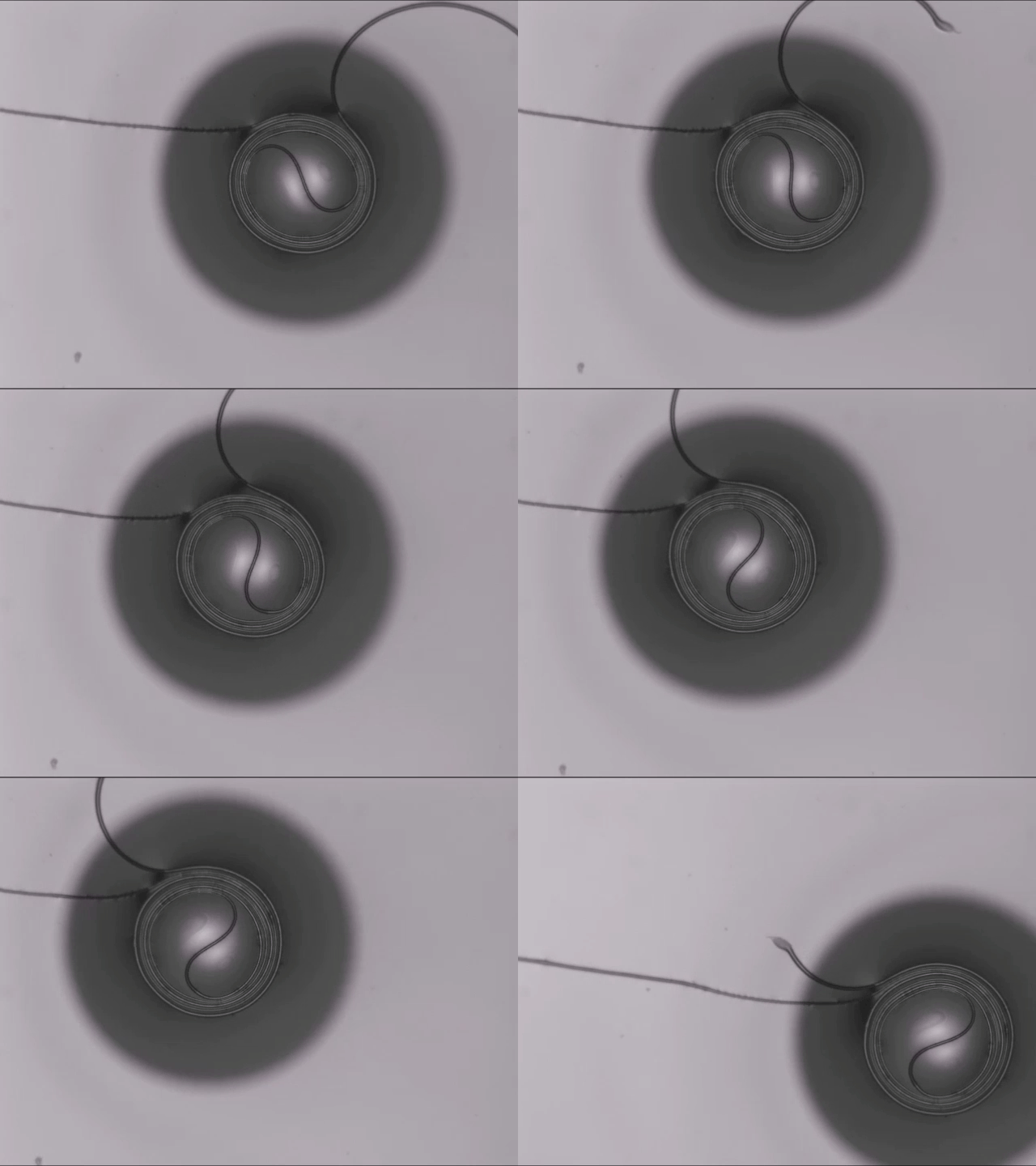
    A thin fiber sitting atop a bubble can spontaneously coil around the bubble thanks to elastocapillarity. (This seemingly bizarre behavior is also why wet strands of hair clump together.) Here’s the situation: The dark circle you see is all bubble; only a portion of the bubble — known as a spherical cap — sticks above the surface of the liquid. When a fiber sits across the top of the bubble, two things can happen: 1) the fiber simply sits there until the bubble bursts, or 2) the fiber starts to bend and wind around the bubble’s cap.

    Bending the fiber takes energy. In this case, that bending energy comes from the system as a whole reducing its free energy. The fiber actually sinks into the bubble film in what the researchers call a “bridged” configuration, where the fiber sits inside the liquid film while also touching the air inside and outside the bubble. In this position, the interfacial energy of the fiber-bubble system is lower, leaving enough excess energy savings for the fiber to coil. (Image and research credit: A. Fortais et al.)

  • December’s Derecho

    December’s Derecho

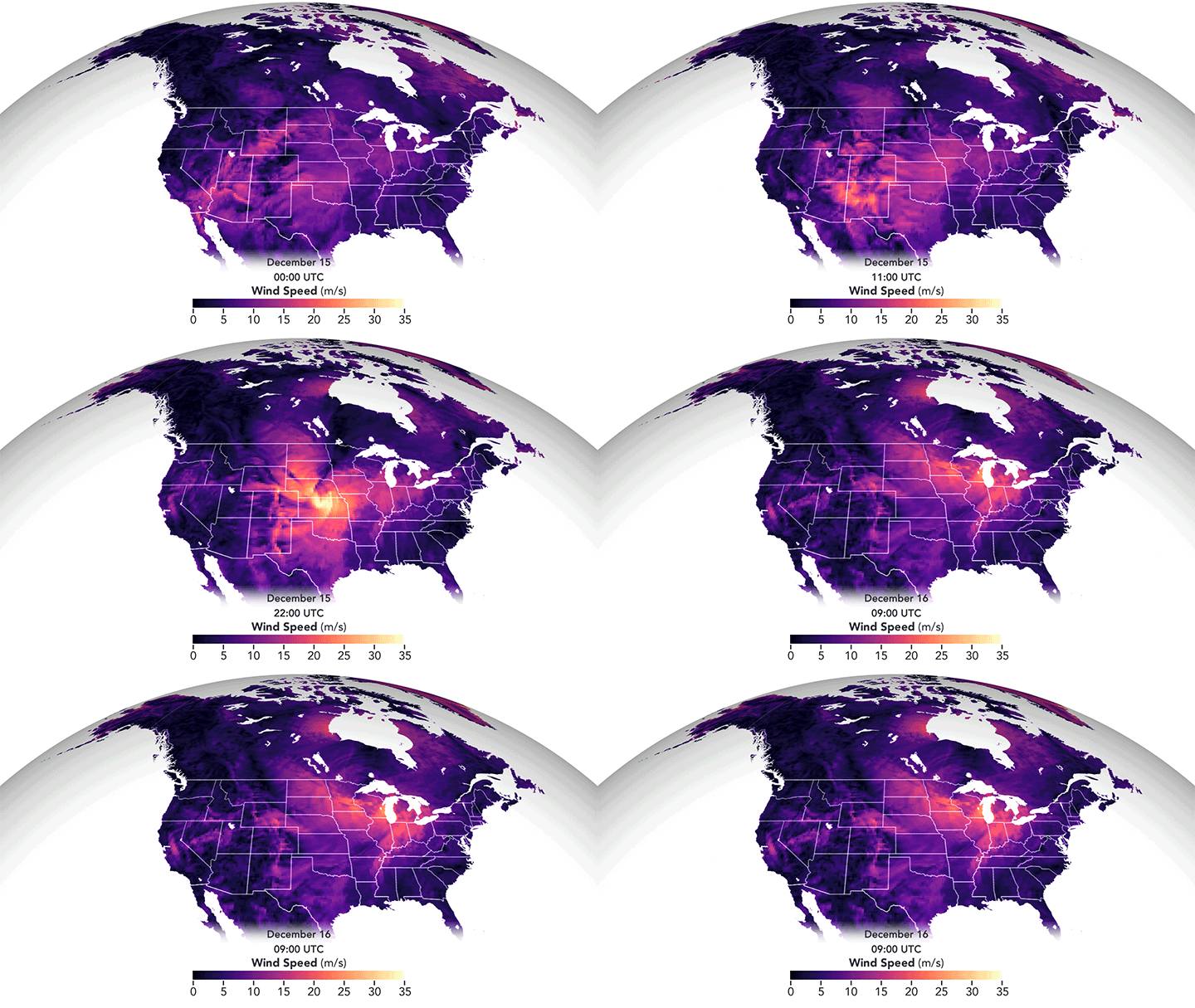
    I confess I’d never heard the term derecho before moving to Colorado, but I’ve experienced a few of these wind storms now. They’re intense! Last December’s derecho formed when a high-pressure system in the western United States met a strong low-pressure system over the northern plains. In fluids, flow moves preferentially from areas of high pressure to those with low pressure, and that’s no different when it comes to weather. The strong pressure gradient drove high winds from the Rocky Mountains to Minnesota. The animation above shows the strongest winds in in yellow-white but even the “weaker” pink areas saw winds comparable to a fast-moving car in speed. The visualization is constructed from data reported by ships, buoys, aircraft, satellites, and other sources, all processed through a NASA weather algorithm. (Image credit: J. Stevens/NASA; via NASA Earth Observatory)

  • Inside a Coronavirus Aerosol

    Inside a Coronavirus Aerosol

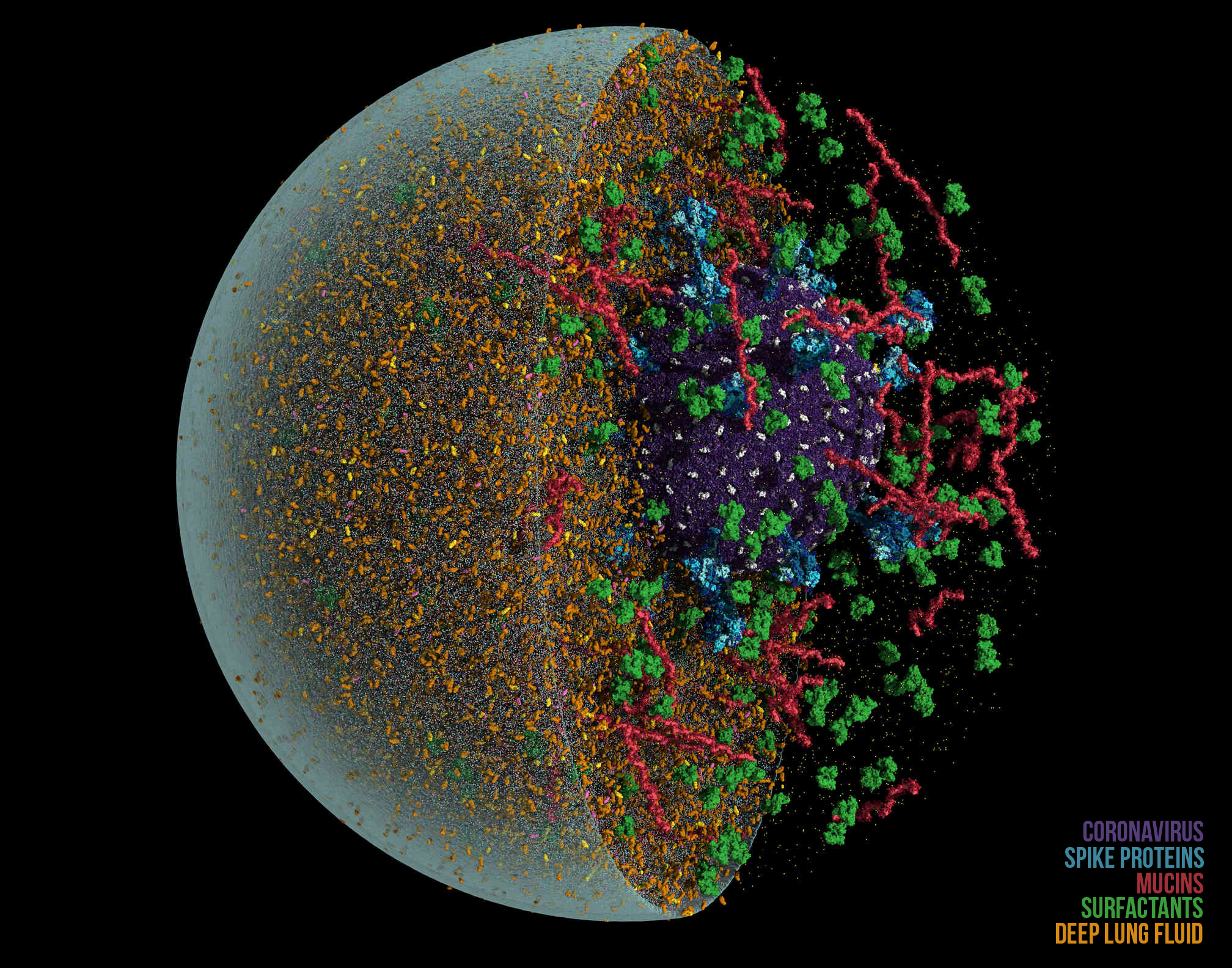
    This is a glimpse inside a tiny aerosol droplet with a single SARS-CoV-2 coronavirus inside it. The numerical simulation required a team of 50 scientists, 1.3 billion atoms, and the second most powerful supercomputer in the world. By simulating every atom, the researchers hope to observe what happens to a coronavirus in these micron-sized, long-lasting droplets. Does the virus survive? How do variants fare?

    Their simulation shows that the positive charge of the coronavirus’s spike proteins helps attract mucins that shield the virus and protect it from the droplet interface where evaporation could destroy it. Variants like Delta and Omicron have even more positive charge to their spike proteins, giving themselves a better cloak of mucins and potentially making them all the more infectious. Definitely check out the full New York Times write-up for more spectacular visualizations from the work. (Image and research credit: R. Amaro et al.; via NYTimes; submitted by Kam-Yung Soh)

  • Featured Video Play Icon

    “Shadows in the Sky”

    This moody music video features storm chasing footage from photographer Mike Olbinski. As always, his captures are stunningly majestic. Watch closely and you’ll see everything from bulbous mammatus clouds to powerful microbursts, from horizon-obscuring haboobs to sky-splitting lightning. And if this video isn’t enough, there’s plenty more to enjoy. (Video and image credit: M. Olbinski)

  • Swirls in the Wake

    Swirls in the Wake

    Rocky islands make excellent atmospheric swirls, as seen here around Guadalupe Island. Winds blowing in from the ocean get forced up and around the island’s topography, resulting in vortices that shed alternately from either side of the island. The pattern they form is known as a von Karman vortex street and is easily seen in satellite imagery, thanks to the swirls that can persist for tens of kilometers downstream. Personally, I never get tired of this one! (Image credit: NASA/GSFC/JPL; video credit: NOAA/CIRA; via Dakota Smith; submitted by @SellaTheChemist)

  • Featured Video Play Icon

    Opera Singer Air Flow

    What does the air flow from a trained opera singer look like? That’s the question behind this study, which combines music and fluid dynamics. Using an infrared camera tracking carbon dioxide (CO2) exhalations from a singer during a performance allowed researchers to identify several important flow features. When breathing, air flows out the singer’s nose in a tight, downward jet with an initial velocity around 1 m/s.

    While singing, air leaves the mouth at a much lower velocity, especially during vowels where the mouth is open. With less momentum behind these exhalations, they can drift upward on the buoyant warmth of the singer’s breath. During consonants — especially plosives like t, k, p, b, d, and g — a rapid burst of air leaves the mouth, traveling at nearly 10 m/s. From the perspective of COVID-19 safety, it’s these plosive jets that are likely to spread contaminated droplets. (Image and video credit: MET Orchestra; research credit: P. Bourrianne et al.; via Improbable Research; submitted by Kam-Yung Soh)

  • Featured Video Play Icon

    The Hot Chocolate Effect

    Stir hot chocolate powder into milk or water, and you can recreate this bizarre acoustic phenomenon. Once the powder is mixed in, tapping the side of the cup creates a low pitch that steadily rises as you continue tapping. This is known as the hot chocolate, or allossonic, effect. When you stir, it creates tiny bubbles in the fluid, which changes the effective speed of sound. As the bubbles pop, the speed of sound goes up and the pitch of your tapping gets higher! Stirring the cup up again (even without adding more powder) should lower the pitch once more. (Video credit: C. Kalelkar)